

This Sunday, Uruguay will vote to repeal the trans law.
On Sunday, August 4, there will be non-compulsory elections to hold a referendum and repeal the trans law in Uruguay, which was regulated in April.

Share

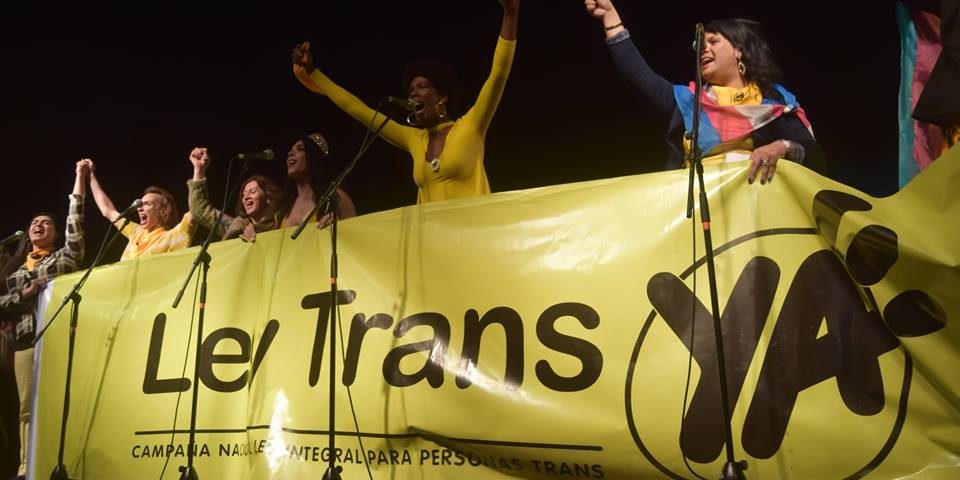
A referendum is being held to repeal Uruguay's transgender rights law, which was enacted in April. The anti-rights campaign is being spearheaded by Carlos Iafigliola, a former presidential candidate for the National Party. Iafigliola had announced that he would launch a nationwide campaign after the primary elections to promote the referendum. On that day, those who wish to participate in the referendum (i.e., those seeking to repeal the law or those who want its future decided through a popular vote) must go to the polling stations set up by the departmental electoral boards throughout the country to vote in favor of eliminating the law. For the referendum to proceed, it must obtain the support of at least 25% of registered voters, which is slightly more than 650,000 people.
The trans law was passed in October 2018 to:
-Add the concept of gender identity as a category in national statistical systems. That is, it recognizes the identity and uniqueness of the group by including it in censuses, surveys, and reports. -The change of name and sex assigned at birth ceases to be a judicial procedure and becomes a administrative procedurebefore the General Directorate of the Civil Registry. -Guarantee access for trans people to education systemProviding support in all areas and implementing quotas (2 percent must be for trans people) and scholarships (8 percent of postgraduate funds from the Ministry of Education for trans people). - Granting 1 percent of job quota for trans people in public employment calls. Job positions must be filled by lottery among those who meet the requirements. -Allocate 1 percent of the vacancies in training programs of the National Institute of Employment and Vocational Training for transgender people. -Design inclusive cultural policiesAdding a gender identity perspective to scholarships, funds, and incentives, both in the public and private sectors. - Including transgender people in policies access to housing- Guarantee the right to health services without discrimination or pathologization based on gender identityThe right of admission cannot be applied to transgender people. People over 18 years of age will have access to health services to support their transition with adjustments to their gender identity, such as surgeries and hormone therapy, with their consent, without having to go through legal proceedings. People under 18 years of age can request access to these services and hormone therapy, and for surgeries, they must have parental approval. – Trans people born before December 31, 1975, who have been victims of institutional violence or deprived of their liberty because of their gender identity, will have right to redress in cases of psychological, moral, or physical harm. And also if there were discriminatory practices by the State that limited rights.A campaign of attrition
Diana Sellanes, a member of the National Campaign for a Comprehensive Law for Trans People and of Unión Trans, told the daily The group did not request the national broadcast, but did not rule it out. “We didn't ask for it, which doesn't mean we won't, but we are considering other strategies,” she said. According to the activist, since it is not a mandatory process, the idea is to discourage people from voting, so she questioned the appropriateness of giving the referendum such prominence. She emphasized that it is a special law intended to “protect sexual diversity.” “We understand that the process is democratic because they gathered the signatures and have the right to the broadcast,” Sellanes stated, although she clarified that the criminal complaint was filed regarding the way in which the signatures were collected. She asserted that they now plan to include misleading advertising disseminated through social media in their campaign against the law.[READ ALSO: Uruguay has the first state census of trans people]
“This campaign is proving very draining for the social movement. We believe other strategies need to be adopted, because it seemed like they wouldn't reach the required signatures, and then they did. This pre-referendum will demonstrate how well the churches and more conservative people are organized,” Sellanes stated. In March of this year, those responsible for the “We Are All Equal” campaign, including Iafigliola and National Party Representative Álvaro Dastugue, obtained 69,360 signatures, surpassing the 55,000 (2% of the electoral roll) needed to initiate the pre-referendum process. “The signatures were obtained based on lies. Things were said that aren't true, things that the law doesn't say,” Sellanes affirmed.We are present
We are committed to journalism that delves into the territories and conducts thorough investigations, combined with new technologies and narrative formats. We want the protagonists, their stories, and their struggles to be present.
SUPPORT US

FOLLOW US
Related notes


We are present
This and other stories are not usually on the media agenda. Together we can bring them to light.