

A podcast of interviews made by and for trans people from Mexico
Luisa Almaguer is a Mexican trans activist and communicator who is paving the way and, at the same time, calling for others to walk it collectively.

Share

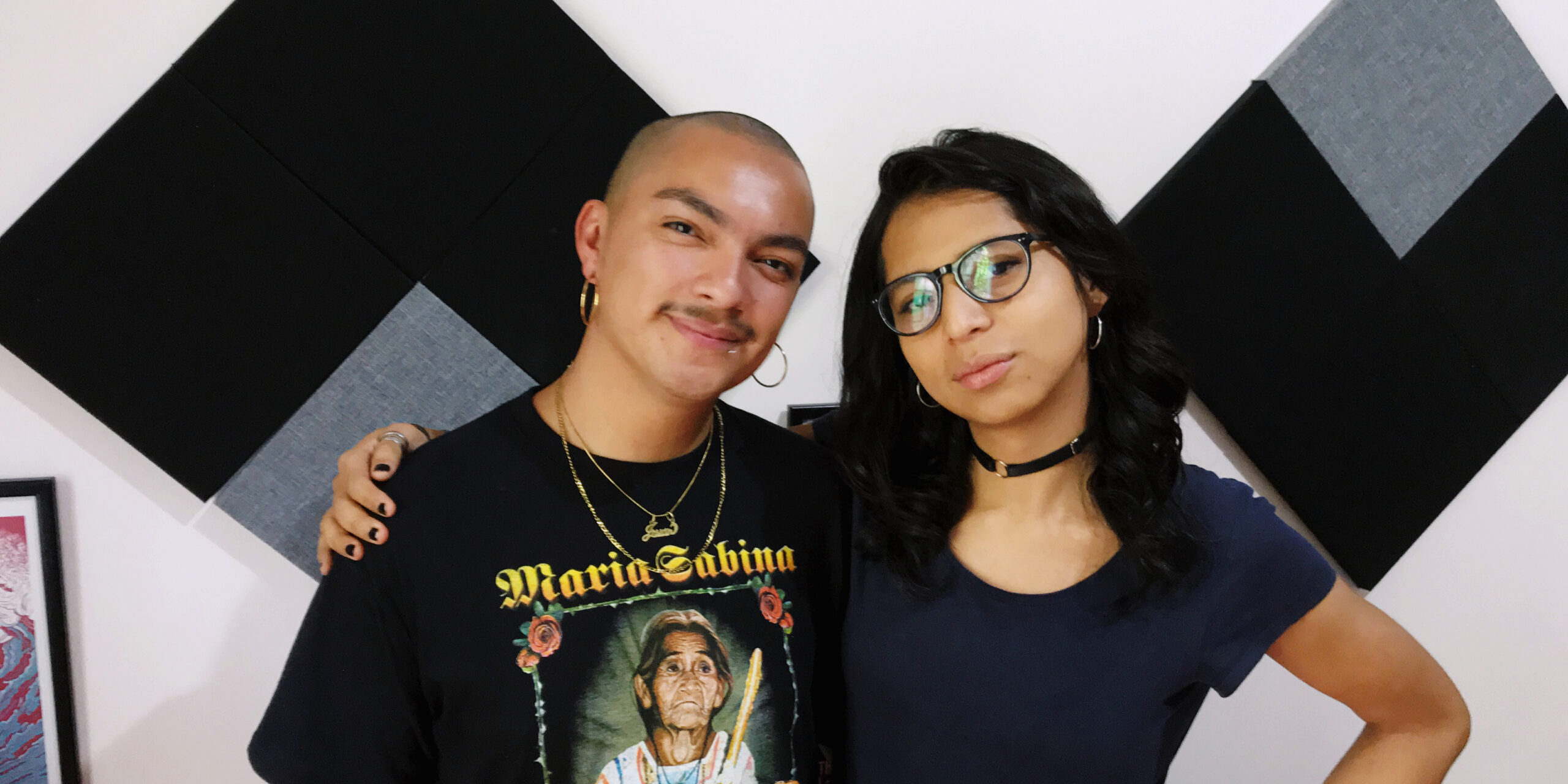
By Milena Pafundi. Luisa Almaguer is a Mexican trans activist and communicator who is paving the way and, at the same time, calling for others to walk it collectively. Originally from Mexico City, she has a wide range of projects: this year she released an album called “Matar o matar” (Kill or Kill) and has developed comedy characters where she humorously addresses sex education and veganism. We met in the studio of Puentes, a podcast based at Casa Creatura in the Condesa neighborhood, to talk about her most recent project: La Hora Trans (The Trans Hour), which already has ten episodes and a significant impact on the community, as well as allies like Patreon, Puentes.mx , and Antifaz .
-Why opt for podcast-style conversations?
– I thought it was important for trans people to start talking about our lives, just to make it visible and, maybe with luck, reach the right people, those who need it. Because it's a powerful thing; I would have needed this program when I was 13, it would have changed my life. I think about that, and I believe it was important that it was done. The great thing about the podcast format is that it allows for the creation of an archive. Especially in Mexico, where we have been so silenced and subjected to violence, and where we continue to be murdered daily.

-How did the process of formalizing the project unfold?
– Trans Hour didn't start here at Puentes, it started at Radio Nopal, an independent radio station. I had this idea of doing a program where only trans people would be interviewed, where they would tell their stories because it has always seemed to me that there are no trans stories anywhere, that there are no role models, that this option doesn't exist within the hegemonic narratives, the trans experience doesn't exist.-I've heard you refer to La Hora Trans as a separatist space, why is that?
I think that if it weren't separatist and there were non-trans people intervening and asking questions, we would still have that cisgender perspective towards trans people, and this is for trans people within the trans community, for trans people. Right now, I see a lot of trans characters, trans people, being included in shows or programs that aren't LGBT or trans-themed. But what I still need to see in the media is trans people interacting. You almost always see the trans teenager isolated in the cisgender world. But they're never a group of trans friends, and that's very important to reflect because we do exist, and it's very empowering to share with each other that we are "peers."
TRANS DIVERSITY
The program aims to open its doors to all the diversity within the trans community: trans men, trans women, and non-binary people. But beyond that, Luisa has invited a diverse range of lifestyles: activists, artivists, scientists, public figures, poets, human rights defenders, and more.– How do you choose your guests?
– We try to make them stories with different origins, different forms, also to realize that this is also reality, that trans is as diverse as everything else, trans diversity is enormous and it is not just one idea or one way of being trans.”– Who else would you like to invite?
– Hopefully we can do many more programs, there are many people, many trans people, women, men, non-binary people who are doing many very important things that it would be very cool to continue to make visible, the list is endless.
10 episodes, 10 guests, August 10
The podcast, which began in October 2018, has already reached its first season of 10 episodes. The guests were: Nathan, Kenya Cuevas , Ophelia Pastrana , Quesx , Aletze Estrada, Siobhan Guerrero , Lia: The Mermaid Bride, Daniel Nizcub, Zemmoa, Jovan Israel.” On August 10th, there will be a meeting with the 10 guests who participated. It will be held at Casa Creatura, where the podcast is recorded, in the Condesa neighborhood of Mexico City. “Bringing this season to an event is very important, because we’re going to meet face-to-face, we’re going to have a discussion, to have questions and answers. There will be a Trans market where trans people will sell their products. I’m very excited,” says Luisa. ]]>
]]>
We are present
We are committed to journalism that delves into the territories and conducts thorough investigations, combined with new technologies and narrative formats. We want the protagonists, their stories, and their struggles to be present.
SUPPORT US

FOLLOW US
Related notes
We are present
This and other stories are not usually on the media agenda. Together we can bring them to light.