

The IACHR is investigating the murder of gay prefect Octavio Romero
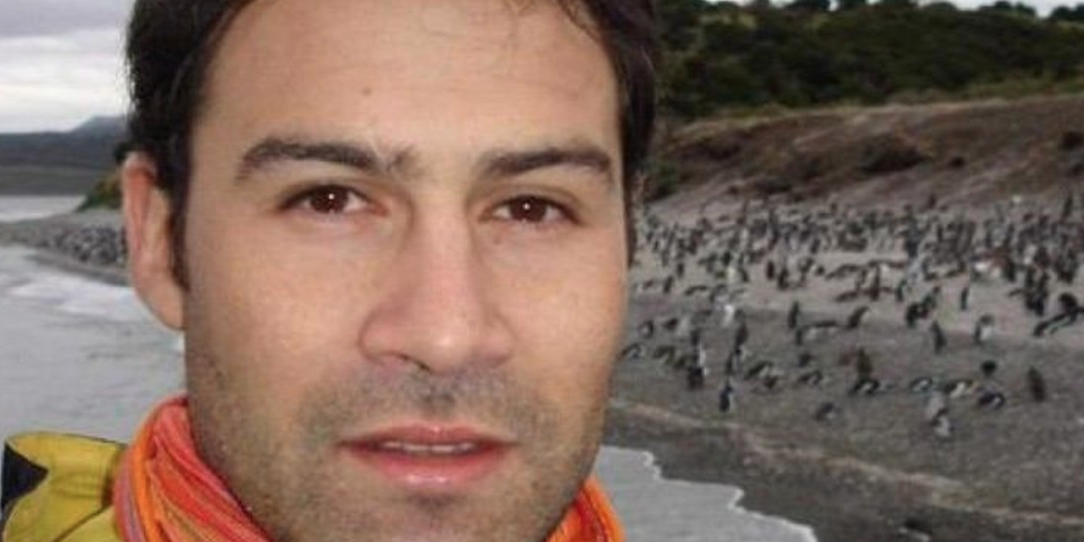
Octavio Romero, after the Equal Marriage Law was passed, was going to be the first member of a federal force to marry a person of the same sex. But he was found dead six months earlier, on June 17, 2011.

Share

By Sole Vela. Octavio Romero, after the Equal Marriage Law was passed, was set to be the first member of a federal force to marry a person of the same sex. He was a Sub-Officer in the Argentine Naval Prefecture (PNA) and had already received the required permission—mandatory by protocol—to marry Gabriel Gersbach. Six months before the wedding, on June 17, 2011, he was found dead in the Río de la Plata. The case, which remains unsolved, has been admitted to the Inter-American Commission on Human Rights (IACHR), which is beginning to assess whether Argentina is responsible for human rights violations. The IACHR, one of the two bodies of the Organization of American States (OAS) created for the observance and defense of human rights, issued a special report on Romero's murder. Faced with the inaction of the local judiciary, in June 2012 Gerbasch, the Argentine Homosexual Community (CHA), and the Civil Association for Equality and Justice (ACIJ) filed a petition with the Inter-American Commission on Human Rights (IACHR). Argentina was the first country in Latin America to legally guarantee this right, and since then, more than 20,000 marriages have been celebrated. July 15 marked nine years since its vote and approval in the Senate: 33 in favor, 27 against, and 3 abstentions. That morning, Gabriel and Octavio hugged and cried tears of joy. They were finally going to be able to get married after 12 years together. That day, they went to celebrate in the plaza.
[READ ALSO: Attack on a lesbian couple in Berisso: condemnation and march]
Hateful graffiti in the Prefecture
“Octavio Romero, faggot,” was one of the messages scrawled on a men’s restroom door that Octavio found at work after his leave was approved. Gabriel suspects they didn’t want a gay man, much less a proud gay man like Octavio. Anyway, he clarifies: “He would never have married in uniform because he didn’t even go to work in uniform: he wore a suit and tie. And although he was the best at the shooting range, he didn’t like guns. The only thing he liked was that the Coast Guard retired young.” Octavio’s murder was included in the 2011 Hate Crimes Report by the Argentine Homosexual Community (CHA), along with 13 other crimes: half against transvestites, and the other half against gay men. CHA President César Cigliutti supported Gabriel from the very beginning: “Beyond who the perpetrators were, it’s clear this is a hate crime. Just looking at our bodies is enough to understand the symbols behind these crimes. The motive—he has no doubt—is always homophobia, lesbophobia, and transphobia.” Like Octavio, the other three victims murdered that year were found naked or semi-naked. Octavio worked in administrative roles in the Management Control offices of the Argentine Naval Prefecture, an area that handles the entry and exit of ships. But his dream, ever since his first trip with Gabriel to Brazil, was to dedicate himself to diplomacy. So, he took advantage of his morning job to study Public Relations in the afternoons at the University of Salvador (USAL). He had also already completed a translation degree in English and another in Portuguese. “Octavio joined the Coast Guard just to leave Curuzú Cuatiá, Corrientes, and come to the city. Because that structure had nothing to do with him,” says Mariela Lucero, one of his best friends and a classmate in Public Relations at USAL, who was the last person to speak with him before going to a birthday party where they were supposed to meet. “He would never have stood us up,” she asserts. “When he announced he was going to get married,” she denounces, “the harassment began. He told me he was having a hard time but wanted to assert his right to marry.”The last kisses
“After 12 years together, it had never happened that he didn't come home to sleep a night. Besides, we texted a lot. We were inseparable,” Gabriel says. That night, as soon as his friends told him he hadn't arrived at the party, he went to his house to look for him, but found the door unlocked, all the lights on, and the TV on. And in the refrigerator were the bottles he was going to bring. On a chair was the burgundy corduroy jacket he was going to wear. That night they had said goodbye with two kisses. Two days after his disappearance, on June 11, 2011, the search for Octavio was featured in almost all the media outlets. Six days later came the bad news that a boatman from the Belgrano Nautical Club had found his body—near Vicente López—in the Río de la Plata. Gabriel was about to give a statement at the Federal Police Investigations Superintendency when he read on the TV in the waiting room: “The missing prefect has been found dead.”Franco Torchia's interview
On the fourth anniversary of his death, while Gabriel was on vacation in Brazil getting a tattoo of a drawing that Octavio had made, he received a WhatsApp message from journalist Franco Torchia“Are you available to talk? Because I received a report about Octavio’s murder.” Franco had interviewed him twice on his radio program about diversity. You can't live on love.“My production company and I arrived and found,” Franco explains, “an anonymous sealed envelope, handwritten on the outside and typed on the inside. Several pages with very precise and credible information.” Another envelope with the same report was received by prosecutor Estela Andrades de Segura.State negligence
According to defense attorney Dalile Antúnez, a member of the Civil Association for Equality and Justice, the anonymous letter appeared to have been written by someone within the force. It detailed what allegedly happened that night: that a group had kidnapped him in a van, and that the operation had been archived on a hard drive at the Coast Guard Building. Although some investigative steps were ordered based on the report, she asserts that there has been no progress in three years: “Despite several lines of inquiry remaining unexplored, there has been no government action to determine what happened. The hypothesis that it was orchestrated by members of the Coast Guard as a hate crime was never seriously investigated.” When Octavio was murdered, he and his partner had returned a month earlier from a trip to Europe, which had served as a sort of pre-honeymoon. They traveled for the wedding of Gabriel's brother and took the opportunity to announce their own wedding for the end of the year. They had already chosen the venue and the designer for the invitations. And Gabriel also recounts that Octavio had asked his parents for her hand in marriage: “We were very much in love and wanted to grow old together.” Eight years after the crime, Gabriel and Octavio’s story is one of marriage equality that never happened and of justice that never was.We are present
We are committed to journalism that delves into the territories and conducts thorough investigations, combined with new technologies and narrative formats. We want the protagonists, their stories, and their struggles to be present.
SUPPORT US

FOLLOW US
Related notes

We are present
This and other stories are not usually on the media agenda. Together we can bring them to light.