

Guatemala adds two gay congressmen: progress and impacts
What impact might this increased visibility of sexual dissidence have on the LGBT+ community in a conservative country like Guatemala?

Share

By Pilar Salazar*, from Guatemala City
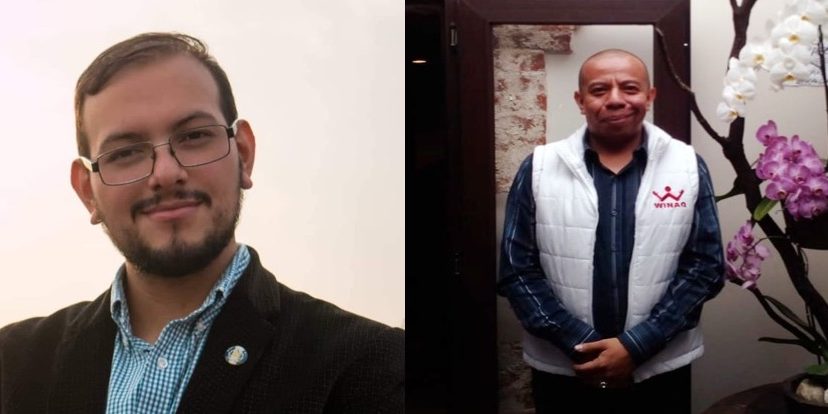
On June 16, Guatemala held general elections: presidential, legislative, municipal, and for the Central American Parliament. A runoff election for president and vice president will be held on August 11. These were rather unusual elections, marked by the participation of four gay men as candidates and allegations of serious irregularities in the Supreme Electoral Tribunal's vote count. Two of these gay men were elected: Aldo Dávila and José Hernández. What impact might this increased visibility of sexual diversity have on the LGBT+ community in a conservative country like Guatemala?
READ MORE: Guatemala elections: LGBT+ candidates with a sexual diversity agenda
The trans vote
Although trans people “were able to vote,” as a local newspaper reported, we don't do so under dignified legal and human rights conditions due to the lack of a gender identity law. At polling stations, when they check our identity documents and see that the “sex”—because that's how the document is labeled, not “gender” as it should be legally—doesn't match our appearance, we can quickly be ridiculed. And we automatically become invisible/ignored in the statistics of male and female voters.
In my experience, I can say that at the polling place where I voted this year, as a trans woman (this time not as a poll worker secretary), I felt like an oddity. This feeling intensified when I handed over my ID and saw serious and unfriendly expressions on the faces of the poll workers (with the exception of the presiding officer). I think it also had to do with the fact that I checked and opened all five ballots in front of them to verify their authenticity and accuracy before going to the voting booth.
This placed me in a double bind: one for being trans and the other for being “so distrustful and scrutinizing.” Despite everything, and if we see it as something “positive,” my gender identity was not grounds for questioning or denying my right to vote.
Political visibility and the LGBT+ agenda
We in the LGBTIQ+ community are aware that Representative Sandra Morán was the first openly lesbian and feminist woman elected by more than 32,000 people in the central district. And that she has been a voice for the LGBTIQ+ population during the 2016-2019 term for which she was elected to public office.
READ MORE: #Guatemala The congresswoman fighting alone for LGBT rights
Morán, in conjunction with civil society organizations, has proposed a series of laws in favor of the LGBTIQ+ population, such as a Gender Identity Law—to allow transgender and transsexual people to be registered on their personal documents with their self-perceived name and gender (5395). This law, presented to the full Congress on February 22, 2018, received an unfavorable opinion from the Committee on Legislation and Constitutional Matters (a congressional body) made up of conservative deputies after one of its members, Estuardo Galdamez, asked God "to regenerate homosexuals."
READ MORE: This is how a diverse family lives amidst LGBTphobia in Guatemala
Another of Representative Morán's proposals was the law to punish hate crimes (5278), which was reviewed by the full Congress on August 22, 2017. It did not proceed for the same reasons, and these proposals, as we colloquially call them in Guatemala, were shelved.
Now it's Aldo Dávila and José Hernández's turn. Dávila was elected as a representative for the central district. Openly gay, he will take office on January 14, 2020. He himself states that he doesn't have a "gay agenda," as some people claim, but rather a human rights agenda. He also promises to follow up on Representative Morán's proposed legislation.
READ MORE: 2018 Balance: Guatemala on alert and in debt regarding LGBTI+ rights
José Hernández will take office on January 28th at the Central American Parliament (Parlacen), the permanent regional body for political and democratic representation of the Central American Integration System (SICA), headquartered in Guatemala since 1991 with sub-offices in each Central American country. Its main objective is the integration of Central America. It is structured around diverse ideological currents, not political parties. There, Hernández will be tasked with promoting peace, democracy, and human rights.
He has a challenge, as he told me a few days ago: to create the Central American Human Rights Ombudsman's Office and promote agreements, public policies and the standardization of laws at the regional level in this matter, making use of ISCA (Institution of the Central American integration system, which is in charge of ensuring the rights of sexual diversity in the region) a recently created system.
In a conversation with María José Rosales, a sociologist and activist who identifies as a lesbian feminist and is part of the team at the feminist newspaper "La Cuerda," she stated that Sandra Morán's entry into the movement is not the same as Aldo Dávila's or José Hernández's. According to her, "because they don't carry a feminist agenda." Even so, Rosales believes they should be supported, as she is not the only one who perceives a violent attitude from a large part of society—on social media, for example. Rosales proposes countering the wave of homophobic, lesbophobic, and transphobic violence at this point of high visibility. Furthermore, she added, they should monitor and be a voice of warning for social movements.
"Urgent: Promote laws against hate crimes"
Equal civil unions, or as many call them, “marriage equality,” are important from a legal standpoint, as they would allow for the legal and social recognition of same-sex couples. Even so, in my opinion, it shouldn't be a priority on the agenda of elected representatives without first promoting laws that punish hate crimes and discrimination so that we stop being killed en masse and constantly .
READ MORE: Young activist murdered and hate messages left on her body
The elected representatives should also turn their attention to the phenomenon of LGBTIQ+ migration in Central America. It is a constant struggle to look to and emigrate to other countries to save our lives, where we often hope for the recognition of human rights and dignified access to healthcare, employment, and education—something we lack in Central America.
Although those of us who are part of the LGBTIQ+ population are excited by the fact that there is already a lesbian woman in Congress and two gay men are going to join, bringing our concerns, I am very critical of the fact that no one has yet thought about candidates for trans people to add representation: in Congress, in the mayoralties, in the Cocodes (Community Development Council) or in any of the three State bodies.
Perhaps it's that seeing a trans/sexual/vestite/gender face in Guatemalan misogynistic politics is too offensive and transgressive for the conservative, prudish, and Judeo-Christian culture in which we live in Guatemala.
*Pilar Isabel Salazar Argueta is 38 years old, a communicator and journalist "first by vocation", incidental/dissident activist in academia from the Social Sciences and theoretical-corporal facilitator on issues of sexuality.
We are present
We are committed to journalism that delves into the territories and conducts thorough investigations, combined with new technologies and narrative formats. We want the protagonists, their stories, and their struggles to be present.
SUPPORT US

FOLLOW US
Related notes

We are present
This and other stories are not usually on the media agenda. Together we can bring them to light.