

Marcela Chocobar trial: anticipation for the transfemicide verdict
On Thursday, June 13th, at noon, the Criminal Court of Río Gallegos will announce its verdict in the transfemicide case of Marcela Chocobar. The 26-year-old trans woman was last seen in September 2015, and to this day her body has not been found; only her skull has been recovered. Starting today…


Share

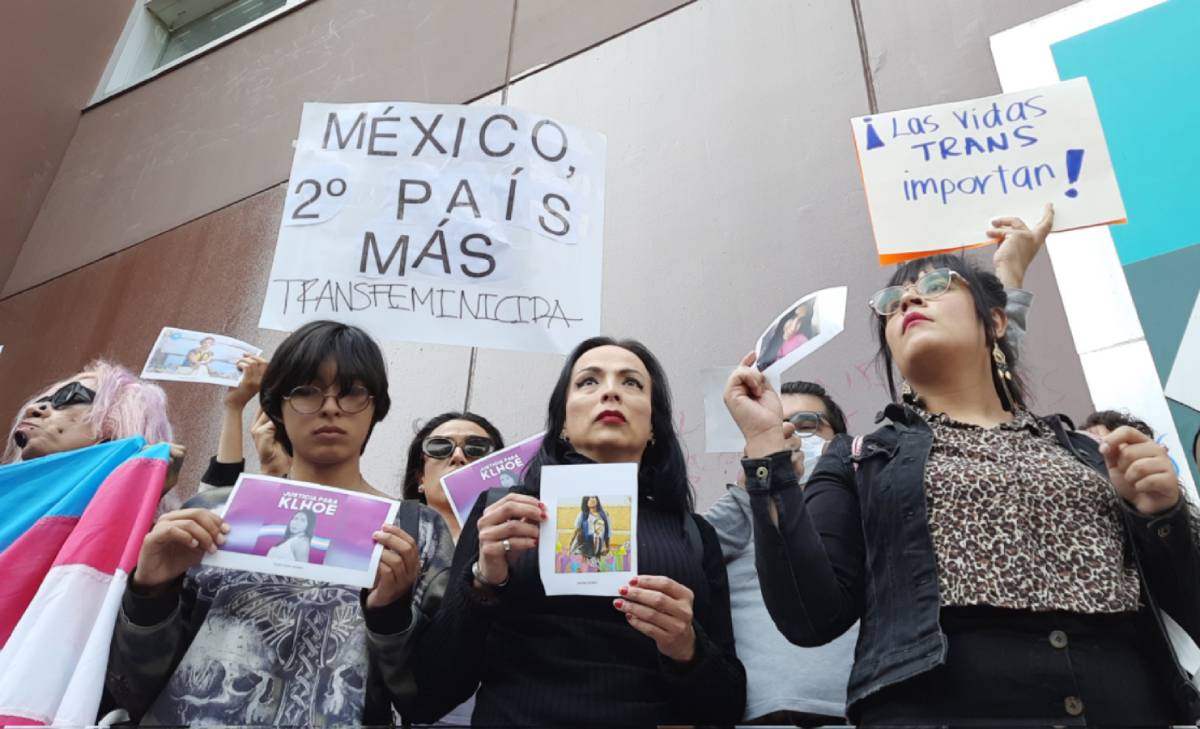
On Thursday, June 13th, at noon, the Criminal Court of Río Gallegos will announce its verdict in the transfemicide case of Marcela Chocobar. The 26-year-old trans woman was last seen in September 2015, and to this day her body has not been found; only her skull has been recovered. Tonight, starting at 9:00 PM, there will be an artistic and cultural vigil in front of the courthouse where the trial has been taking place since May 21st. The Chocobar sisters and activists who fought hard to ensure the trial proceeded and that the crime was recognized as a transfemicide—a hate crime based on gender identity—are also expected to attend. The prosecution and the plaintiffs have requested life sentences for the accused, Ángel Azzolini and Oscar Biott.
[READ ALSO: Chocobar: crime is being tried as transfemicide and a witness said she was dismembered]
“The closing arguments were a horrible day. The defense claimed my sister had gotten up and walked away, that they hadn't left her lying there. That other people grabbed her and killed her. Things that made no sense. And they emphasized that her body is missing. That the case is based solely on hearsay and testimony. For all these years, the justice system has turned its back on us. We were always very vigilant in trying to find legal recourse. We were able to change the charges, and that gave us some hope. The defense said it was just social pressure because so many organizations were present. When they gave the microphone to Biott, I didn't finish hearing what he said because my sister started crying and yelling at him. He said he was very sorry for us, that he also hopes the trial will be clarified,” Judith Chocobar, Marcela's sister and a driving force behind the case along with her other sisters, told Presentes.
At the second hearing, a “repentant” witness testified that the defendants Azzolini and Biott had dismembered the young woman. At the fourth hearing, the forensic expert confirmed this, stating that “a professional” had skinned and dismembered her.
[READ ALSO: Chocobar trial: forensic expert confirmed that the young trans woman was dismembered]
“We believe there is sufficient evidence to convict the defendants. That is what the organizations expect. It has been proven that this is a hate crime, and the change in the charge to transfemicide, as soon as the trial began, indicates that there is enough proof of this,” Romina McNamara, deputy secretary of the CTA and a member of the Women's Roundtable, told Presentes. This organization in Río Gallegos brings together diverse groups: neighborhood, social, labor, and pastoral organizations.
The final moments
On September 6, 2015, at 6:30 a.m., security cameras recorded her getting into a red Renault 9. When Marcela didn't return, her sisters filed a missing person report, but it took 48 hours for them to file a formal complaint. Eight days later, on the morning of Monday, September 14, 2015, skeletal remains and other evidence indicating that Marcela was dead were found. Fifteen days passed before the forensic laboratory confirmed on September 29 that the remains belonged to the young woman. That same day, three men were arrested while driving a car matching the description of the one recorded by the cameras.
From that moment on, her family and activists from feminist groups in Río Gallegos began to mobilize throughout the city demanding justice. At first, the neighbors looked at them with suspicion, but then they echoed the demands: the crime challenged the entire city.
[READ ALSO: Three years after the transvesticide of Marcela Chocobar: threats and impunity denounced]
“Now I have mixed feelings: because it’s finally putting an end to something we’ve been waiting for for so long. All the times they shut the door on us. The province is very backward, and we paved the way with ideas from other provinces. Diana Sacayán’s trial was very important. I want to be hopeful, but I’m a bit clouded. My sisters have faith. Everything indicates that there will be a good verdict. The city is very attentive. When we went out to look for my sister or block the street, we didn’t have anyone’s support. Only the human rights organizations. Now the neighbors are also supporting us. They tell us they don’t want the accused free. They tell us: you never gave up searching,” added Judith Chocobar.
We are present
We are committed to journalism that delves into the territories and conducts thorough investigations, combined with new technologies and narrative formats. We want the protagonists, their stories, and their struggles to be present.
SUPPORT US

FOLLOW US
Related notes
We are present
This and other stories are not usually on the media agenda. Together we can bring them to light.