

Police commissioner accused of leading a trafficking ring in Camino de Cintura to stand trial
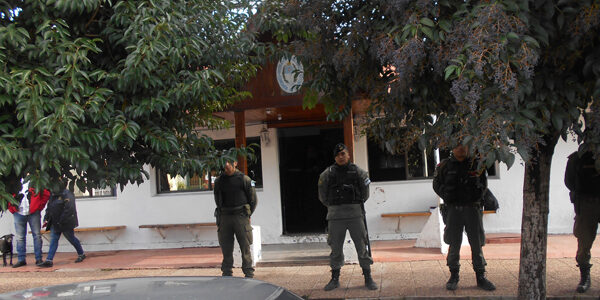
Héctor Mario Coquean, head of Police Station No. 4 in Lomas de Zamora until 2017, is accused of leading a gang that sexually exploited cisgender, transvestite, and transgender women in situations of structural vulnerability along Provincial Route No. 4.

Share

Héctor Mario Coquean, head of Police Station No. 4 in Lomas de Zamora until 2017, is accused of leading a gang that sexually exploited cisgender, transvestite, and transgender women in situations of structural vulnerability along Provincial Route No. 4.
By Ana Inés Cabral
Commissioner Héctor Mario Coquean, accused of leading a sex trafficking ring that victimized cis, trans and transvestite women in Camino de Cintura, will go to trial at the request of the head of Federal Prosecutor's Office No. 2 of Lomas de Zamora, Cecilia Incardona, and the Office of the Prosecutor for Trafficking and Exploitation of Persons (Protex), headed by Alejandra Mángano and Marcelo Colombo.
The Buenos Aires Provincial Police commissioner is accused of leading this "system," which allegedly involved the participation and collaboration of other officers from the same Buenos Aires police force: two other commissioners, two "street bosses," and subordinate personnel. All of them are being held in pretrial detention and have also been indicted on the same charges as Coquean. Furthermore, each of them has had their assets frozen up to 2 million pesos.
19 victims on Route 4
The scheme devised by Coquean and the other defendants involved locating victims along Provincial Route 4, an area under the jurisdiction of that police station, exercising extreme control over them, and charging them a daily fee of 250 to 400 pesos for their presence there, regardless of whether they actually went to the location. Sexual services were offered throughout the day, but more women were brought in at night. If a woman refused, a man nicknamed "Juan" threatened her with weapons and even resorted to beatings.
Throughout the investigation, at least 19 victims between the ages of 18 and 50 were identified, according to judicial sources who spoke to Presentes. All admitted to fearing possible reprisals and all reported having been subjected to intimidation tactics by the accused, who took advantage of the impunity afforded them by their positions of power.
[READ ALSO: Laly Heredia, a 36-year-old trans woman, murdered on Camino de Cintura]
Five of the identified victims are Peruvian, six are Paraguayan, and the rest are Argentinian. Eleven identified as cisgender women, and the rest as transgender women. Some of them described how they entered the prostitution circuit and detailed that they began to be sexually exploited before the age of 18. In their statements, all were able to contextualize their situation and describe the constant stigmatization and discrimination they experienced and continue to experience, which hindered their integration into the formal labor market.
Migrants due to gender violence
The foreign victims also recounted that they made the decision to leave their countries of origin in search of a better quality of life and greater job opportunities. Many of them reported that they were also victims of violence within their families and closest social networks. For the professionals of the Human Trafficking Victim Rescue Program of the Ministry of Justice and Human Rights, who participated in the raids and interviewed the victims, this context of displacement is what often leads victims to conceal their situation from their closest networks, thus further exacerbating their vulnerability, as they are left completely helpless should they need assistance.
[READ ALSO: Map of hate crimes in Argentina 2019]
The acts attributed to Coquean allegedly occurred at least from February 2015—when the investigation began—until March 2016, when he left his post as head of the 4th Police Station in Lomas de Zamora. However, there is evidence to suggest that the implemented system continued to operate under the commissioners who succeeded him until May 2017.
In February of this year, in the same Camino de Cintura area, Laly Heredia, a 36-year-old Peruvian trans woman, was murdered. Her body was found with a gunshot wound to her hip, and several 9mm shell casings, the caliber commonly used by police weapons, were found nearby. However, so far, the two cases do not appear to be related.
We are present
We are committed to journalism that delves into the territories and conducts thorough investigations, combined with new technologies and narrative formats. We want the protagonists, their stories, and their struggles to be present.
SUPPORT US

FOLLOW US
Related notes


We are present
This and other stories are not usually on the media agenda. Together we can bring them to light.