

Salta: Agreement to eliminate law that persecutes the trans community
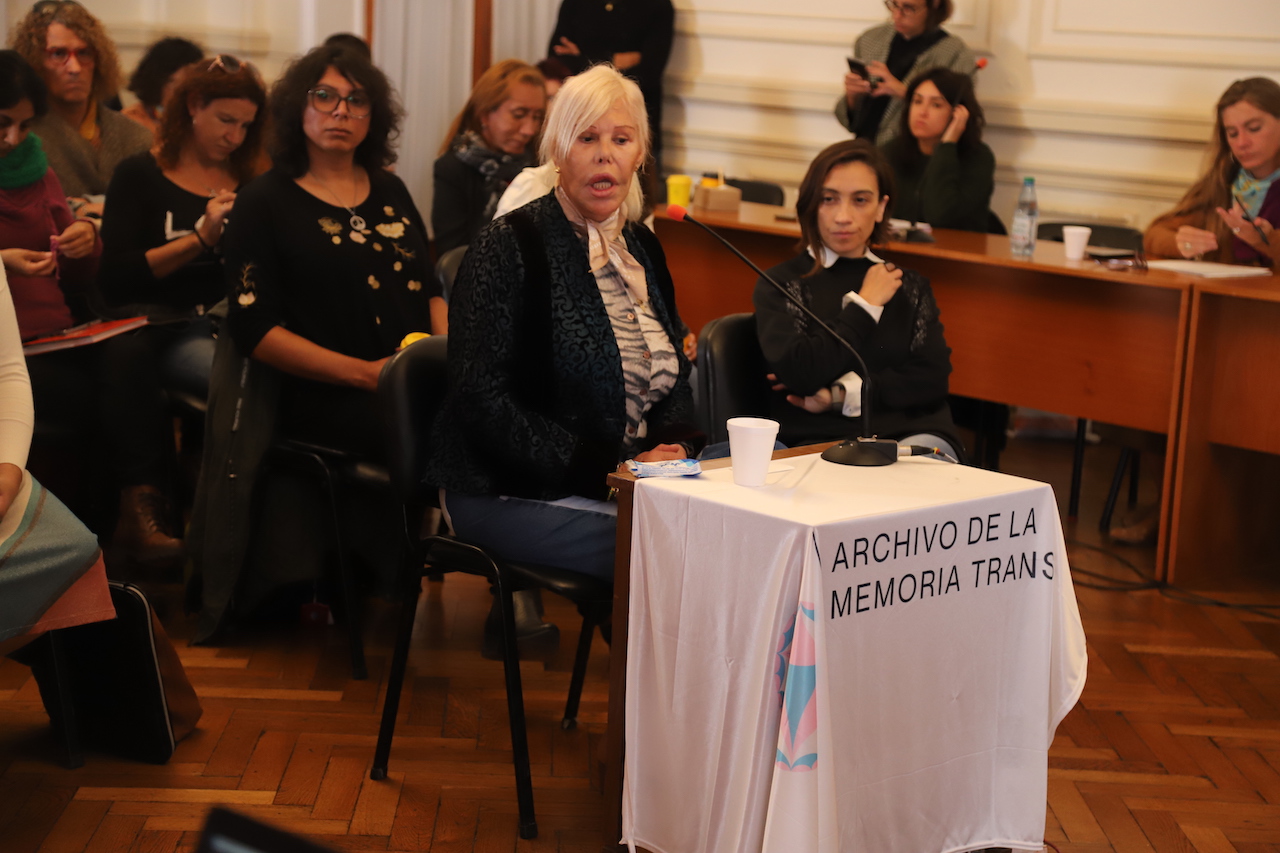
Representatives of the LGBTI community met with the Human Rights Commission of the Salta Chamber of Deputies. The Commission will push for the elimination of the controversial Article 114 of the Provincial Code of Misdemeanors in the coming days.

Share

By Elena Corvalán
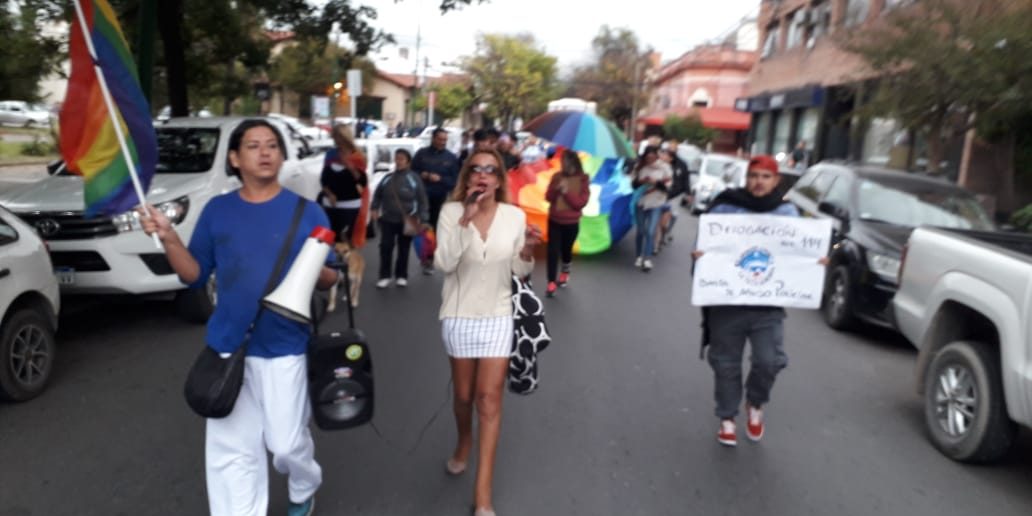
In the last two weeks, there have been at least three incidents of police violence against transgender people in Salta. Because of this, representatives of the LGBTI community met on Monday with the Human Rights Commission of the Chamber of Deputies. The Commission will push in the coming days for the elimination of the controversial Article 114 of the Provincial Code of Misdemeanors, which provides for up to 15 days of arrest, or a fine, for those who “offer or incite others in public to engage in sexual acts for money or any other form of compensation.”
For his part, the province's Minister of Security, Carlos Oliver, pledged to put an end to the repeated police abuses against the trans community in the province.
Provincial Deputy Héctor Chibán (UCR) informed Presentes that he had spoken with Minister Oliver, who "committed to dismantling the repressive system against the trans community." He also pledged to reassign two female police officers from the Second Police Station in this city, who have been accused of "hostile behavior" toward trans people.
[Salta: Police attacked a trans woman in the street
“Since last year, there have been more than 16 complaints of institutional violence, but no police officer has been arrested or charged for these attacks,” Nicole Erazo, a communicator and trans activist, told Presentes. She added that there are approximately 3,500 citations issued irregularly because they did not include all the necessary information to allow for the right to a defense.
She recalled that last week “more than five of our colleagues were violently detained” and that on April 24, a young trans woman walking near the Artisan Market in this city was attacked by a police officer who hit her with a baton or stick, causing head injuries.
“We demand the repeal of article 114, because it allows our rights to be violated simply because of our gender identity. After 8 p.m. we cannot go out; we shouldn't wait for another comrade to die at the hands of the police,” the activist stated.
Human rights violations
Representatives of trans organizations informed them that "they are subjected to serious human rights violations during the arrest process, and during detention."
“This is urgent, given that the health and physical integrity of citizens are at risk, so we must act as diligently as possible, and without prejudice to continuing to move forward on the other issues, the repeal of article 114 of the Contravention Code,” the legislator insisted in statements to Presentes.
The director of the Observatory of Violence against Women and member of the LGBTI collective, Pía Ceballos, recalled that this organization has been recommending the repeal of article 114 since 2017 and stated that they will insist on this measure.
[READ ALSO: #1M Map of the transvestite-trans job quota in Argentina]
Nicole Erazo told Presentes that they also requested that the identified aggressors "be taken off the streets" and be reassigned to police offices, something that Minister Oliver pledged to do immediately.
“We want to stop this once and for all—the rapes of my fellow trans women, the beatings, the insults, the degradation, the abuse they suffer. This is a witch hunt. It can’t go on. We can’t live like this. It’s horrible,” she emphasized. “This has been going on forever. Even during the dictatorship, there was police abuse of power. The State doesn’t seem to want us in the streets, but they also won’t grant us the trans job quota.” “They are trampling on our human rights,” she asserted.
 Political representation and work
 Political representation and work
 For her part, activist Mary Robles said, "We ask legislators to give us tools of representation, not repression."
In addition to the repeal of this law, LGBTI organizations have been demanding opportunities to enter the workforce. In this context, on May 1st, ATTTA Salta issued a statement reiterating this demand: “We demand that the Argentine State fully comply with and respect the Gender Identity Law No. 26,743, passed and enacted in 2012. We demand the implementation of the Trans Employment Quota,” they stated.
She also called on representatives in Congress to “guarantee trans people the full and equal exercise of our rights and freedoms, promoting respect for our dignity.” “We demand access to employment, both in the public and private sectors, so that sex work is not a social imposition and the only source of income. Without labor inclusion, trans people will remain below the poverty line.”
Representatives from the Association of Transvestites, Transsexuals, and Transgender People of Argentina (ATTTA); the Salta Transparency Group (GTS); Trans Women Argentina (MTA); Pía Ceballos, a member of the board of the Salta Observatory of Violence Against Women; Victoria Liendro, head of the Sexual Diversity area of the Undersecretariat of Gender Policies of the province; and members of the newly formed organization Self-Convened Trans Women, which brings together those suffering police repression, participated in the meeting with the Human Rights Commission. They were accompanied by activists from the Socialist Workers' Movement (MST) and representatives of the Campaign for the Right to Legal, Safe, and Free Abortion.
We are present
We are committed to journalism that delves into the territories and conducts thorough investigations, combined with new technologies and narrative formats. We want the protagonists, their stories, and their struggles to be present.
SUPPORT US

FOLLOW US
Related notes

We are present
This and other stories are not usually on the media agenda. Together we can bring them to light.