

First transgender retiree in Santa Fe: "Being a bank employee saved my life"
"Many of my friends are gone: either they were left behind on the ring road or they were killed. I survived, but not under the same circumstances."

Share

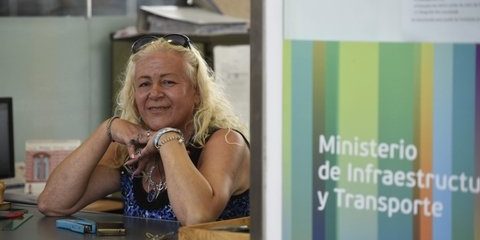
By LC Jorgelina Pineda is the first transgender retiree in the province of Santa Fe. She is 60 years old and worked for the provincial bank until it was privatized in the 1990s, at which point she became part of the staff of the Ministry of Transportation and Infrastructure. Jorgelina's transition began in 2004. Since 2017, she has had a National Identity Document (DNI) reflecting her self-perceived gender identity. “With the Gender Identity Law, women can retire at 60, and I took advantage of it. I started the process in 2018, and this year I began receiving my pension,” she tells Presentes. Jorgelina was born in Correa, 200 kilometers from the city of Santa Fe, into a conservative family. Her transition, she says, began gradually, so as “not to clash” with her mother. “I started getting my nails done, wearing earrings, doing things I wouldn't have dared to do when I worked at the bank.” Her career as a bank employee began during the dictatorship: “I was arrested several times. They'd drive by in the 'little blue room'—that's what they called the police van—and they'd load you up, but I got away with my bank employee ID. Back then, I wasn't cross-dressing, but I was gay,” she says. Jorgelina considers herself a survivor in a country where the average age of trans and gender-diverse people is under 35. “ Many of my friends are gone, or they died on the Circunvalación highway, or they were killed . I survived, but not under the same circumstances as them. I didn't work as a prostitute, but many of my friends didn't have many options. Today I can say that being a bank employee saved me . I criticized my father for following all the rules—like working, getting married, and studying—even though I didn't get married, I'm grateful to him for that.” “Having a job gave me a different way of life than the rest of my friends ,” she says.
For the transvestite-trans job quota
Jorgelina is convinced that the trans and travesti employment quota law is fundamental. “Now the path is a little easier for trans women. I don't think you have to suffer to be who you are. I was the black sheep of the town for being gay, even though I had a happy childhood. But when I started to realize what I wanted for my life, I began to feel sad and disoriented. I think that now young people can express what they want and don't want in a different way. There are trans children,” she says. Her career in the government, she explains, focused on helping and solving people's problems. “As a retiree, I would like to continue doing that, from a different perspective. I would like to work on disability issues or start studying for a degree. I think that in life you have to give back. I have some seeds to sow, but I think it's time to reap the rewards,” says Jorgelina. Last year in Salta, A man was accused of changing his gender identity to retire earlyEsteban Paulón, Undersecretary of Diversity Policies for Santa Fe, says that in Jorgelina's case, if she had waited until retirement to legally change her gender identity, she could have done so earlier, at age 57, due to the special pension contribution system. "However, she waited three years because she wanted it to reflect her self-perceived gender identity," Paulón said. "We hope that many more trans people will retire. And we hope that when the Transgender Employment Quota Law is approved this year, many more people will be able to enter the provincial government."We are present
We are committed to journalism that delves into the territories and conducts thorough investigations, combined with new technologies and narrative formats. We want the protagonists, their stories, and their struggles to be present.
SUPPORT US

FOLLOW US
Related notes



We are present
This and other stories are not usually on the media agenda. Together we can bring them to light.