

Chile has accumulated a record number of violent incidents against LGBT people in the last year.
In 2018, 698 cases of violence and abuse based on sexual orientation or gender identity were reported in Chile. This is the highest figure recorded in the last 17 years.

Share

Photos: Josean Rivera and Movilh
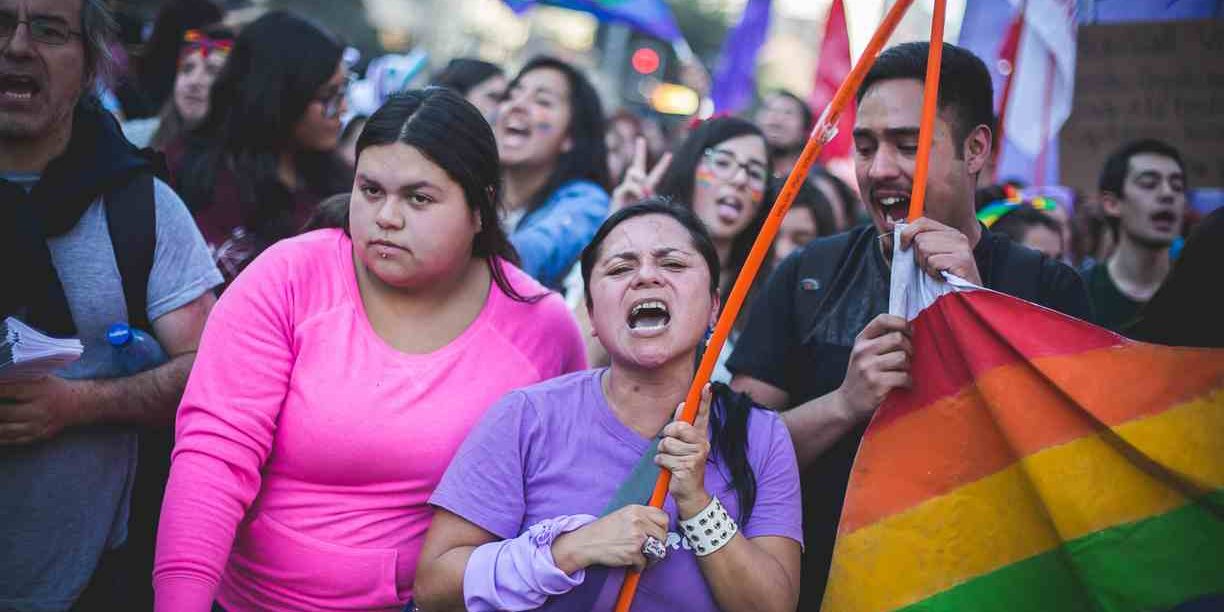
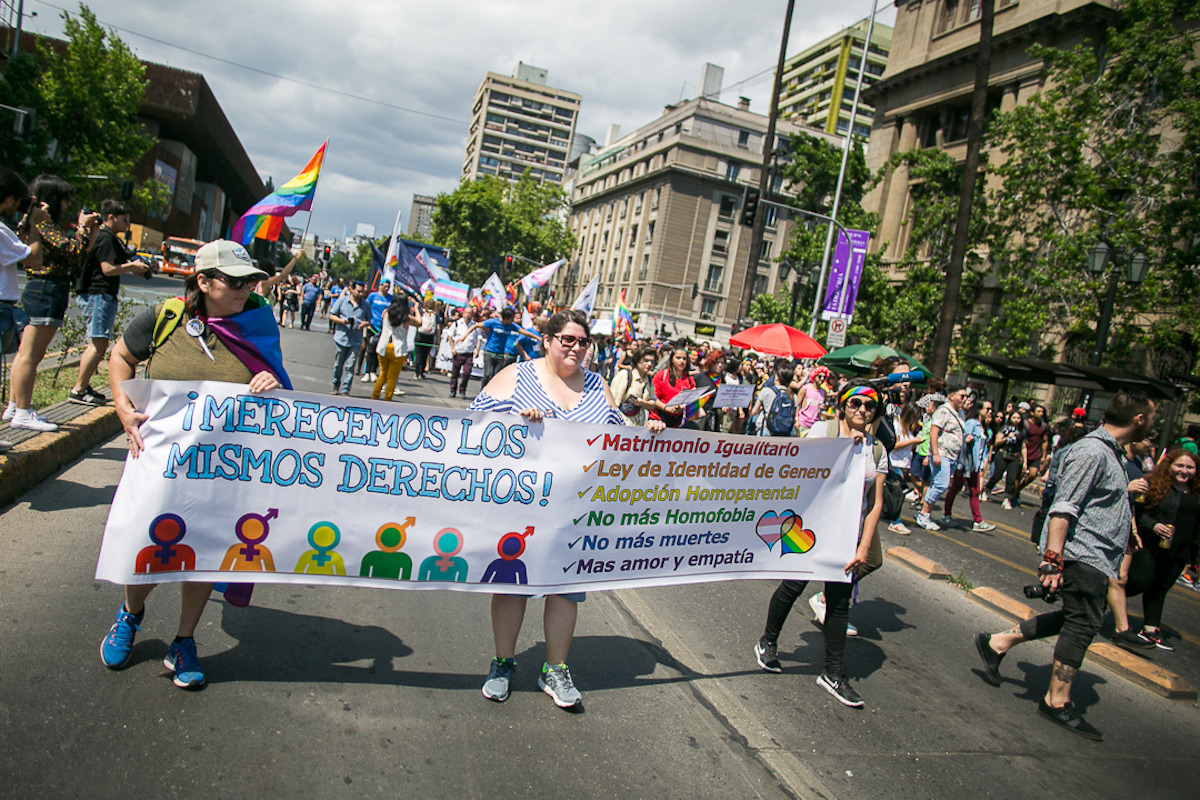
In 2018, 698 cases of violence and abuse based on sexual orientation or gender identity were reported in Chile. Compared to 2017, this represents a 44% increase. It is the highest figure recorded in the last 17 years and accounts for 22% of the 3,137 total violations registered during that period. This information comes from the 17th Annual Report on Human Rights of Sexual and Gender Diversity, prepared by the Movement for Homosexual Integration and Liberation (Movilh) .
“We are very concerned about the results of this report. Although there was progress for sexual diversity and for trans people in particular, they were nevertheless the main victims of discrimination,” Oscar Rementería, spokesperson for Movilh, told Presentes. He also highlighted the level of exposure of ultraconservative groups that spoke out against diversity in 2018.
Luis Lillo participated in the presentation of the report, which took place yesterday at the Movilh headquarters .
 The report's figures record 3 murders of LGBT people ; 58 physical or verbal assaults perpetrated by civilians unknown to the victims; 16 cases of police abuse; 28 incidents of workplace discrimination; 37 episodes of educational exclusion; 102 homo/transphobic mobilizations or campaigns; 271 situations of institutional marginalization; 17 denials of rights in public or private spaces; 72 acts of community violence (family members, neighbors, friends, acquaintances); 92 hate speech statements; and 2 abuses in the field of culture, media, or entertainment.
The trans population experiences the highest number of abuses
For the third time in 17 years, the trans population accumulated the highest number of hit-and-runs with 39% of the total, corresponding to 273 cases, the highest known to date.
[READ ALSO: 2018: Impunity in attacks against the LGBTI community in Chile]
“ The increase is intertwined with paradoxes. On the one hand, it is explained by the progress of the Gender Identity Law and the triumph of Fantastic Woman at the Oscars , which provoked the anger and rejection of anti-rights groups and individuals who continually mobilized to boycott the law or, quite simply, to offend the actress Daniela Vega. To illustrate, of all the discrimination cases in 2018, 15 were directed against Vega, and there were 218 mobilizations throughout the country to boycott the law,” the report states.
The situation of lesbians
The lesbian population, meanwhile, accounted for 13% of the total cases and the gay population 15%, while 33% of the incidents affected the LGBTI population as a whole.
Reports of crimes or attacks against trans people rose by 217%, against lesbians by 34%, against gay people by 6.3%, while against the LGBTI population as a whole they fell by 1.2%.
Cases of discrimination and absence of the State
Police beatings, torture, and robberies were the category of discrimination where abuses increased the most, with 1500% more than in 2017. They are followed by marginalization or attempts at institutional exclusion (+613%), abuses in the educational system (+85%), murders (+50%), denial of rights in public or private spaces (+54%), mobilizations or campaigns against LGBTI rights (+32%), and physical or verbal aggressions perpetrated by civilians (+3.6%).
[READ ALSO: The challenges of the gender identity law in Chile]
The report indicates that the largest increases occurred in state-run areas (police, public institutions, education). It also points out that the state became lax in the face of abuses committed within its departments and by its officials: “It was completely indifferent to the abuses that occurred in other areas, to such an extent that there was no condemnation of any abuse or torture by police officers or gendarmes, nor any assistance provided to the victims,” it states.
Who are the perpetrators of the hit-and-runs?
A total of 58 institutions and 404 people were responsible for the 694 cases of homophobia and transphobia that occurred in 2018.
“These are the same ideological sectors as always, which, although they did not increase in quantitative terms, did multiply their actions in 2018, particularly due to the debates surrounding the gender identity law, equal marriage and same-sex adoption,” the report explains.
The big difference with previous years "lies in the fact that these groups gained influence and power both in the National Congress; with the self-proclaimed Evangelical Caucus; and in the Government, where representatives of this same religion assumed positions in key areas, such as Education," the report warns.
Breeding ground for the 2019 attacks
The report emphasizes that there was also no “public reproach” from the Political Power against the murders or physical assaults suffered by people, which implies a setback and forgetting of everything learned after the death of Daniel Zamudio in 2012, giving a negative signal of impunity in favor of the perpetrators and enhancing secondary victimization, which, whether intended or not, in turn reinforces and indirectly validates the occurrence of violence in areas outside the state apparatus.
[READ ALSO: #CHILE 2017, year of fury against LGBTI: violence increased by more than 45%]
Óscar Rementería states that “without a doubt, this context of 2018 was the breeding ground for the continuous attacks suffered during the first three months of 2019 against the LGBTI population. The difference is that only in the last month did the Government begin to publicly condemn the abuses and help LGBTI movements to confront them.”
2018: The year Chile achieved the Gender Identity Law
“2018 will go down in history as the year when the human rights of trans people were most discussed and debated in the public and private spheres, with the issue of gender identity achieving an impact that transcended borders, within the framework of an unprecedented process of visibility and conquest of rights,” the report states.
The passage of the Gender Identity Law and the World Health Organization's (WHO) decision to remove transsexuality from its list of mental disorders are at the forefront of these changes. Added to this are two Supreme Court rulings that allowed transgender people with children and previous marriages to legally change their name and gender without surgery, and the implementation of a gender identity program at the Sótero del Río Hospital—all of which contributed to a series of advances in the field of education.
Stagnation, setbacks and non-compliance
The report warns that “after a decade of systematic progress in public policies undertaken by the Executive Branch to promote the human rights of LGBTI people, from March 2018 onwards there were severe setbacks and regressions.”
“On the one hand, no new public policies were implemented, and on the other, past policies were not monitored to ensure their continuity and proper functioning. There was only very specific support from some ministries or services, but this did not constitute a formalized public policy ,” the report explains.
“The approval of the Gender Identity Law marked a milestone for the human rights of the trans population over 14 years of age and single, to which were added the efforts of a small number of parliamentarians to advance on key issues,” such as same-sex adoption, the report recalls.
However, despite a majority expressing support, the National Congress did not give any impetus to the Equal Marriage Law and continued the trend of approving "half-baked regulations," the report denounces.
There is a “habit of passing half-baked laws, as the Gender Identity Law excluded married people and children under 14, based solely on prejudice and ignorance and overlooking the human rights of children and adolescents, an extreme, unjustifiable and reprehensible indifference that repeats what happened in the past: the anti-discrimination law and the Civil Union Agreement, approved in previous years, also present gaps, problems and inconsistencies, only because the Political Power agreed to give in to ideologies that see LGBTI people as second-class citizens,” the study indicates.
The judiciary remains the most progressive branch.
“In 2018, the Judiciary finally consolidated itself as the most progressive in the State in matters of LGBTI human rights, even though the process is marked by contradictions, since the courts are unable to contribute to resolving through rulings the inconsistencies with the Constitution and with international treaties that include the prohibition of equal marriage and the lack of legal recognition of two fathers or two mothers,” the report states.
#StopTheHate
“We hope that in 2019 there will be a change in attitude from the authorities so that they condemn hate speech and approve the modifications to the anti-discrimination law,” the Movilh spokesperson told Presentes.
We are present
We are committed to journalism that delves into the territories and conducts thorough investigations, combined with new technologies and narrative formats. We want the protagonists, their stories, and their struggles to be present.
SUPPORT US

FOLLOW US
Related notes

We are present
This and other stories are not usually on the media agenda. Together we can bring them to light.