

We need a March 8th with rainbow justice
At Presentes, we spoke with three LGBT activists to find out why they are marching on the 8th, and this is what they told us:

Share

By Vero Ferrari, from Lima
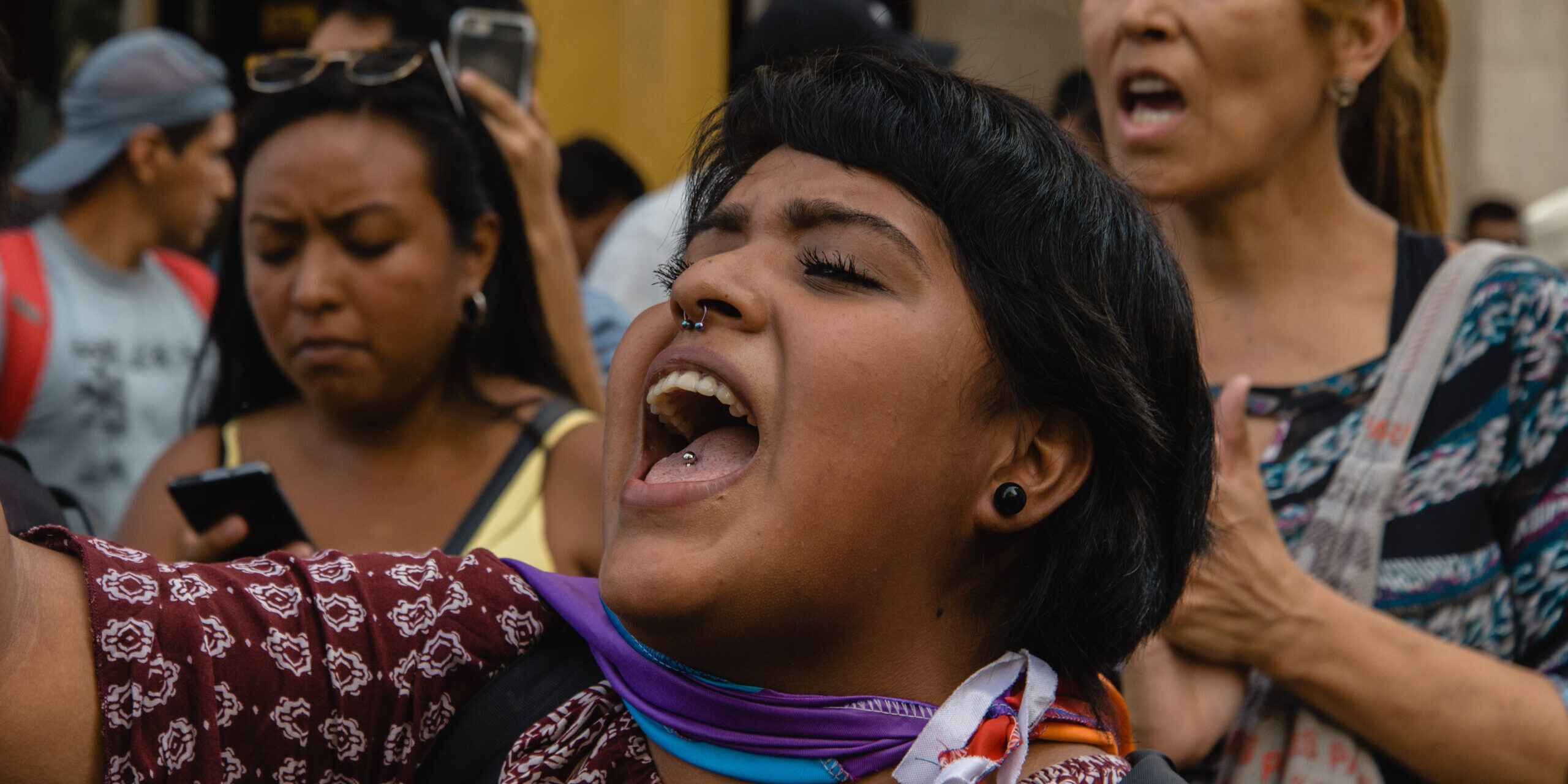
Photo: Esteban Marchand
In Peru, there are second-class citizens who can be easily identified. These are the citizens who constantly have to wrest rights from the State, who cannot rest for a single day because if they do, Congress will try to take away what little they have achieved. They are the ones who cannot give up, not on their day, not on any day, because they know that if they are absent, the weight of their absence will take its toll, and that in the face of the depoliticization, neutralization, and suppression of their demands, they must mount a persistent protest.
In this context, March 8, International Women's Day, finds these citizens facing 31 femicides and two hate crimes, a nearly two-year-long legal battle against the gender perspective in education to remove it from the national curriculum, and the advance of fundamentalisms that once again deny the humanity of women and LGBTQ+ people, also denying the everyday violence we experience.
At Presentes, we spoke with three LGBT activists to find out why they are marching on the 8th, and this is what they told us:
Miluzka Luzquiños , a trans activist, was recently recognized by the Ministry of Justice as a human rights defender and director of the TRANS organization.
“This March 8th, personally, I am striking and marching for the right to be happy, a right that has been historically denied to us because we don't have a gender identity law that recognizes us as trans people in Peru. I am also marching for access to employment, for access to comprehensive healthcare. We already have a technical standard for hormone therapy for trans women, which is 50% implemented. The State has purchased the hormones and has them ready for distribution, but we are concerned because it hasn't trained endocrinologists to support the feminization process. At the same time, we can't even talk about primary healthcare for trans women who live below the poverty line. It's important to highlight the issue of poverty because some are not born poor; rather, poverty is imposed upon them by their families when they affirm their gender identity or begin their transition. Here we are talking about two kinds of poverty: the innate poverty of those born into poverty who are forced into homelessness, sex work, and violence; and the poverty of those who are not born poor, who transition at 17, 26, or even later in life.” 50 years with a family. As an organization, we march to strengthen leadership because we believe that trans women need to strengthen their base, they need to hear more about feminism, they need to talk about sisterhood, they need to recognize new leadership.”
María Ysabel Cedano , lesbian activist, lawyer and director of DEMUS-Study for the Defense of Women.
“The first thing I believe is that there must be many lesbian women, but we are condemned to live absolutely in the closet because of the ferocity with which we could be attacked if we were visible. I see this in many Indigenous, Amazonian, or Andean sisters, in many defenders of their bodies and territories who would never dare to express their sexual orientation, who could never say they are lesbians, who would prefer to fulfill the mandates of marriage and motherhood, to get married and have children. How can you live a full life if you have to hide from those who are supposed to be your comrades in the struggle? And now that 'Don't Mess With My Children' is doing grassroots work, it gets worse, because with the 'gender ideology' campaign, people believe that feminism makes people lesbian, that it makes them homosexual, that it attacks the family, and above all, the idea of God. They think that questioning that sexuality, reproduction, and life in general doesn't have to be as religion says is like denying God. But it's not like that. God is, for Many, in places where poverty is so great, find it gives them a sense of hope or comfort. I'm thinking of the women in the poor neighborhoods, in working-class areas.
This March 8th, as a lesbian, I march so that the Judiciary declares the lawsuit against the gender perspective unfounded, guaranteeing my human right to education with this perspective. Because it is the State's duty to break with centuries of education that fosters the belief that sexuality is governed by God, religion, or the morality of some. I march so that gender equality policies can include not only gender-focused education as a lever for change, but also so that the law is aligned with the Inter-American Court's rulings on relationships and gender identity. I also march so that there are truly specialized services for LGBTQ+ people, because the Women's Emergency Centers are not doing a good job. Just a few days ago, I learned of two attacks against lesbians, and unfortunately, they had nowhere to go. When they went to the Women's Emergency Centers, they were told they could only receive guidance, but that they needed psychological support. Therefore, we need State personnel to be trained to properly understand these cases, so that impunity is not perpetuated, and the State has a responsibility in this.
Jheinser Pacaya , a gay activist and coordinator of the Feminist Diversity Committee of the Nuevo Perú political party, said,
“This March 8th, more than marching, I will accompany the feminist women because I believe that a first step in joining the fight against violence against women, against femicide, against patriarchy, is recognizing my privileges. That is why I will accompany the lesbians who have historically been subjected to corrective rape, and all the trans women who will not be able to be there because they are in a vulnerable state, since the State denies them identity, education, and work. As a gay man, beyond being a queer person, I am still a cisgender man, and it is in this capacity as a man that I invite all my comrades who identify with this struggle to first consider their privileges. Let us not overshadow or try to lead any women's struggle; let us accompany them.”
We are present
We are committed to journalism that delves into the territories and conducts thorough investigations, combined with new technologies and narrative formats. We want the protagonists, their stories, and their struggles to be present.
SUPPORT US

FOLLOW US
Related notes


We are present
This and other stories are not usually on the media agenda. Together we can bring them to light.