

La comadre Quirquiña, a drag cholita at carnival
She arrived in Argentina from Bolivia and in Villa Soldati she became known as Quirquiña, the godmother.

Share

By Carla Castelo
Photos: Ariel Gutraich
He sometimes feels like a woman but identifies as a gay transvestite. He arrived from Bolivia nine years ago as a shy young man and became a famous chola in the community, hosting radio programs and shows. They call him Comadre Quirquiña.

One carnival day, in the darkness of her room, Quirquiña, the godmother, hugs her chola skirts and gives thanks for having found happiness. These are the embroidered and shimmering skirts worn during the Bolivian community's festivities, when the cholas dress in lace and embroidered blouses and the typical bowler hats of La Paz, always adorned with jewelry.

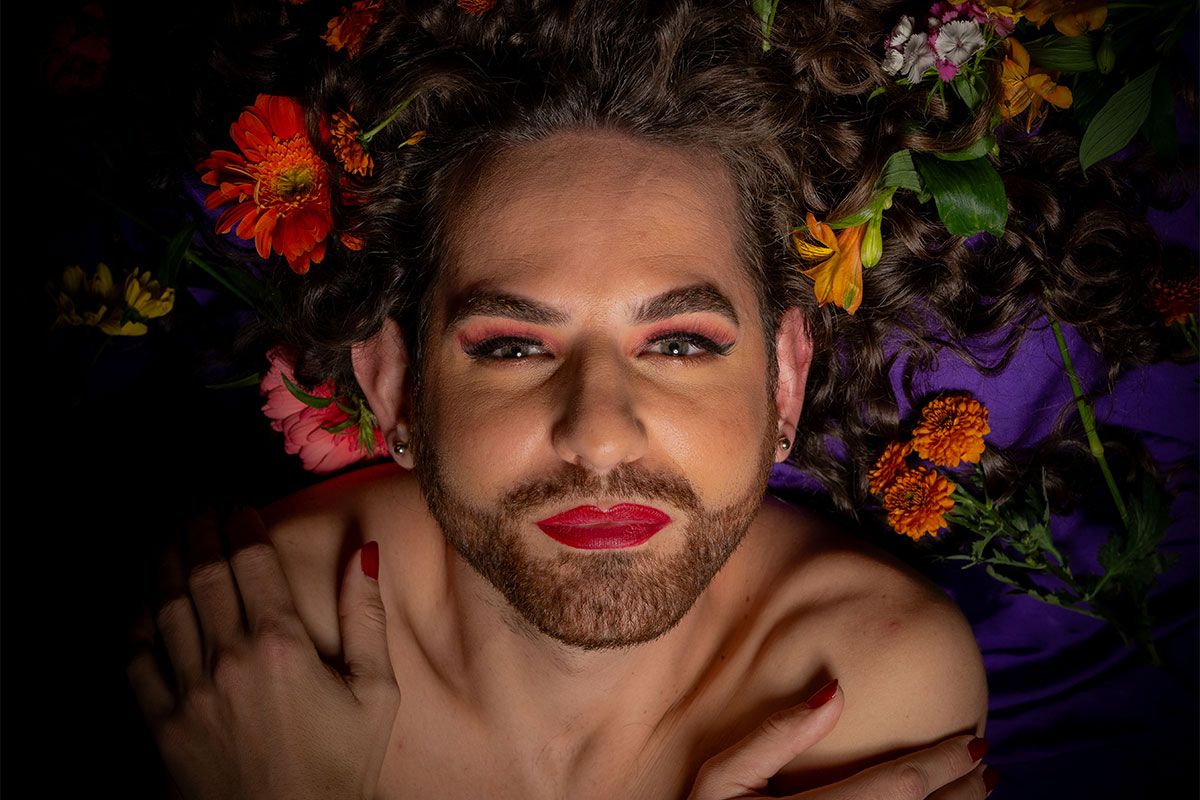
Quirquiña, her makeup smudged from dancing and drinking at traditional festivals, reclines in her colorful skirts. She is grateful to be authentic. She is grateful to be famous. She is grateful to be accepted by her community.
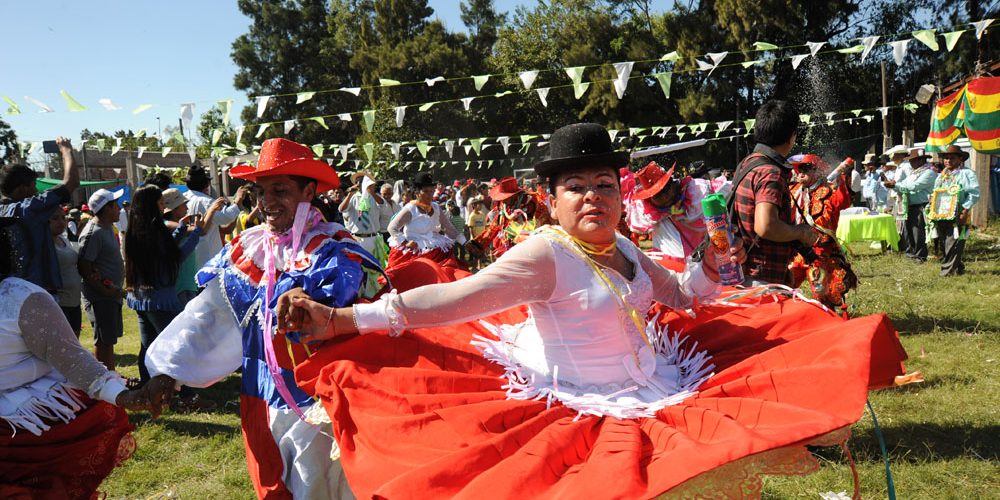
If you saw her at the Villa Soldati carnivals, going back and forth among the older cholitas and those macho Bolivian men dressed in their finest clothes, with ornate trousers and shiny hats. Among them, Quinquiña is just one of them. Another godmother. Another of the cholitas who come and go in their finery, watching over the children and serving beer, one after another, in plastic cups, offering and blessing the earth with a little of the drink. Always. Both sides. The blessed challa. The offering to Pachamama.

Quirquiña speaks of “the shame of being a faggot.” He says that the offering made by a homosexual brings good luck. “Because a faggot is both man and woman,” he explains. And one is struck by the contradiction: being discriminated against and venerated.
“I arrived in 2011. I started out as a little guy with short hair. I was a sewing assistant, and while I was saving up to study at nursing school… When I got in, that's when they truly gave me the opportunity to be free. Because you understand that when you're gay, the mannerisms are noticeable, there are things that give you away, and my classmates suspected it but didn't say anything to me. The nice thing about Argentinians is that they treat you as they see you. Or as Mirtha Legrand says, ' You're treated as you're seen '”

Quirquiña opens her tiny eyes, made up with purple eyeshadow and black eyeliner. “I gradually freed myself, I began to transform, and I fell into the media through a singing group. I stayed, and Quirquiña became more and more well-known, much more popular, through humor.”
She smiles. Quirquiña always smiles and speaks about herself in the third person. As if Quirquiña were a character played by that man who works as a nurse. “I go in uniform. I go there with a bare face, no worries,” she says.

But she wants to be Quirquiña all the time. That's what they nicknamed her the first time she visited the radio station where she has her show, Radio Líder. "Because of the spice, quirquiña, which is spicy," she laughs.
Quirquiña is Bolivian, and she has the delicate mannerisms of the cholitas. This is evident in the colorful carnival they hold every year on a humble property, where a jury of experts evaluates the dance troupes. The cholitas attend to the children, to their men, and to the frequent visitors. With their enormous skirts, their tight stockings, their gold jewelry, the cholitas are submissive. And they dance, showing off their lace. And in the carnival, they are venerated by the men as their own.

Quirquiña is just another face in that carnival, where she dances gracefully in her skirt, with a touch of mischief. She's one of those preparing the picnic for the Rompecorazones troupe. And when they greet her from the stage, she responds with a wave and a delicate flick of her hand. And that sweet laugh everyone expects from a lady.
“I feel like a woman. Every time my godparents come over, I feel like a woman, because they call me godmother Quirquiña, and they make me feel supported. It feels so good when people treat you like that, you feel fulfilled. Quirquiña is Quirquiña.” She also embraces some of the issues that come with being a chola. And she wins over her community with humor.

“This is Quirquiña. This is a wave. We do voices, we create characters, because I do the voice of Consuelo, who is a posh transvestite, the daughter of Bolivians, born here. 'My parents are Bolivian, I'm not.' It reflects the children of Bolivians, how they are acting. And well, Quirquiña is a chola in a pollera who came from La Paz, and she assumes the role of a woman in a pollera, even the behavior; she is flirtatious, mischievous, lively.”

You can tell they love her, they celebrate her. There's a wiser sense of integrity in the Bolivian community. Although homosexuality is still a taboo subject. Quirquiña simply blends in. Sometimes, she even plays at being a boy, because she enjoys it.
“What I do is drag. Today I'm dressed as a cholita, and tomorrow there's a game and I'm going out with the guys, you know how we do it.”

But her laugh is more feminine than Rita Hayworth's. And her movements, modest. “That's the point. Quirquiña is like that. She's achieved a lot in the community. I don't know what they said the other day, they insulted Quirquiña, and the people themselves—poor whoever insulted her—the people themselves say there are men and women and Quirqui is right there. They've become familiar with her.”

Quirquiña is 30 years old. “And I long for a normal family, a house, children, for my mother to come.” She says she has suffered for love. “When Quirquiña has to love, she loves. She lives. And if she can grab a bite at a party, all the better.”
Like a butterfly, she glides through the crowd. She offers a drink and taps the beer bottle open. She moves with such lightness that it seems as if she's always dancing. And she wears those incredibly expensive skirts worth thousands and thousands of pesos. "Every time my sister comes, she looks at the skirts and tells me she wants them as an inheritance," she says.

Quirquiña's family accepted her because she had created a persona for herself. She hosts shows, films commercials in Bolivia, and makes public appearances. She's already secured sponsorships. She's become a prominent figure in the Bolivian community.

“I have fought hard to get here, it has been difficult, and when we come to enjoy it you feel… you are already on top, I don’t know how I got here, but I got here.”
 A shy, gay man arrived in Argentina, where he became known as Quirquiña. In this way, he won over a community that had been so elusive, so unattainable, when he still lived in his own country.
 She defends the traditions of Bolivian culture with heartfelt love. A man who has ceased to be, a woman born amidst the most deeply rooted rites. And as she says with a tender gaze, when she sees the youngest children dressed in traditional finery, she always thinks: "We're going to be here a long time."
Share
We are present
We are committed to journalism that delves into the territories and conducts thorough investigations, combined with new technologies and narrative formats. We want the protagonists, their stories, and their struggles to be present.
SUPPORT US

FOLLOW US
Related notes
We are present
This and other stories are not usually on the media agenda. Together we can bring them to light.