

Being LGBT and traveling in the Central American migrant caravan
On February 12, migrants from the caravan that departed from Honduras in January arrived in Mexico City.

Share

By Milena Pafundi, from Mexico City
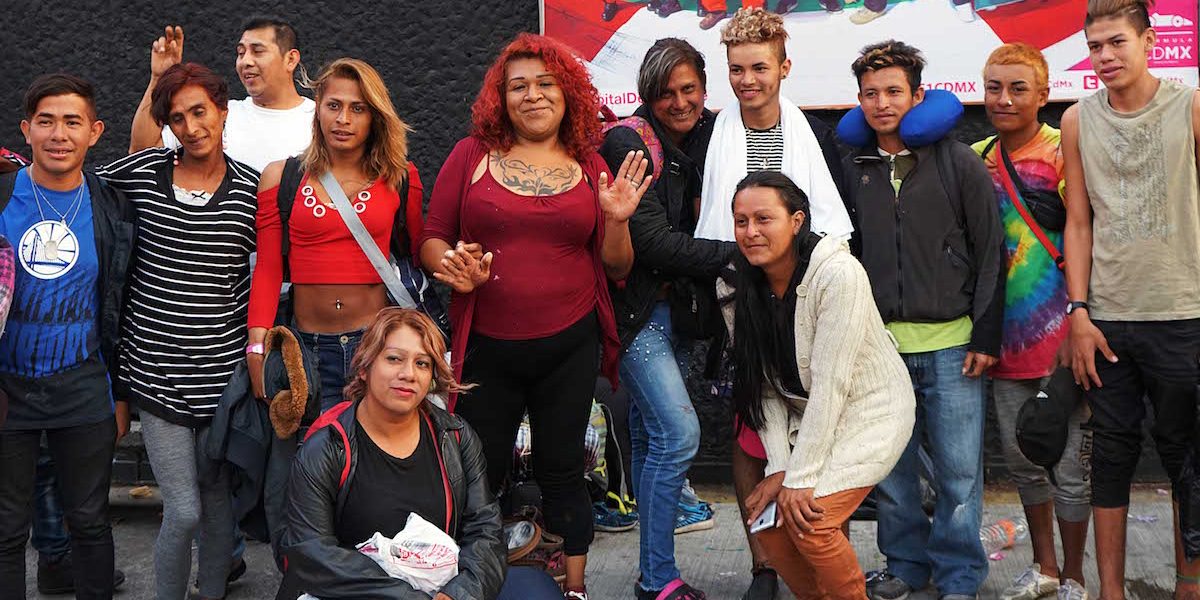
On February 12, Central American migrants from the caravan that departed from Honduras in January arrived in Mexico City. They are fleeing poverty and violence in their countries. They risk their lives to reach the U.S. border, seeking to improve their lives or, in the case of LGBTQ+ individuals, simply to survive, although discrimination is also a constant presence along the migratory journey. They stayed for four days at the Jesús Martínez "Palillo" stadium, and on Saturday the 16th, police repression resulted in several migrants being beaten and two being arrested.
[READ ALSO: The journey of Julissa, a Salvadoran trans woman who left in the migrant caravan ]
The 28 LGBT+ people in the caravan formed a community and were left homeless due to discrimination inside the stadium. Thanks to activists and organizations like the Mexican Network of Trans Youth and the Center for Support of Trans Identities, the LGBT+ community was able to spend the night at the feminist cultural space "Punto Gozadera."
At six o'clock the next morning, they met up with the rest of the caravan to continue their journey to the State of Guanajuato.
A young man obtained a humanitarian visa thanks to the efforts of UNHCR and COMAR. He is being housed by transgender women who run a hair salon in Iztapalapa, in northern Mexico City.
[READ ALSO: LGBTI+ migrants in the caravans from Honduras to the United States]
"I'm a gay man fleeing my country because of discrimination, death threats, and rejection by the authorities. I'm here seeking support so I can live my life as a gay man."

"I'm migrating so I can help my mom and my family, because my house is falling apart."

"Where I live there are gangs and they wanted to recruit me. And I didn't want to."
"I started the journey alone. I was going to leave my country on foot, but I came across the caravan, and the caravan found me. My dream is to tattoo; it's a big goal I have. The art in the United States is excellent, and I would like to continue learning."

"I don't have a job, I don't have anyone to support me and help me migrate from my country, so the caravan gave me the opportunity to do it as a group, to be with other people. I want to follow my dream of being who I am, what I like, a trans girl. I don't want them to impose conditions on me, to force me to dress like a man at work."

"It's very dangerous for a trans girl to be in El Salvador. Gangs kill us."

"We've walked, we've traveled in trailers. We've endured the cold. We've risked our lives. And all to try to find our happiness. We're heading to Tijuana so we can reach our destination in the United States."

[READ ALSO: Hate crimes in El Salvador: two trans women murdered in one week]


[READ ALSO: This is how trans migrants dream and die on the US border]


 to
to


We are present
We are committed to journalism that delves into the territories and conducts thorough investigations, combined with new technologies and narrative formats. We want the protagonists, their stories, and their struggles to be present.
SUPPORT US

FOLLOW US
Related notes
We are present
This and other stories are not usually on the media agenda. Together we can bring them to light.