

Beating of writer Juan Solá: “We’re going to make you shit yourself for being a faggot”
Security employees at a bowling alley in Mendoza locked him in a room for an hour and beat him.

Share

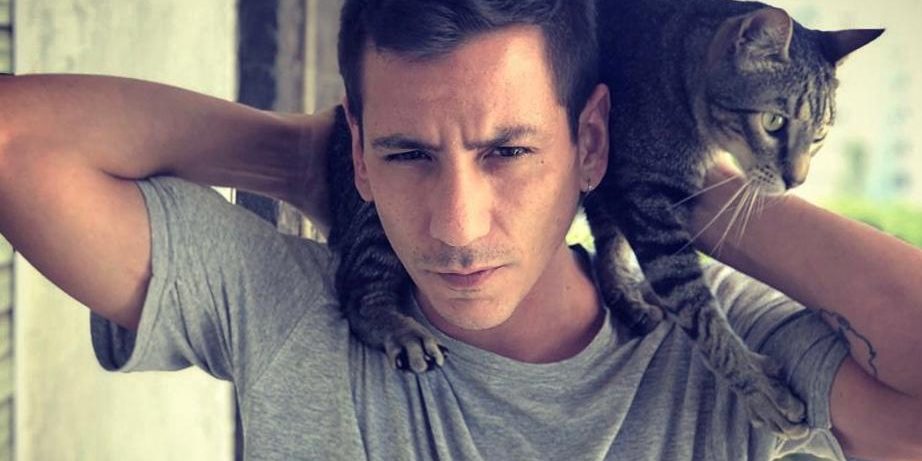
Juan Solá is a well-known writer and a leading figure in the LGBT+ literary world. Early Sunday morning, he was at a nightclub in the city of Mendoza with his friend Maru Leone when he was attacked by security personnel. They locked him in a room for an hour, beat him, and hurled insults at him, saying, "We're going to make you shit yourself, you faggot."
According to Solá's account to Presentes, the incident that ended with him being locked and beaten in a room at the Picasso nightclub—located in the heart of Mendoza—was confusing. He told Presentes: “I had bought a beer, and the glass had a horrible smell, like disinfectant. So I bought another one. But it was the same. I felt dizzy, I thought I was going to faint, and I leaned against a column. That's when I felt someone lift me up. I assumed they were coming to help me, but they grabbed me by the neck. They were members of the security staff, although they weren't wearing any identifying security clothing,” he explained.
What followed is what he reported twelve hours later to Prosecutor's Office 1 as "unlawful deprivation of liberty and assault": "They shoved me into a windowless room and said, 'So you like hitting women?' And I thought, 'Why would she say that to me?' I found it funny. I understand perfectly what violence against women is. And I asked them to bring in the girl who said I had hit her, and she was a security guard who was in uniform. She showed me her elbow, without any injury, and told me that I hit her when she tried to remove me."

“They beat me viciously”
“After that, the guys kept hitting me. What hurt was the viciousness with which they did it, because it wasn't so much with force as with pleasure. 'We're going to make you shit yourself for being a faggot,' they told me. In every sentence it was 'faggot or queer.' I don't know if they use it with homosexuals or to intimidate any cisgender man they hunt down. Because that was a hunt .
The place where they held him for about an hour, he recalls, was an unfurnished room, isolated from the patio and the dance area, near the entrance. “Those who beat me were also bowling alley staff, because they had access to areas not open to the public,” he asserted.
“When they opened the bedroom door, I could see outside and there was a police car. They had me next to them, with my hands in the trunk of the car. They thought I was drunk. I was dizzy, bruised, and they pushed me against the wall. In the push, the security guards hit me on the head and scraped my elbows. All of that was confirmed by the forensic doctor,” he explained.
When they released him, they told him he couldn't file a report because he couldn't give a statement while intoxicated. "I wasn't drunk," he added. Twelve hours later, when he was feeling a bit better, he decided to file a report: " If this happened to some other, less well-known guy who works a different job, it would just go unnoticed." Still shocked and in pain, he told Presentes: "Many people who wrote to me and offered their support told me that this is quite common here in the city of Mendoza. It's terrible."
The writer published the entire story in a long post on social media, which immediately went viral.
“The homophobic content of the attack is evident.”
“I have no doubt that this attack was also motivated by hate and homophobia. Although that wasn't the primary reason, and it wasn't the only one, the homophobic content of the attack is evident . They clearly used it as an insult and as an 'excuse' for the beating. Homophobia and hate were part of the attack. It happened to Juan, and that's why it has been made visible. But the unfortunate reality is that this happens every weekend in Mendoza nightclubs: violence from bouncers against young people in nightclubs, and also this constant homophobia, especially in violent situations ,” stated Mercedes Ríos Villegas, a feminist lawyer from Mendoza, who is representing Solá in her complaint.
As of the closing of this note, five days after the attack, no one from the bowling alley had contacted Solá or the lawyer.
We are present
We are committed to journalism that delves into the territories and conducts thorough investigations, combined with new technologies and narrative formats. We want the protagonists, their stories, and their struggles to be present.
SUPPORT US

FOLLOW US
Related notes


We are present
This and other stories are not usually on the media agenda. Together we can bring them to light.