

Elections in El Salvador: candidates ignore the LGBT+ community
The country's main presidential candidates omitted electoral proposals to guarantee the rights of LGBT+ groups.

Share

By Paula Rosales, from San Salvador
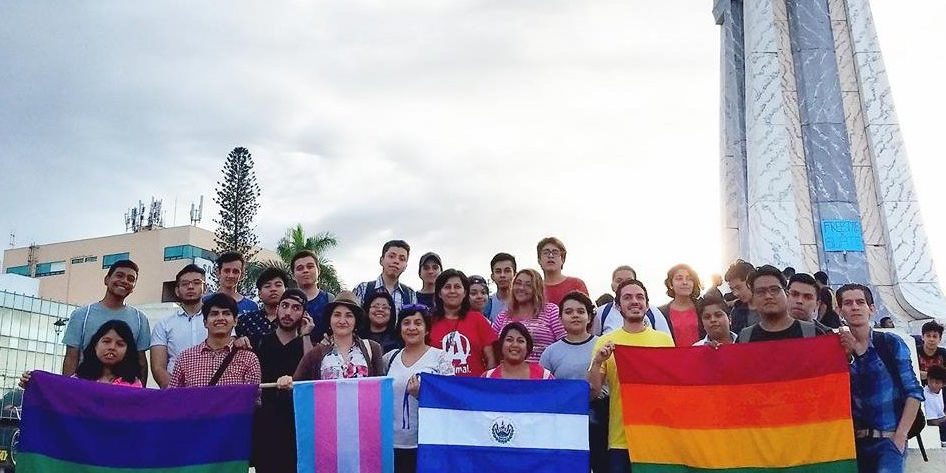
Photo: RV Pride
Despite the fact that the population is being threatened by violence, unemployment and forced migration, during the election campaign, the main candidates for the presidency of El Salvador completely omitted the inclusion of electoral proposals to guarantee the rights of the LGBT community.
No commitment to LGBTI+ human rights
El Salvador will elect its president on February 3rd, who will govern the Central American country for the next five years. Agencia Presentes reviewed the campaign platforms of the four candidates participating in the election: all show a lack of policy proposals regarding health, employment, education, and security. The documents contain not a single line reflecting a specific commitment to protecting human rights. Furthermore, during their campaign activities, the presidential candidates avoided answering questions about the rights of the LGBT community.
Some 5.2 million people are eligible to choose between three right-wing candidates, Nayib Bukele, of the Grand Alliance for National Unity (GANA), Carlos Calleja of the Nationalist Republican Alliance (ARENA), Josué Alvarado of VAMOS, and one left-wing candidate, Hugo Martínez of the ruling Farabundo Martí National Liberation Front (FMLN).
According to the latest poll, published in January 2019 by the Mitofsky polling firm, Nayib Bukele of the GANA party leads with 57 percent of the vote, followed by Carlos Calleja of the ARENA party with 31 percent. The FMLN candidate, the ruling party, holds third place with 11 percent.
"We do not intend to change the law: marriage is between a man and a woman."
Nayib Bukele's government plan does not include any proposals for the LGBT community. His party, GANA, which is closely linked to evangelical churches of various denominations, supported a 2015 constitutional amendment to define marriage as being solely between a man and a woman.
“We don’t intend to change the law regarding marriage. We believe that marriage should be between a man and a woman. That doesn’t take away from the life that each person wants to lead,” Bukele said during a university forum.
READ MORE: The journey of Julissa, a Salvadoran trans woman who left with the migrant caravan
Anti-rights commitment
Meanwhile, the ARENA party's platform (in power between 1989 and 2009) prioritizes strengthening the country's neoliberal economic model. Its proposals emphasize greater control over government spending and the implementation of a robust transparency mechanism after two of its presidents were accused and imprisoned for illicit enrichment.
In one section of the commitment, it refers to inclusivity and equality in access to opportunities , but without specifying or mentioning the LGBT community in the 250 pages of the document.

One of the commitments that candidate Carlos Calleja signed during the campaign was a commitment with the Union of Evangelical Christian Churches of El Salvador (UNICSAL) to replace the current Secretariat of Social Inclusion with the conservative Secretariat of the Family.
In 2009, with the FMLN's rise to power, the Secretariat of Social Inclusion became the first state institution to establish a Directorate of Sexual Diversity. This office is responsible for creating public policies that guarantee the basic human, economic, social, civil, and political rights of all citizens within the LGBTI community.
READ MORE: Karla Avelar: “In El Salvador there is a genocide of LGBTI people”
A horizon of setbacks
“It’s alarming that they’re going to turn the Secretariat of Social Inclusion into the Secretariat of Family Affairs, because it plays an important role. It’s an oversight body for the inclusion of diverse populations. Replacing its mandate will be a significant setback in terms of inclusion and human rights ,” Bianka Rodríguez, director of the Comcavis-trans Association, told Presentes.
In El Salvador, a country with over six million inhabitants, 80 percent of the population identifies as Catholic or Evangelical. Consequently, candidates often adopt policies that appeal to this demographic.
The ruling FMLN party, which has promoted a series of policies of inclusion and respect for the human rights of the LGBT community from the executive branch, does not define specific lines for the continuity of these programs in its candidate's government plan.
The election campaign also failed to include any proposals to address femicides or hate crimes. The only talk was of strengthening the security apparatus. The right to abortion was also not mentioned.
What are the demands of the LGBTI+ community?
Among the demands requested by the LGBTI community is the approval of the Identity Law that allows them access to employment, health, education, respecting their sexual orientation.
Furthermore, they request that future leaders make a real commitment to counter impunity in cases of homicide and violence, since currently investigations are not progressing in state institutions.
In 2018, civil society organizations working for the rights of the LGBT community presented a draft gender identity bill to Congress, seeking to recognize the right to recognition of gender identity and expression. The bill has not yet been passed.
“I believe the LGBTI movement must demand much more and strengthen its demands from our own reality,” Karla Avelar told Presentes.
The upcoming elections will be marked by widespread public discontent with the two major parties, ARENA and FMLN, which have alternated in the executive branch without achieving significant progress.
His administrations, which in total three decades, have been marred by cases of corruption in the handling of state funds, high homicide rates, and a decrease in purchasing power.
Share
We are present
We are committed to journalism that delves into the territories and conducts thorough investigations, combined with new technologies and narrative formats. We want the protagonists, their stories, and their struggles to be present.
SUPPORT US

FOLLOW US
Related notes


We are present
This and other stories are not usually on the media agenda. Together we can bring them to light.