

The Uruguayan artist who documents her trans colleagues
By Denisse Legrand* Photos: Mariana Grief Sofía Saunier is a multifaceted artist who has never been able to make a living from her art. In addition to drawing, painting, and performance art, she is the creator of Transur, an audiovisual project that records the stories of transgender people, like herself, from Uruguay and other parts of the world. “Transur means 'Uruguayan trans people,' but it also…

Share

By Denisse Legrand*
Photos: Mariana Grief
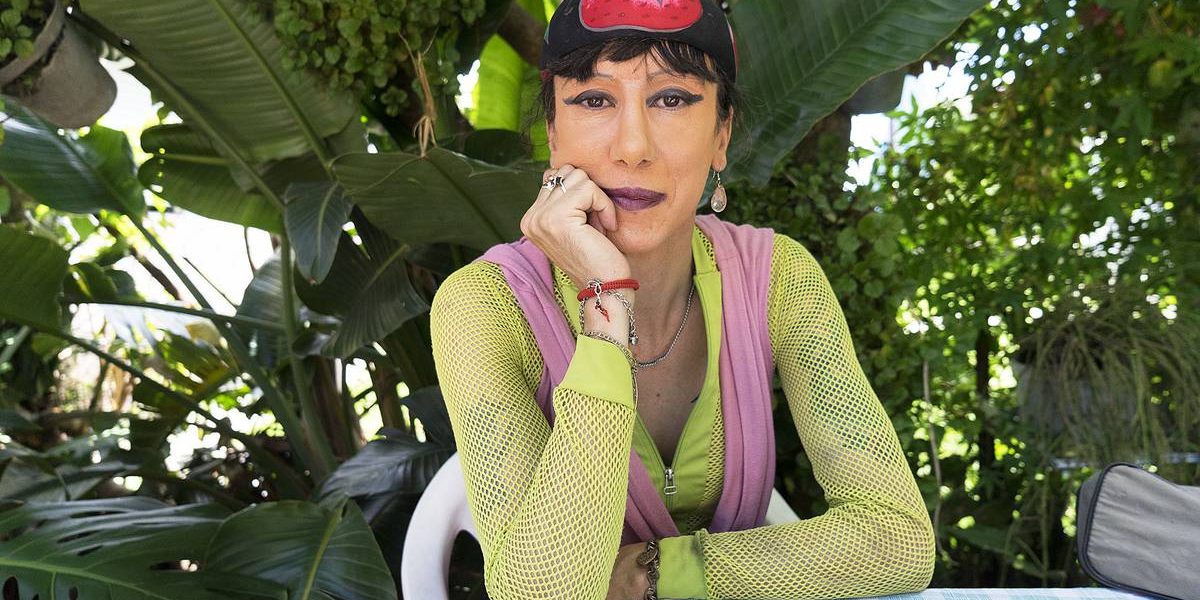
Sofía Saunier is a multifaceted artist who has never been able to make a living from her art. In addition to drawing, painting, and performance art, she is the creator of Transur, an audiovisual project that records the stories of transgender people, like herself, from Uruguay and other parts of the world. “Transur means 'Uruguayan trans people,' but also 'trans people from the South,'” she explains.
Currently, Sofía cares for an 85-year-old woman who lives next door. When she was 10, she went to live with her mother in Buenos Aires. “My mother didn’t accept me, and at 15, I was left exposed to the streets.” She says the streets are full of dangers. “Especially when you’re young and unprepared to face so many things. Some survive, others commit suicide or die along the way.” She returned to Uruguay at 25, in 2000.
Sofía says she is trans because it “transgresses gender.” “I don’t consider myself a woman because I wasn’t born a woman, but I don’t consider myself a man either. If I had to categorize myself, it would be a genderqueer identity.”
A simple yet ambitious project
She created Transur because she believes that society doesn't get to know the life stories of trans people and that only what is shown in the press is known, "which is always the same: prostitution, boulevard, homicides."
“I realized that trans people weren’t visible,” she says. So she thought about starting to record the stories of trans people, so they could tell their own stories and show people that “we are like everyone else: we have dreams and sorrows, like everyone else.”
[READ ALSO: Uruguay approved the comprehensive law for transgender people]
To date, this project, which began in 2014, has compiled an archive of 52 life stories , representing just over 6% of the total transgender population living in Uruguay (850 people). According to the National Census of Transgender People, conducted by the Ministry of Social Development and the University of the Republic, the majority of the transgender population (62%) lives in coastal and border regions. Canelones, Maldonado, Cerro Largo, Salto, Paysandú, and Artigas are the departments with the largest transgender populations. The remaining 38% reside in Montevideo.
Some of the stories in Transur's archive are from women who live in the interior of the country. Sofía comments that while Montevideo "isn't a big city," life in the interior is different. "A trans person attracts more attention in the interior; in Montevideo, perhaps you're a little more discreet. There, because you're more visible, you're more exposed. People point you out more."
 Sofia interviewing Florence for Transur.
The first-person stories told in Transur have much in common. “They are sad stories. While not every chapter is tragic, they share themes of abandonment, societal rejection, and decline.” Regarding this, Sofía hypothesizes that most of the people interviewed are not young, even though the life expectancy for this population is 35 years. “Older trans women have gone through many terrible things, such as rejection from their families, discrimination from the state, and the military dictatorship. Many of them turned to prostitution from a very young age.” The stories of younger trans women “aren’t as tragic, because we live in a different historical era.”
Sofia recounts that she suffered state violence “in the midst of democracy.” One day, while walking along Agraciada Street on her way to the supermarket, a white van stopped and the police arrested her.
“They asked for my name and ID. I didn’t have them because I was going to the supermarket. They forced me into the van. They tried to hit me. I’d never experienced anything like it. It was like a slaughterhouse, locked up with people I’d never seen.” The van continued on its way, stopping other people. “It went down Carlos María Ramírez, turned onto Garzón, and ended up on Bulevar. They piled in until it was full. We were all trans women.”
Motorcycle Transport
Sofía exhibited her art at every edition of Trans Art Week . At the second edition, she presented a video about Transmotoqueras , another of her projects.
“We are three very diverse trans women who go out to travel the roads and film what we do. We took our motorcycles and went all the way to the Santa Teresa Fortress to make ourselves visible. So that people can see us on the roads, on the beaches. That's the idea: to show ourselves. That way people can see that we can live a life like anyone else.”
[READ ALSO: Trans woman attacked in Salto: “Now you’re going to collect your pension”]
They were taken to the Montevideo Police Headquarters. “They locked us in a cell. We were all lying on the concrete floor, huddled together for warmth.” Although it was more than fifteen years ago, she says she was left with fear and that for a long time she “didn’t want to go out on the street.”
While discrimination persists and makes transgender people the most vulnerable population in the country, things are changing. “The change is incredible. Before, I would go out on the street and people would insult me, yell at me all the time; it was very common. Now I feel calmer, safer. I don't walk around afraid or ashamed.”
[READ ALSO: Uruguay has the first state census of trans people]
The rejection this population faces is literally fatal. “Trans people are not integrated into society. Because they are exposed to vulnerability and living on the streets, they are dying.” To change this reality, she believes that a comprehensive law for trans people is a fundamental tool.
She also believes that access to information is another defining characteristic of this era. “When I was young, I didn’t know what a homosexual or a trans person was. I only knew that I felt this way. But no one gave me any information, neither at school nor in my family. Now, anyone exploring their sexuality can find information online about what they’re experiencing and talk about it with their parents. Going forward, families will be much more accepting of their sons and daughters. All of this is thanks to information.”
Sofía says that change also means trans people need to stop being afraid and be able to show themselves. “We have to be sociable, able to live during the day, not just at night. Go out, show ourselves, chat with the neighbor, with the shopkeeper. We don't have to hide because we're not monsters, we're like everyone else.”
We are present
We are committed to journalism that delves into the territories and conducts thorough investigations, combined with new technologies and narrative formats. We want the protagonists, their stories, and their struggles to be present.
SUPPORT US

FOLLOW US
Related notes
We are present
This and other stories are not usually on the media agenda. Together we can bring them to light.