

Karla Avelar: "In El Salvador there is a genocide of LGBTI people"
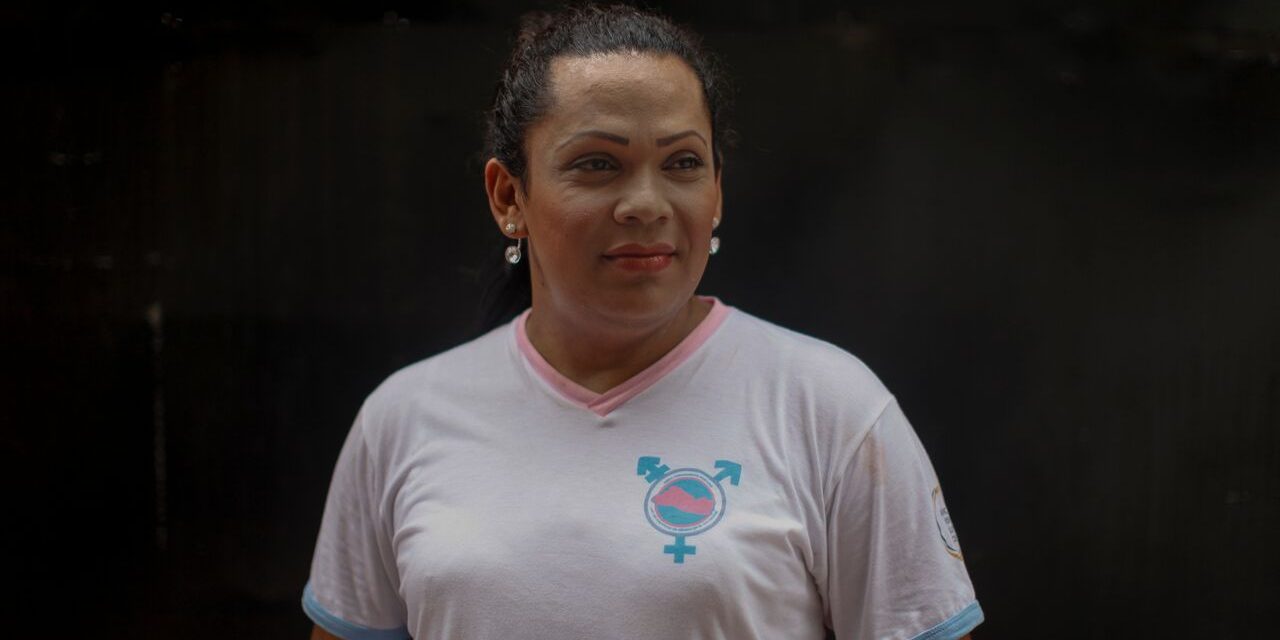
Avelar is a 41-year-old trans activist who has suffered constant human rights violations. She has been repeatedly raped, kidnapped, tortured, imprisoned, and shot. She now lives in Switzerland, where she has sought asylum to save her life.

Share

By Paula Rosales, from San Salvador. Photo: José Cabezas. Karla Avelar is a renowned LGBT rights defender in El Salvador who was forced to seek asylum in Switzerland, where she now resides, after enduring multiple acts of persecution, threats, and torture. Her mother was kidnapped, and members of Mara Salvatrucha (MS-13), one of the largest and most violent gangs operating in the United States and three Central American countries, demanded that she hand over part of the prize money from an international award for which she had been nominated. Avelar is a 41-year-old trans woman and survivor, while the average age of survival for transgender people in the region is 35. Her life has always been marked by human rights violations: she has been repeatedly raped, kidnapped, tortured, imprisoned, and shot. [READ ALSO: “Unstoppable”: the book that tells us about LGBTI rights in Latin America] Upon seeking asylum in Europe, Avelar had to relinquish her leadership of the organization COMCAVIS TRANS. El Salvador, a country of over six million inhabitants, has a homicide rate of 50.3 per 100,000 people, one of the highest in the world, according to the United Nations. The Salvadoran trans community reports the murder of some 600 women since 1993, with not a single case solved. Many trans women in El Salvador are forced to smuggle drugs, weapons, and cell phones into prisons.
[READ ALSO: 2018: Guatemala on alert and in debt to LGBTI+ rights]
Faced with constant persecution, discrimination, lack of job opportunities, attacks and murders against the community, many of them have been forced to seek asylum in other countries. Avelar has dedicated more than two decades to raising awareness of the social and economic conditions of the LGBT community. Her work was recognized in 2017 when she was nominated and became a finalist for the prestigious Martin Ennals Human Rights Award. Presentes spoke with her about her career, the global challenges that the community will face in the face of the increase in ultra-conservative leaders who seek to suppress rights due to sexual diversity.– What motivated you to seek asylum in Switzerland?
KA: It wasn't a pleasant motivation at all; it was primarily a necessity. For a long time, I was the victim of aggression, which even went so far as to harm my physical integrity, with attempts on my life. I was also kidnapped and, in a way, tortured, and obviously, no one should have to endure or allow that situation. However, along the way, I also had to endure my mother being involved, so in that sense, I was forced to endure as much as I could, even to the point of putting both our lives at risk. (The gang members) would send me messages saying that if they couldn't hurt me, they would hurt her. In a way, I could guarantee my safety, my movement by changing routes and all that, but my mother couldn't.[READ ALSO: Inter-American Court of Human Rights: States in the region must guarantee gender identity and marriage equality]
I reported the public authorities for the situation of aggression, arbitrary arrests, torture, and extortion against my trans colleagues. Every time they encountered me, they attacked me, accusing me of making them look bad and demanding to know what evidence I had. The gangs went even further. When they realized I was the director of an organization (COMCAVIS TRANS), they began harassing me more aggressively. During the last six months I lived in El Salvador, I had to find ways to get around because they attacked me on the bus. Once, they came to my house in the middle of the night, threatened me, and demanded I hand over part of the Martin Ennals Award I was nominated for. They told me I had to understand that the gang needed to sustain itself and that if I guaranteed them part of the prize money, they would guarantee my safety and protection. Since I did not agree, things got out of hand, and I even had to request international support to be able to move immediately, to be able to change houses. I was assigned support to be able to move, to change houses, to change my phone number, and to take security measures because I could no longer control them.– Did you feel that you were violated by both the State and organized crime, represented by the gangs?
KA: Yes, I suffered attacks from the police and the military.– How did you make the decision to ask for protection?
KA: My mother and I traveled to the awards ceremony, and I didn't have any documents with me because I wasn't prepared for a last-minute decision. I decided after learning about the video they showed my mother, and that's when I knew that if I returned to my country, I wouldn't survive more than a day. I didn't know how long they would torture me. We participated in the awards ceremony, where I came in second place, and for me, it was an important process of leadership recognition. It also recognized the work of women human rights defenders, something that doesn't happen in El Salvador. While we were in Switzerland, my mother broke down and confessed that the arm she had fractured wasn't from a fall down the stairs, but from a gang attack. She lied to avoid worrying me further. The harassment went so far that they demanded my mother tell them the date I would return to El Salvador from my trip to Switzerland. They were going to be waiting for me at the airport the moment I set foot in my country. I would be murdered in front of my mother. When I explained the situation to the award organizers, they met to assess the risk I faced if I returned to El Salvador and urged me to make a decision. We left everything behind: my mother's house and the life we had built together. She supported my decision; we cried all night in the hotel. It wasn't easy.– After being forced to migrate, how would you define life for LGBT people in El Salvador, and what do you consider to be the reasons why a greater number seek other destination countries?
KA: As activists, we are familiar with the situation of violence in our countries. I would define it in a rather strong word: what is happening now in El Salvador to the LGBTI population is genocide. Genocide because there is no response, no commitment, no guarantees for the protection of people's rights. All possibilities for advancement are limited, including access to work, healthcare, the right to free movement, and the right to vote. What we see is an openness to exploitation because we are useful to them when they deem us useful. But the reasons why these people decide to leave are numerous and evident. The biggest problem is that the State does not recognize the forced displacement that is occurring both internally and externally.[READ ALSO: #Guatemala The congresswoman who fights alone for LGBT rights]
The problem isn't solved simply by leaving the country; it's just the beginning. Leaving without information, without financial resources, and facing vulnerability as an LGBTQ+ person—especially if they are transgender—without family or social support, and arriving in a country like the United States, where the guarantee of rights has been changing lately, is incredibly difficult. It offers them no guarantees, particularly with President Donald Trump, who has denied them rights, funding, and protection, making the situation even more tragic.– When did you make the decision to become an advocate for the human rights of LGBT people?
KA: There were plenty of reasons from childhood because discrimination against LGBTI people, and especially transgender people, begins within the family. This is due to a lack of information and simple ignorance that leads to rejection. I am currently respected and accepted by my family, but at one point my own family rejected me and hurt me from a very young age, and I had to leave home not only because of the rejection but also because of physical and sexual abuse. I was raped by my cousins. My mother's job in the capital forced her to leave me in the care of my grandmother, who didn't have the necessary information to understand me. When I left home at nine years old, I ended up in the hospital twice. Sex work exposed me to complicated situations. I was imprisoned in a penitentiary where I was locked up to serve my sentence with the gang that had tried to kill me. It was one of the most difficult parts of my life, those four and a half years in jail. There was never a conviction; there was a deficiency in the judicial system. I was imprisoned illegally and unjustly.[READ ALSO: #Guatemala Alert over a law against the rights of women and LGBTI people]
I was arrested by a police officer who made my life a living hell when I was working as a sex worker. He falsified the information and testimonies in the case file that led to my imprisonment. I was also a victim of the justice system. I reached a very difficult point. When they imprisoned me, they beat me with sticks, raped me for two days with the consent of the prison guards, and almost inserted a stick into my anus. Fortunately, Borroneo Henríquez, the gang leader, arrived and told them to let me go, that my worst punishment would be enduring them. They let me live, but it was a life without life. I became a sex object, their servant every day. I ironed their clothes, washed their shoes, cooked for them. It was a terrible physical drain, and my HIV-positive condition completely ruined my health. Fortunately, I was released thanks to my mother's efforts. She had to pay a bribe to the judge, who only released me after receiving money, and I was in very poor health when I was released. After all, that started a more critical situation because the gang accused me of infecting “Homboys” with HIV. Obviously, to protect my life, I didn't tell them my status because they would have killed me on the spot. That's when I learned about the situation trans women face, and I decided I had to report it. It wasn't an easy decision, but I dared to speak out and filed my first complaint in 2013 with the Inter-American Commission on Human Rights (IACHR) about the conditions we were living in. That report also addressed the situation of women deprived of their liberty.– Do you know how many of the cases you reported have been resolved in El Salvador?
KA: The IACHR only makes recommendations to States, but this complaint resulted in four major recommendations. One was the approval of the gender identity law for transgender people; another was that government institutions begin documenting hate crimes; and it also urged the reformulation of the penal code to include hate crime as an aggravating circumstance. Of these, only the hate crimes law was implemented. This reform has left a bad taste because it was approved in 2015, has been in effect for three years, and has only been implemented in one or two cases. This clearly demonstrates the lack of commitment and empathy on the part of the prosecution in enforcing the laws, because judges are not applying the relevant articles in cases of attacks against LGBTI people. AP: What do you think about the rise of ultraconservative governments on the continent? KA: I think it's clear that states have regressed in respecting human rights, not only for LGBTI people, but also for other groups such as Indigenous peoples, women, and displaced persons. Internationally, we see Brazil, Argentina, Nicaragua, and Venezuela experiencing complicated situations, whether due to ultraconservative governments or those who have seized power. All of this puts the lives of LGBTI people at risk, as well as their families and the social fabric of the country. But I think there's an important factor: churches wield significant power, which is reflected in the election of these kinds of leaders who then bring the demands of religious groups into power. This is serious. The important message is that organizations must better prepare themselves to confront these setbacks in rights that had already been won in Brazil, the United States, and Argentina. This deserves serious attention and monitoring from international mechanisms and social organizations to prevent these states from being governed by the erratic thinking of one person. Regarding El Salvador, the situation is far from favorable. A process of regression has begun since the election of the new Legislative Assembly, and now a right-leaning Attorney General has been elected. Furthermore, there is the possibility that a far-right representative could become president, which will further complicate conditions not only for LGBTI people but also for women. I highly doubt the gender identity law will advance, but I see the outlook as very bleak. There will be no chance whatsoever of the gender equality law moving forward. On the contrary, if the right wing comes to power, the same thing will happen as in Brazil: hard-won benefits will be blocked, the Directorate of Sexual Diversity will disappear, and even the Secretariat of Social Inclusion could vanish. In El Salvador, the Catholic and Evangelical churches have a significant influence on the management of public policy. We are currently living in a silent war, with more than three thousand murders a year, including extrajudicial killings. It is quite clear that killing is being carried out legally, and in this case, the State is complicit in the excessive violence.AP: El Salvador is about to elect a new president, and no candidate has addressed the inclusion of LGBT rights in their government plans. What is your assessment of this?
KA: It's a denial and a lack of recognition of the need to work with vulnerable populations. I only know of one government plan, and it doesn't convince me. An important point is to meet and listen to the different sectors. I believe the LGBTI movement must demand much more and strengthen its demands based on our own reality.-How do you contribute from the outside to demanding respect for the rights of LGBT people?
KA: Now I have the opportunity to have a more proactive impact on the United Nations mechanism. I participate in consultations, conferences, and document reviews. I also participated in the annual meeting on forced displacement alongside the UN Special Rapporteur on Refugees and Displacement. I continue to expose reports of violations against the LGBTI community in Central America.We are present
We are committed to journalism that delves into the territories and conducts thorough investigations, combined with new technologies and narrative formats. We want the protagonists, their stories, and their struggles to be present.
SUPPORT US

FOLLOW US
Related notes
We are present
This and other stories are not usually on the media agenda. Together we can bring them to light.