

Trans historical reparation: “We are the survivors”
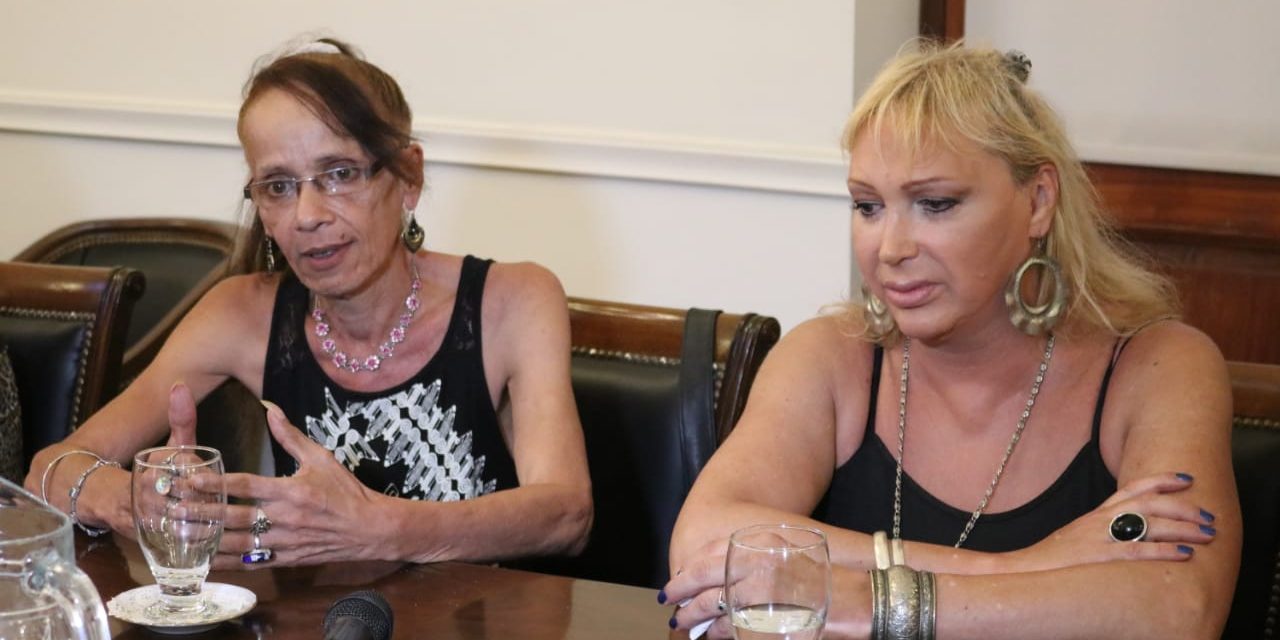
Noly Trujillo (55 years old) and Marina Quintero (56 years old) are the first trans people recognized in the country as victims of state violence because of their gender identity, something unprecedented in Latin America.

Share

By Luciana Caminos
Noly Trujillo (55 years old) and Marina Quintero (56 years old) are two trans women survivors. Any trans woman over 40 in Argentina today is a survivor. But they also lived through the dictatorship. They are part of a group of 25 trans women who received historical reparations from the province of Santa Fe, which includes a lifetime pension. This is the first time that trans people have been recognized as victims of state violence based on their gender identity during the dictatorship in Argentina. It is an unprecedented measure in Latin America.
Marina is in charge of the library at the LGBT House in Santa Fe. She loves to read, and among her plans is to create a provincial trans memory archive. Noly has been a municipal employee for several years and was a sex worker for 30 years. Four constants are repeated in both of their lives: confinement and discrimination, but also struggle and dreams.
 “A doctor told my dad to lock me up.”
 “A doctor told my dad to lock me up.”
 “From the age of 9, I lived with my aunts because my mother had passed away. When I was 11, my father reappeared and locked me up in a children's shelter. He was friends with a judge who sent him to have me seen by a doctor at the Mira y López psychiatric hospital. In my medical record, he wrote 'faggot-homosexual' and told my father that I had to be locked up because 'I didn't fit into society.' It was 1971,” Marina recounts.
At 18, Marina left the children's shelter. She remembers that her first social event was the birthday party of Marcela Corraza, a long-time trans woman from the city of Santa Fe. “That's where I met a lot of trans friends, with whom we were constantly getting arrested. Wherever they saw us, they'd pick us up. The only way out we had was to be sex workers. We couldn't study or work because everyone made fun of us. Many of those friends are no longer with us,” she says.

«They beat us, threw cold water on us, and above all, there was a lot of psychological torture."
Noly had a different kind of family luck. She's the youngest of four sisters, the daughter of a railway worker and a stay-at-home mother. “My family was hoping for a boy. For as long as I can remember, I felt like the fourth sister. I always felt like a woman, but my family didn't accept me that way. I was 'Noly,' but I received a lot of love. I was my mother's darling, and my sisters took great care of me.”
She recounts that she went through everything a trans girl goes through: “I would cry in bed all day when they cut my hair because I wanted to be like my sisters. I was happy when they called me 'baby' every time I went to the store.”
“During my adolescence, I wanted to die because my breasts weren't growing. I felt paralyzed; I didn't know anyone from the LGBTQ+ community. I only went to school. I quit the church choir and the club, and the bullying started. Adolescence became tough,” says Noly. At 15, I moved to a different neighborhood and met some of my sister's gay friends: “I started coming out, and that's when I was arrested for the first time for a background check. I was transitioning, I had long hair, and that was enough to get us arrested. Up until then, I'd lived in a bubble, and those arrests were very abrupt. They beat us, threw cold water on us, and above all, there was a lot of psychological torture. Once, they made me strip naked and forced me to take off my underwear, and the police officers kicked it around. It felt like a beating. It was normal not to be treated like a human being. Walking in the dark through backstreets, along the train tracks, throwing ourselves under cars to hide. You normalized living like that. Over time, I even missed being in jail. The act of reparation made us remember all these things we had hidden. Telling our story did us good.”
While for the rest of Argentine society the (military) dictatorship ended in 1983, for them it continued until 2010 because the province's code of conduct remained in effect. “They took us to the cells, stripped us naked, and beat us. I don't even want to remember that time; telling you just one story doesn't do it justice. They abused us, and we did anything to survive. In 2009, we started meeting with other women, encouraged by Flavia del Roso (a doctor) and Mabel Busaniche (coordinator of the Multisectoral Women's Network). We began meeting with the women from AMMAR in Rosario and created the Women and Transvestites (AMYT) group, from where we began working to repeal the codes of conduct. In 2010, we succeeded.”
The memory of Lohana and the struggles for the quota
One day, when Noly was arrested in Buenos Aires, she met trans activist Lohana Berkins. “We slept in the same cell, and some time later she invited me to her birthday party. I had never been an activist or even thought about our rights. But I left with her voice inside me. It was magical, and even though she was an abolitionist, she respected that I was in favor of sex work,” she says.
“I had a very ingrained religious belief. I thought I was going to die at 33. I saw my female colleagues dying and you also start to normalize death. And suddenly I started to experience situations I never thought I would: civil unions, same-sex marriage, the repeal of the code of misdemeanors, and the gender identity law,” Noly says.
 At the historical reparations event held on December 10, 2018, Marina and Noly remembered their fallen comrades: Olga Murillo, Coty Olmos, Carla Suárez, Valeria Rodríguez, Valeria Merlo, “La Botanga,” and “La Ruselot.” “Historical reparations came late, but they are in our hearts,” says Marina. And Noly adds: “We survivors are left, and we are worn out. This reparations is wonderful because in the time we have left, we will be at peace without having to make sacrifices. Now comes the time for rest, peace, and enjoyment, and I think we all agree on that. We want to rest, but we won't be able to detach ourselves from activism; we will continue to demand quotas. My last wish is for the trans job quota to be passed. I don't want young women to go through what I went through.”
We are present
We are committed to journalism that delves into the territories and conducts thorough investigations, combined with new technologies and narrative formats. We want the protagonists, their stories, and their struggles to be present.
SUPPORT US

FOLLOW US
Related notes
We are present
This and other stories are not usually on the media agenda. Together we can bring them to light.