

Francesc Morales, the gay YouTuber who challenges Chile
Chilean Francesc Morales makes videos and writes columns that, with humor, educate against homophobia and provide information about HIV.

Share

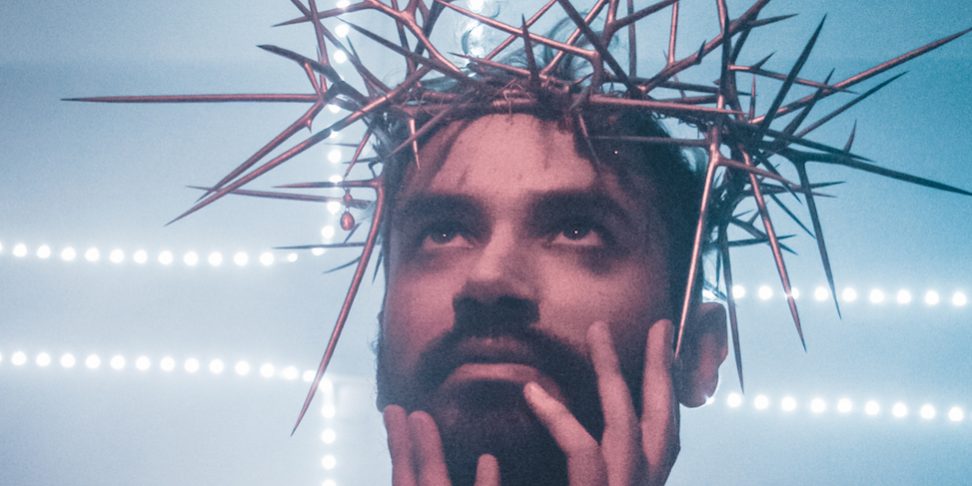
Chile already knows that nothing Francesc Morales does goes unnoticed. He recently went viral for a Halloween costume: an imitation of the controversial commentator Patricia Maldonado. Francesc Morales is a graduate of audiovisual direction from the Pontifical Catholic University of Chile, but he is also a screenwriter, producer, YouTuber , millennial, comedian, and LGBT+ activist. And whatever he does is sure to make the rounds on news websites and television programs, like the time he walked around wearing a t-shirt with an image of President Sebastián Piñera dressed as a drag queen.
He writes columns for the Chilean publication The Clinic , one of them titled 'Guide to Dating Someone with HIV'. In his series "Mamones" (roughly translated as "Dicks"), he shares a perspective on the gay world that is less solemn and more relatable. He also addresses HIV in this series. Chile had the highest number of new HIV cases in Latin America , and Francesc brings this reality to light. His most recent production, #BeingPositiveIsNotNegative, consists of three videos in which he discusses the virus.
“What we were trying to do was break down some stigmas surrounding HIV. I feel that even though people are constantly given information, they don't really retain it, things like HIV not being a death sentence, for example. The more different ways there are to talk about the topic, the better, and comedy is the best way to reach different people,” he tells Presentes.
 – How did you get started?
– I consider myself a former filmmaker because when I graduated with a degree in film directing at 22, I was the black sheep of the class. Many of my classmates had won major awards, and I never got selected for any big festivals, and my films (“Humanimal” and “Green Celery”) never got a commercial release either. I was frustrated. Finally, it was online where I found my audience. The first thing I did was create a viral video in response to a Chilean politician named Jacqueline Van Rysselberghe, who had commented that gay people were unstable. So I made a parody about what it would be like if this congresswoman had gay parents. It was pure comedy, not offensive at all, it got media coverage, and it was a hit.
[READ ALSO: Namuel: Chile's pop promise who defies homophobia]
The viral videos I started making four years ago always served as a response to homophobic acts or homophobic remarks. What I've learned in recent months is that the best approach isn't to retaliate, but to empower yourself. So now I want to start creating content that does just that, through comedic sex education, without resorting to insults.
– Why did you decide to raise awareness about HIV? What is the situation like in Chile?
– Since last year, there has been a major alert about HIV in Chile due to the increase in cases. However, the government's measures to prevent it have been almost nonexistent. This year, a campaign was launched, and it was quite poor (as always), and I feel that's why it was important to make these kinds of videos because, in general, government campaigns don't have much impact since they are basic and not informative. I've had people come to me asking, "What do I do?" And I myself didn't know much until I had to deal with a case close to me, and then I had to research and provide support. So I felt that the support I provided to someone could be done through video.
– What is the goal of your creations?
– I'd like what I do to serve as guidance for gay men who are just discovering their sexuality and to help them learn. That's why I like the informative aspect, making sure the content is useful. That's something I criticize YouTubers for a lot; I feel like they talk a lot about themselves but don't create useful content for someone whose life they don't care about. For me, informing people is very important, almost like creating survival guides for the 21st century.
[READ ALSO: HIV/AIDS in Chile: Between the worst figures in the region and the media circus]
I think every communicator, director, or whatever, likes the feeling that they're changing the world. This might not be real and might only exist in my mind, but that feeling is a powerful motivator for taking action. Feeling that what you're doing matters—perhaps not in the sense that something will be legislated because of what you do, but feeling that you're being heard. There's always a political element to it.
– How do you see the LGBT+ community?
– Even though gay people have been on Earth for millions of years, I still feel like they're still figuring out how to express themselves, who they are, what's right. We should take it this way: nobody's right about anything, we're all discovering ourselves and figuring out what to do.
– What are you going to do next?
A new sex education series is coming. In fact, while we were working on this project, we decided to do a much simpler, smaller project, #BeingPositiveIsNotNegative, to test the format first, and it worked incredibly well. This new project premieres this Monday on my Instagram and features Carla Jara, a well-known and beloved television personality in our country, as a co-star. This will allow our message of education and acceptance through humor to reach a much wider audience. Can comedy really change the world? I'll tell you on Monday.
We are present
We are committed to journalism that delves into the territories and conducts thorough investigations, combined with new technologies and narrative formats. We want the protagonists, their stories, and their struggles to be present.
SUPPORT US

FOLLOW US
Related notes
We are present
This and other stories are not usually on the media agenda. Together we can bring them to light.