

2018: The trans population, the main victims of violence in Peru
In 2018, violence in Peru disproportionately affected transgender people. There was no significant progress for the rights of LGBTIQ+ people.

Share

By Esteban Marchand, from Lima
2018 was a year of political chaos in Peru: corruption scandals involving various branches of government and the impeachment of former president Pedro Pablo Kuczynski distracted and paralyzed the country in several ways. No laws protecting the rights of the LGBTIQ population were passed in Congress that year. One of the few positive developments was the holding of public hearings on the Gender Identity Bill.
[READ ALSO: Another trans woman attacked in Peru: 76 attacks so far in 2018]
Trans women were the primary victims of violence in 2018. According to the report "Who Said What? Nobody Cries for Trans Women," 71 cases of human rights violations against trans women were recorded in Peru between January and November . The report was produced by "Trans: Feminist Organization for the Human Rights of Trans People."
Why are these cases not being reported?
“Not all cases have been reported to a police station or led to legal proceedings. Most have been shared as anecdotes on social media. They aren't reported because the spaces designated for reporting are very violent and hostile ,” Miluzska Luziños, an activist with the organization that conducted the survey, told Agencia Presentes.
 Nine days into 2018, a transgender woman was brutally beaten in the Casa Grande district of Ascope province, La Libertad region. The woman, identified as Pilar, was severely beaten by an unknown assailant who knocked her to the ground and continued to assault her. Her neighbors alerted the police. The case was not prosecuted.
On March 5, a trans woman was assaulted in the Los Olivos district. Colunche Sosa J suffered cuts to her face and lip. The assailant was detained at the Sol de Oro police station but was later released.
[READ ALSO: Survivors demand memory and justice for transfemicides in Peru]
In November, Gris Génesis del Castillo was attacked with a metal bar in Yurimaguas , in the San Martín region. In addition to being attacked due to transphobia, the victim was criminalized for living with HIV.
On December 7, activist Yefri Peña Tuanama was attacked in the Ate Vitarte district by Gino Santana Soller. “You’re going to die, faggot,” were the words Yefri heard before feeling the impact of a rock on his head, which required four stitches. The attack by Gino Santana Soller was reported to the Ate Vitarte police station.
At least four trans femicides and zero justice
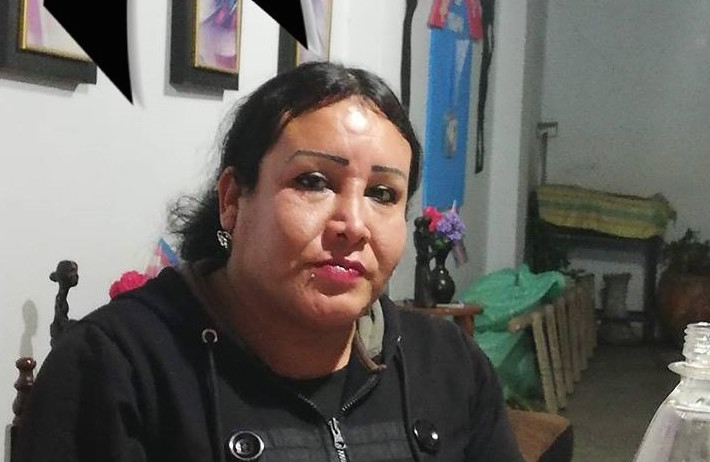
During 2018, according to the same report, at least four murders of transgender women were recorded.
Miluzska Luziños indicated that the investigations into all these cases are currently stalled. No one has received justice so far.
Misheel Ruidias was murdered with a gunshot to the head . She had arrived in Lima from Spain to visit her family. On February 12, she went to a party in the Manuel neighborhood where, according to witnesses, an altercation occurred and Freilor Basilio Antonio shot her.
On November 3, Brenda Zarit Sifuentes Andrade, 36, was murdered. She was found with her throat slashed in her home, also in the La Esperanza district. Her body had multiple stab wounds. Robbery has been ruled out as a motive.
On Friday, November 16, 37-year-old hairstylist Karla López Laureano was strangled in her bedroom with an electrical cord . The main suspect is Luis López, a Venezuelan national, who is currently at large. Karla was buried under her chosen name, even though Peru does not yet have a gender identity law.
 Gender perspective against anti-rights movements
 Gender perspective against anti-rights movements
At a general level, in the government sphere “there hasn’t been much progress with a specific agenda,” analyzes activist Alexandra Hernández Muro of Más Igualdad Perú. However, she believes that in education, “the government has committed to a gender perspective, which is the foundation for raising awareness about LGBTIQ rights.”
The activist believes that this initiative has faced opposition from anti-rights groups. “It has become clear that the conservative movement, led by those who gather around the ‘Don’t Mess With My Children’ movement, has put in place a machine to counter it legally and also in the educational sphere, attempting to give talks in state schools.”
In her opinion, if the State does not allocate a budget, a real implementation of the rights-based approach will not be achieved. “I think we have improved, but there is a significant stagnation in raising awareness among education, justice, and health professionals,” she stated.
We are present
We are committed to journalism that delves into the territories and conducts thorough investigations, combined with new technologies and narrative formats. We want the protagonists, their stories, and their struggles to be present.
SUPPORT US

FOLLOW US
Related notes
We are present
This and other stories are not usually on the media agenda. Together we can bring them to light.