

Lana from Holland: “Being trans in Brazil means living in danger every day”
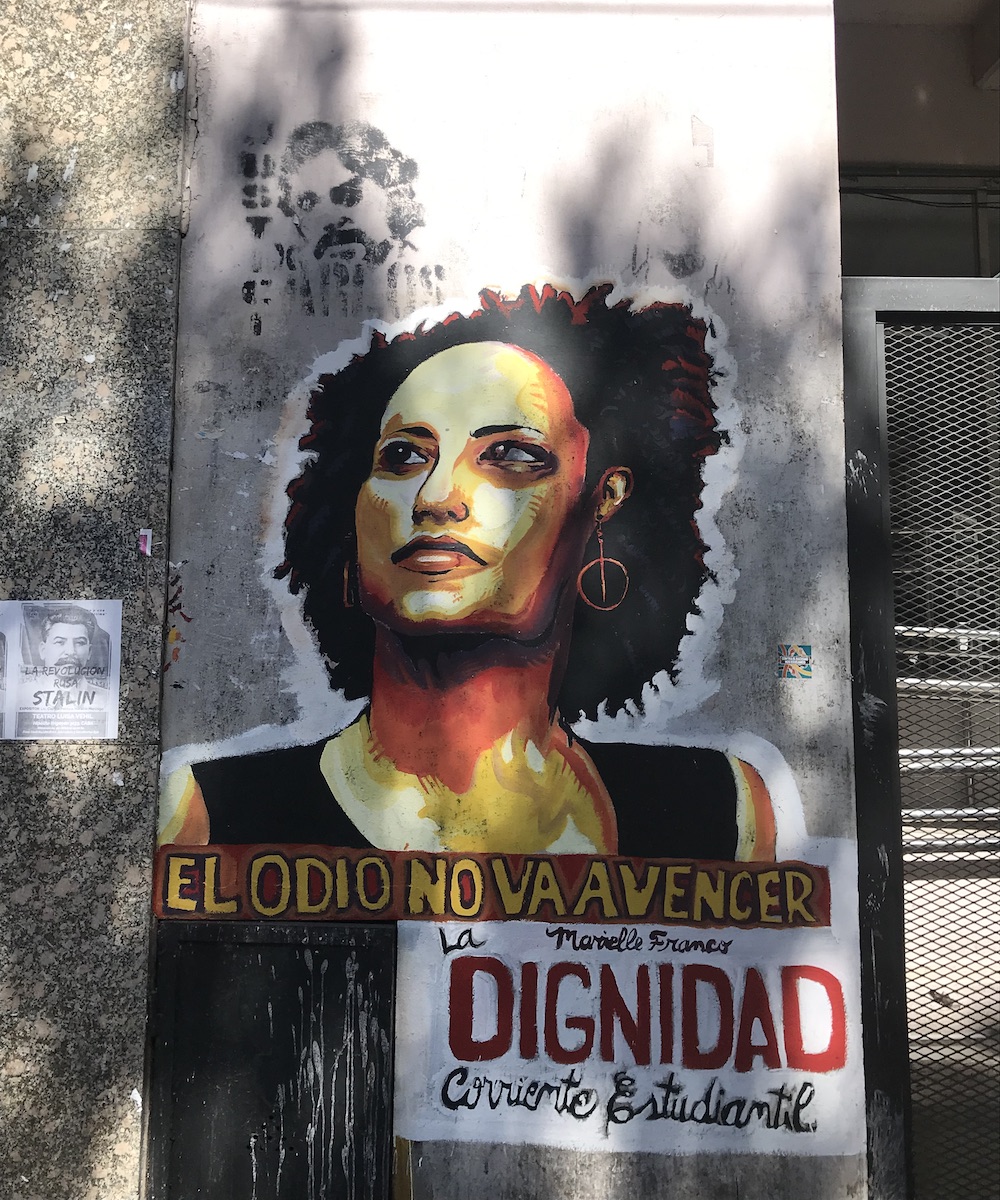
Lana de Holanda is a 28-year-old trans activist from Rio de Janeiro with a very intense journey. Three years ago, she began sharing her transition on social media and in a column for the Huffington Post, and ended up as an advisor to the left-wing city councilor (Socialism and Liberty Party, PSOL) Marielle Franco.


Share

By Ana Fornaro and María Eugenia Ludueña
Photo: Presentes Agency
Lana de Holanda is a 28-year-old trans activist from Rio de Janeiro with a remarkable journey. Three years ago, she began sharing her transition on social media and in a column for the Huffington Post, eventually becoming the first trans advisor to Marielle Franco, a left-wing city councilwoman (Socialism and Liberty Party, PSOL), until Franco's assassination on March 14th. In the year that far-right politician Bolsonaro won the presidency and saw a record number of trans candidates in the elections , Lana was in Buenos Aires as a guest at the events leading up to the G-20 summit. She participated in activities organized by the NGO Gender and Trade, was present at the feminist tent, and spoke with Presentes.
– How did your activism begin?
– I started my activism when I came out as trans in 2015. It was at that point in my life because I realized the privileges I had as a gay man and I didn't perceive the networks of discrimination against trans women. That was a huge shock. And there's no way to be trans or a transvestite without being an activist because our lives are in danger every day.
[READ ALSO: #BRAZIL Marielle Franco was murdered: feminist, Afro and lesbian councilwoman]]
– How did you get close to Marielle?
– I was working as a receptionist for Amnesty International in Rio, and at that time I was already writing. She works at the Human Rights Commission, and when I went to Amnesty, she started to follow my transition process and read my work. Two weeks after I was elected, she messaged me to say she wanted to talk. And that's when she asked me to be part of her term. When Marielle called me, it was very important because there had never been a trans advisor in the Rio de Janeiro City Council. Her term was very inclusive. There were lesbians, bisexuals, many Black people. It was a term that caused quite a stir in that predominantly white and wealthy environment. That made people uncomfortable.
[READ ALSO: Who is Erica Malunguinho, elected as Brazil's first transgender congresswoman?]
– Has Bolsonaro's election already had consequences for LGBT people?
When Bolsonaro was elected, I was at home with a group of friends, and we were paralyzed with fear. We're terrified. LGBT activists in Rio and throughout Brazil are uncertain about what will happen to us, but we know he's capable of something truly vile, something truly despicable. His statements that he'd rather have a dead son than a gay son are just one example. We're afraid not only of what he might do, but also of what his supporters might do. During the campaign, several LGBT people were attacked, and two trans people were murdered. So there's what he might do to us directly, but also what the population that feels justified in his actions might do.
-What are you doing politically now?
– After Marielle's assassination, I lost my job, but the party continues to support me until the end of the year. Now I'm helping with the investigation. I participated in Monica Francisco's campaign ( a congresswoman-elect for the PSOL party ), and now she's called me to work with her. My goal is to strengthen and provide physical support to left-wing bills, LGBT-related or not, that are on our side. Because we saw what they did to Marielle, what they're capable of. Because the Brazilian right wing is very mobilized; they're YouTubers, they're active on social media, and they believe that being revolutionary means being against minorities . The activists need to unite to form a strong bloc.

– What does transfeminism mean to you?
– Transfeminism is the radical idea that trans women are women and trans men are men. And that gender is a social construct, and that my gender is not linked to my genitalia. We fight for something as basic as the right to use a bathroom, to work, to education. We need the same rights as cisgender people. And it's also difficult to make people understand that sexual orientation and gender identity are different things. For example, I am heterosexual and trans. It's a painstaking, daily struggle.
We are present
We are committed to journalism that delves into the territories and conducts thorough investigations, combined with new technologies and narrative formats. We want the protagonists, their stories, and their struggles to be present.
SUPPORT US

FOLLOW US
Related notes


We are present
This and other stories are not usually on the media agenda. Together we can bring them to light.