

Salta: Homophobia in a Catholic school
After Governor Juan Manuel Urtubey described the expulsion of a student for making his sexual orientation visible as unacceptable, the Ministry of Education called a meeting.

Share

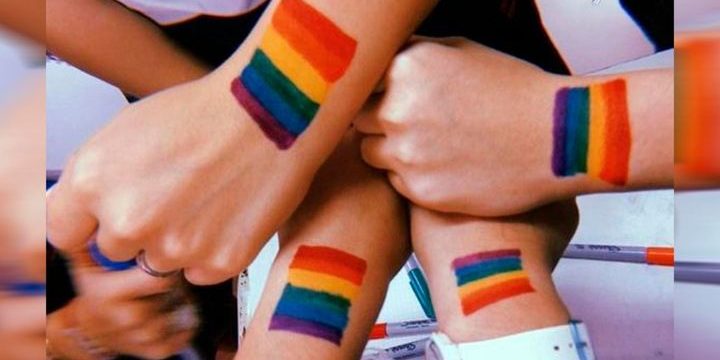
On September 28, a student at Santa María School in the city of Salta decided to publicly acknowledge his homosexuality and began wearing a bracelet with the rainbow flag. School authorities immediately told him that this was not permitted at the institution. A group of classmates showed their support and posted photos on social media with the rainbow flag; in one of them, a student made the middle finger gesture toward the school's crest. As a result, they were denied enrollment for their final year of high school in 2019. The governor of one of the country's most conservative provinces, Juan Manuel Urtubey, called the school's decision "unacceptable." The Ministry of Education convened a meeting to address the case.
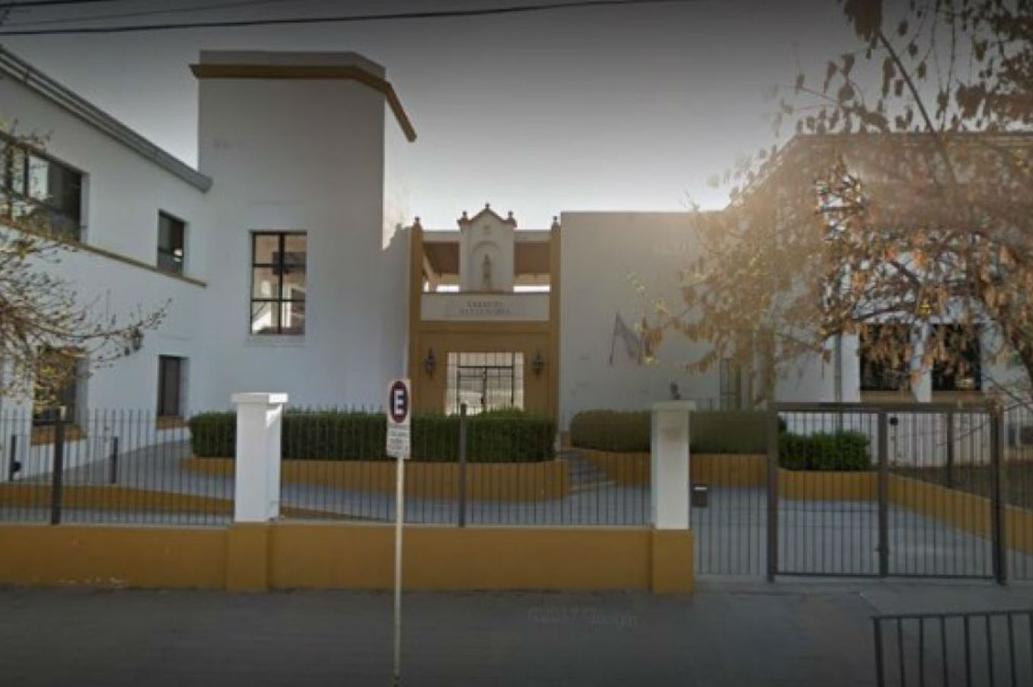
Although the incident occurred more than two months ago, it only recently came to light through a public letter from the student's older sister. The young woman asserted that her brother was expelled from Santa María School because of his sexual orientation. Only today, after the matter gained national attention, did Governor Juan Manuel Urtubey comment on the issue: a meeting was immediately called to discuss the case.
After days of silence, last night the authorities of the school, one of the most traditional in Salta, issued a statement denying that this student had been expelled and asserting that the institution exercised its right of admission with respect to the other four students because they had committed an offense considered serious against a symbol of the school: “ We clarify that the school has always guaranteed, among all members of the educational community, the diversity of thoughts and opinions within a framework of coexistence and respect, understanding that this enriches the educational process. In this context, we inform you that a fourth-year student, who freely expressed his gender identity, was respected as all members of the school are respected and supported as all students are. Regarding the incident with the bracelet he was wearing, we clarify that the administrative team, in a personal interview conducted that same day, listened to him and, attentive to his statements, made an exception to the regulations, which were already known to the student, authorizing its use until the last day of classes .
The grandmother of one of the expelled boys also spoke out on social media.
#SaltaLaLinda My eldest grandson, with an impeccable academic and behavioral record, was EXPELLED from the Santa María School in Salta for defending a gay classmate from the cowardly aggression and humiliation to which he was subjected by a counselor of that school.
— Ana (@AnaLaprofe484) December 8, 2018
And the father gave a long radio interview in which he recounted the details of how the events occurred.
The interview on Radio Con Vos with the student's father, Jorge Coraita
Both Carlos Saravia, the lawyer for one of the expelled students, and Jorge Coraita, the student's father, also a lawyer, explained that the school did not actually expel this student, but the decision to sanction his four friends is a form of punishment. "They're trying to isolate him," Saravia maintained.
Coraita explained to various media outlets that the problem began the day his son went to school wearing a bracelet with the colors of the LGBT community. A teacher asked him to take it off, claiming it was a provocation that went against the school's values. When the boy refused, he was taken to the principal's office, where the principal and vice-principal insisted he remove the bracelet. The lawyer recounted that while the administration's initial argument was that the bracelet was similar to a green bandana and that wearing either of those symbols was not permitted at the school, they later stated outright that wearing any type of bracelet was prohibited, even though the vast majority of students wore them. After the student persisted, the principal finally allowed him to continue wearing it. “This conversation was not a pleasant experience for Santiago. He was in an educational setting, and they were reprimanding him. There were two adults, the principal and the vice-principal. The law establishes limitations on what can be done, what can be asked of a minor, a student. They violated all the rules. There was an undue intrusion into his privacy. It is a serious matter that those who have custody of our children would address them in this way, in a clear abuse of authority. All the regulations speak of the best interests of the child. They had no regard for this, and clearly, by prohibiting the bracelet, they wanted to make the message invisible,” Coraita stated in a radio interview with Ernesto Tenembaum.
He recounted that his son left the meeting “very shaken” and even asked him to come pick him up because he wanted to leave that environment. But while he waited for his father, he returned to the classroom, where his classmates “were furious about the institutional violence their friend and classmate had suffered.” They then continued sending him messages of support and even painted the LGBT flag on their arms; among these messages, they sent him several photographs, including one of a school t-shirt with the words “fuck you” on it.
The following Monday, the school authorities apologized to Coraita, who replied that these apologies should be conveyed to her son, "at the appropriate time, discreetly, without taking him out of the classroom," to avoid further stigmatization, given that he had been ridiculed in the educational setting on other occasions.
What a fitting phrase for the Santa María School in Salta, which has just expelled my grandson and three other classmates for defending a gay classmate from the cowardly aggression and humiliation to which he was subjected by a counselor of that institution!
— Ana (@AnaLaprofe484) December 8, 2018
"They sanctioned his friends to blame him: a sinister mechanism."
But two weeks later, school authorities informed four classmates who had shown solidarity with her son that they would not be admitted for the following school year. The reason: the photograph with the insulting message near the school's crest. “We're talking about kids who, except for one who had been in Salta for two years, had thirteen years of excellent academic records at the institution. It was a reaction to the institutional aggression. Curiously, the reason for the sanction is the 'fuck you' message directed at the crest, the symbol that represents the institution. The administrators were the ones who attacked Santiago; that's where the homophobia, the discrimination, the undue intrusion into his privacy occurred. That was the most serious thing,” Coraita maintained, asserting that “they wanted to make her son invisible” and therefore “sanctioned his friends, and that was a way of condemning him and making him bear the blame for the situation. It was a sinister mechanism,” she affirmed.
The lawyer for one of the students whose admission was denied by the school expressed similar sentiments. He explained that he submitted a letter to the educational institution and to the General Directorate of Private Education of Salta, which reports to the provincial Ministry of Education, demanding that his client be allowed to continue his studies at Santa María School. “What we want is for them to comply with the law,” which means “declaring the decision invalid,” the lawyer stated. He added that the school's decision not to accept the gay teenager's friends was made “within a framework of extending discrimination to the other boy, because they want to isolate him. They don't expel the discriminated-against boy, but they leave him alone. They expel his friends and leave him alone,” he emphasized.
Saravia indicated that his client intends to wait this week for an administrative response, and that if this does not occur by next Friday, he will resort to the courts next week with an injunction requesting that his client's rights be respected.
For Saravia, the Ministry of Education's call for a meeting is "striking," because "they (the provincial education authorities) want to reach a consensus on everything instead of doing what is required; it's as if they are afraid to touch the lion's tail," he said before highlighting that "there are several cases of discrimination in schools."
Coraita, for her part, insisted that what happened to her son “must serve as a lesson to prevent similar incidents from happening again in this or any other institution” and demanded that comprehensive sex education be taught in private schools. “These institutions are privately run, but they are public and subject to state laws. The laws stipulate that they must provide comprehensive sex education. Now there is a divide, and there is an attempt to demonize the ideology. This happens because we live in a homophobic culture. Because there is another child whose sexual orientation is different, even without them doing anything wrong, it generates fear or anger. That has to change; that is achieved through education. If my policy as an educational institution is deliberately not to provide education, what I am doing is allowing these homophobic behaviors and so many others to go unpunished. This has become normalized,” she stated before recalling that posters mocking her son were painted at the same school, and there were no consequences.
This morning, the Rosana Alderete Observatory of Violence against Women formally requested the intervention of the Education Ministry of Salta to "take decisive measures to guarantee a life free from discrimination based on sexual orientation and gender identity, and to implement the necessary means for its prevention by both public and private educational institutions."
Loving God means serving your neighbor without reservation and trying to forgive without limits.
— Pope Francis (@Pontifex_es) December 7, 2018
“Discrimination has different social dimensions where exclusionary practices operate, and in this case, it constitutes institutional, physical, and psychological violence,” the Observatory noted. The organization also highlighted the use of the word “cure” by some members of the school and the fact that students who showed solidarity with their classmate because of his sexual orientation were prevented from continuing their studies at the institution. The Observatory maintained that these are “violent actions against Human Rights and against the legal frameworks that protect these rights.”
“Homosexuality is not an illness, there are no therapies to change sexual orientation, these violent practices for subjects with a sexual orientation and gender identity different from the hegemonic heterosexual are ethically unacceptable, since the WHO removed homosexuality from the list of diseases in 1990,” he added.
Pía Ceballos, an activist with the LGBTIQ collective and one of the directors of the Observatory of Violence against Women, added that they believe the Education and Human Rights departments of the province should intervene to ensure that the rights of the adolescents involved in this situation are respected.
Following the widespread attention the case received, the provincial Minister of Government, Justice, and Human Rights, Marcelo López Arias, announced today that "officials from the Human Rights Secretariat are working on the matter, as is the Minister of Education, for whom I have enormous respect and admiration." The minister also expressed his support for implementing sex education in private schools: "There needs to be a national curriculum on Comprehensive Sex Education, applicable to all public and private institutions," he stated.
We are present
We are committed to journalism that delves into the territories and conducts thorough investigations, combined with new technologies and narrative formats. We want the protagonists, their stories, and their struggles to be present.
SUPPORT US

FOLLOW US
Related notes


We are present
This and other stories are not usually on the media agenda. Together we can bring them to light.