

Sport must respect trans people: another law was needed in Argentina
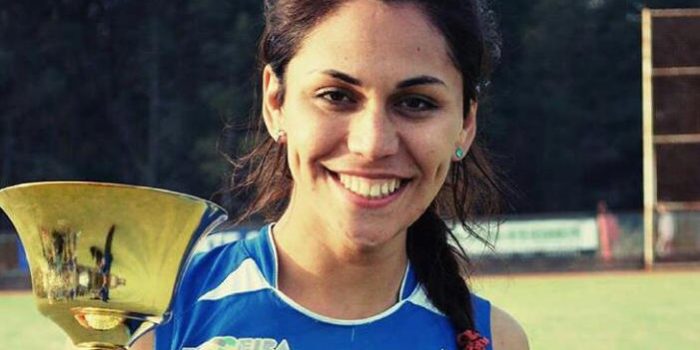
The law passed in the Province of Buenos Aires originated with Saira Millaqueo, a trans hockey player from Bahía Blanca, who took legal action to be accepted as a professional.

Share

By Paula Bistagnino
Everyone has the right to participate in sports activities in accordance with their gender identity. This is stated in a new law passed in November by the Buenos Aires Provincial Legislature: the initiative arose from the fight waged by Saira Millaqueo, a trans hockey player from Bahía Blanca, to be able to compete professionally.
“I had been rejected under the protection of a circular from the International Olympic Committee that requires a certain level of testosterone to prove my female identity,” the player from the Palihue Rugby-Hockey Club of Bahía Blanca tells Presentes.
Saira resorted to the courts and filed a lawsuit for discrimination and non-compliance with the gender identity law – approved nationally in 2012 – against the Bahiense Hockey Association and the Argentine Hockey Confederation.
 On May 15, 2017, Judge Patricia Marenoni, presiding over Family Court No. 3, ordered the Bahía Blanca Hockey Association to register Saira as a player for Palihue. The club appealed, but the appeals court ruled in their favor, and Saira was added to the team. “After my experience, I wanted to ensure that no one else had to go through the painful process I had to endure to play the sport I love.”
That's how he met Senator Federico Susbielles (Unidad Ciudadana) from Bahía Blanca: “Together with him and his team, we drafted the law and presented it with high expectations. It was difficult because it generated a lot of resistance, but we never gave up on pushing it forward.”
Discrimination by action or omission
The law aims to guarantee compliance with the National Gender Identity Law, passed in 2012. “It represents a huge step forward for our province and places it at the forefront in terms of the recognition of rights and inclusion,” explains the legislator from Bahía Blanca. He adds: “Making access to sports, education, and employment effective will allow us to become a better society every day.”
The law establishes that any action or omission that prevents a person from registering, participating, or competing in a sporting activity of a league, federation, or confederation, whether amateur or professional, due to their self-identified gender, will be considered discriminatory. It also stipulates that sports clubs, leagues, associations, and federations that prevent athletes from participating or register them under a gender different from their self-identified gender will be sanctioned by the relevant authority. “This is a very important step forward, because we are talking about diversity and rights,” Susbielles adds.
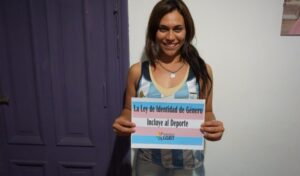
“If we need a law, it’s because there was resistance.”
Alexa Pettone is a trans skater from San Pedro. “I call these laws 'positive discrimination' because they shouldn't exist. The idea that a law has to guarantee inclusion in a sport whose essence is people coming together and having fun seems absurd. But we need it,” says the athlete and activist, who, while she didn't have to fight to be able to compete, knows what it's like to fight for her rights. “This law exists because there was resistance and a struggle. That's why I congratulate Saira, because she's the one who pushed and fought to achieve something that's important for all our teammates,” Alexa adds.
“There are still sports organizations that resist. So we have to support the law and continue working together. And those of us already involved must continue fighting for visibility and against discrimination. In sports in general, there is exclusion, and many young people are also barred from participating due to economic access. We have to fight for inclusion and access for everyone.”
We are present
We are committed to journalism that delves into the territories and conducts thorough investigations, combined with new technologies and narrative formats. We want the protagonists, their stories, and their struggles to be present.
SUPPORT US

FOLLOW US
Related notes
We are present
This and other stories are not usually on the media agenda. Together we can bring them to light.