

Survivors demand remembrance and justice for transfemicides in Peru
By Esteban Marchand On Transgender Day of Remembrance, Peruvian activists gathered in Plaza San Martín in downtown Lima to commemorate the trans women and men who were murdered or died due to a lack of access to basic rights such as health, work, and housing. Among the banners was…

Share

By Esteban Marchand
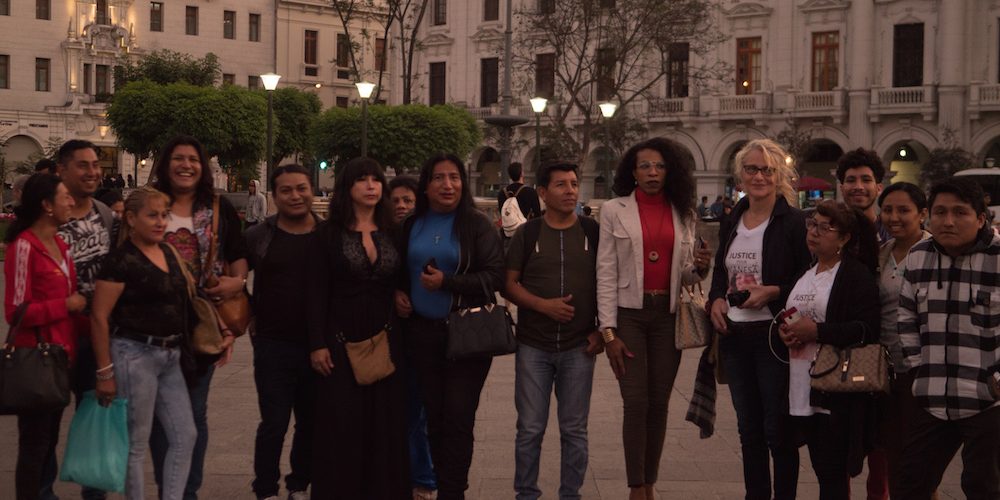
On International Transgender Day of Remembrance, Peruvian activists gathered in Plaza San Martín in downtown Lima to commemorate the transgender women and men who were murdered or died due to a lack of access to basic rights such as health, work, and housing.
 Among the banners was one with the face of Vanessa Campos, a 36-year-old Peruvian trans woman who was murdered in Paris (France) on August 16, 2018.


Agencia Presentes spoke with some activists who were present to learn about the importance of this day and their future expectations in Peru regarding the gender identity law and other laws that facilitate the judicialization of transfemicide cases.
Among them was Yefri Peña who in 2007 was brutally attacked by five men.
She is trans and was tortured while the police watched: her case is dismissed
The right to justice, to a gender identity, and to opportunities for education and work are some of Peña's demands.
For Olenka Marín, a sex worker, this day is necessary because trans women have been forgotten for too long, and today they seek to become visible to society. “Many people think we’re from another planet when they see a trans woman, but that’s not the case. We are part of this society, but we are still vulnerable in every way.”
[READ ALSO: Another trans woman attacked in Peru: 76 attacks so far in 2018]
Although Peru is a democratic state, many activists feel that this is not reflected in their lives. Activist Gahela Tseneg says, “This world has never stopped to look at us, to see how we live and what we suffer. Nor has it stopped to think about how we are killed, in the worst possible conditions.”

 [READ ALSO: Another transfemicide in Peru: “We need real action, they are killing us”]
“The murders committed against our female comrades are overlooked. That is why we must have these spaces to remember each of our fallen comrades, but also to fill ourselves with strength, joy, rebellion, and love to continue the fight to reclaim our rights,” adds Tseneg, who believes that Peruvian society has a historical debt.
 For Belen Zapata, coordinator of Casa Trans Zuleymi, days like these are necessary because the press does not make visible the murders of trans women in Peru, and if it does, it uses a discriminatory approach.
Regarding the recent deaths that occurred a few days ago, the activist comments that it is "a clear example of what has happened in society and how the average citizen, sexist and misogynistic, sees us."
We are present
We are committed to journalism that delves into the territories and conducts thorough investigations, combined with new technologies and narrative formats. We want the protagonists, their stories, and their struggles to be present.
SUPPORT US

FOLLOW US
Related notes


We are present
This and other stories are not usually on the media agenda. Together we can bring them to light.