

The LGBT Human Rights Wiki launched in Paraguay
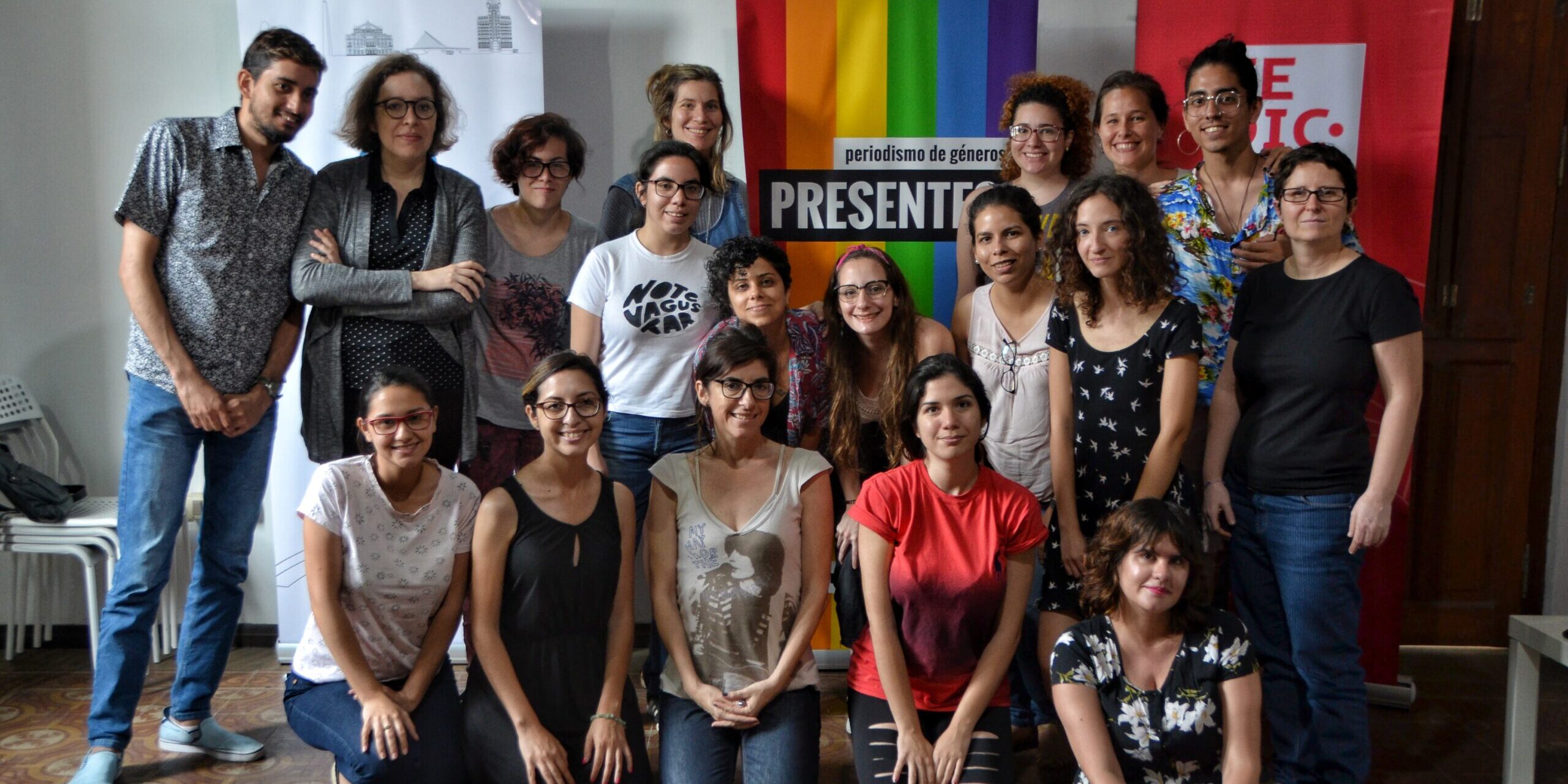
On November 2nd and 3rd, Agencia Presentes convened 60 journalists and activists in Asunción for training workshops on inclusive communication.

Share

Photos: Jessie Insfrán Pérez
On November 2nd and 3rd, Agencia Presentes convened over 40 journalists and activists in Asunción for workshops on inclusive communication. The event concluded with an edit-a-thon of LGBT content on the Spanish Wikipedia, in collaboration with Wikimedia Argentina. All three activities are part of the Wiki LGBT Human Rights.
The free, in-person workshops took place over two days at the Medioteca of TEDIC —a Paraguayan organization that develops open civic technology and defends digital rights for a Free Culture on the Internet. The two workshops were coordinated by the directors of Presentes, María Eugenia Ludueña and Ana Fornaro.
[Now]🇵🇾🌈📝#Paraguay #Asunción #Workshop
The COMMUNICATION TOOLS WORKSHOP FOR #LGBT. @wikimedia_ar, along with the news agency @PresentesLGBT and a large number of activists, will remain here until 6 PM at @TEDICpy pic.twitter.com/slmPs8XfGL— WikiHumanRights (@WikiDDHH) November 2, 2018
On Friday, the Communication Tools workshop for sexual diversity activists was held and 30 people from various organizations attended - including Panambí, Somos Pytyvohara, Aireana, La 108, It gets better Paraguay, Coalición TLGBI, APDH and Lesvos.
Throughout the afternoon, participants outlined the relationship between the media and LGBT+ activism in Paraguay's capital. There was also time to share experiences with journalists and brainstorm strategies for increasing the coverage of news about sexual diversity in journalistic agendas, while respecting human rights, in one of the region's most conservative and backward countries in terms of LGBTQ+ rights.

This workshop by Agencia Presentes offers basic tools for activists working in the field to transform data and situations of human rights violations into communication that can reach the media. Some of the questions explored collectively were: How to work with sources? How to produce reliable information? How to verify facts? How to use social media?
Saturday was the workshop on best journalistic practices. Aimed at journalists in Paraguay, it brought together 30 workers from both independent and commercial print and radio media. Starting with the question, "How are LGBT+ news stories reported in Paraguayan media today?", participants analyzed local examples and shared experiences in editing feminist and LGBT+ topics.
The discussion also addressed how these issues can be tackled so they no longer appear only in the "police" or "trends" sections, but rather integrated across the media agenda. Strategies for combating stigmatization, stereotypes, and media violence were also explored. Other questions raised for agenda development included: What needs to be communicated today? What legal frameworks can communicators cite when national laws protecting rights are lacking?
The activity continued with an editing workshop led by Luisina Ferrante, Education Manager at Wikimedia Argentina. Afterwards, participants edited Wikipedia articles in Spanish to align them with a human rights framework, or to add information about organizations and cases of violence in the country. Fifteen people, including journalists and activists, participated and edited 14 articles.
The project
This project of workshops and edit-a-thons for inclusive communication about diversity was born from a partnership between Presentes (a regional digital LGBT news outlet with a human rights perspective) and Wikimedia Argentina, two non-profit civil society organizations. It also has the support of the Embassy of Canada.
The meetings held with activists and journalists in Asunción are part of the first phase of the project for inclusive communication about diversity. In a few weeks, on November 24, there will be an LGBT+ content edit-a-thon at the Faculty of Social Sciences of the University of Buenos Aires. And in February 2019, the project will conclude in San Miguel de Tucumán, the capital of one of the most violent and anti-rights provinces for LGBT+ people, with workshops for activists and journalists, and another edit-a-thon.
We are present
We are committed to journalism that delves into the territories and conducts thorough investigations, combined with new technologies and narrative formats. We want the protagonists, their stories, and their struggles to be present.
SUPPORT US

FOLLOW US
Related notes
We are present
This and other stories are not usually on the media agenda. Together we can bring them to light.