

Lola Bhajan: “As a girl I used to pray to God to wake up like a little girl”
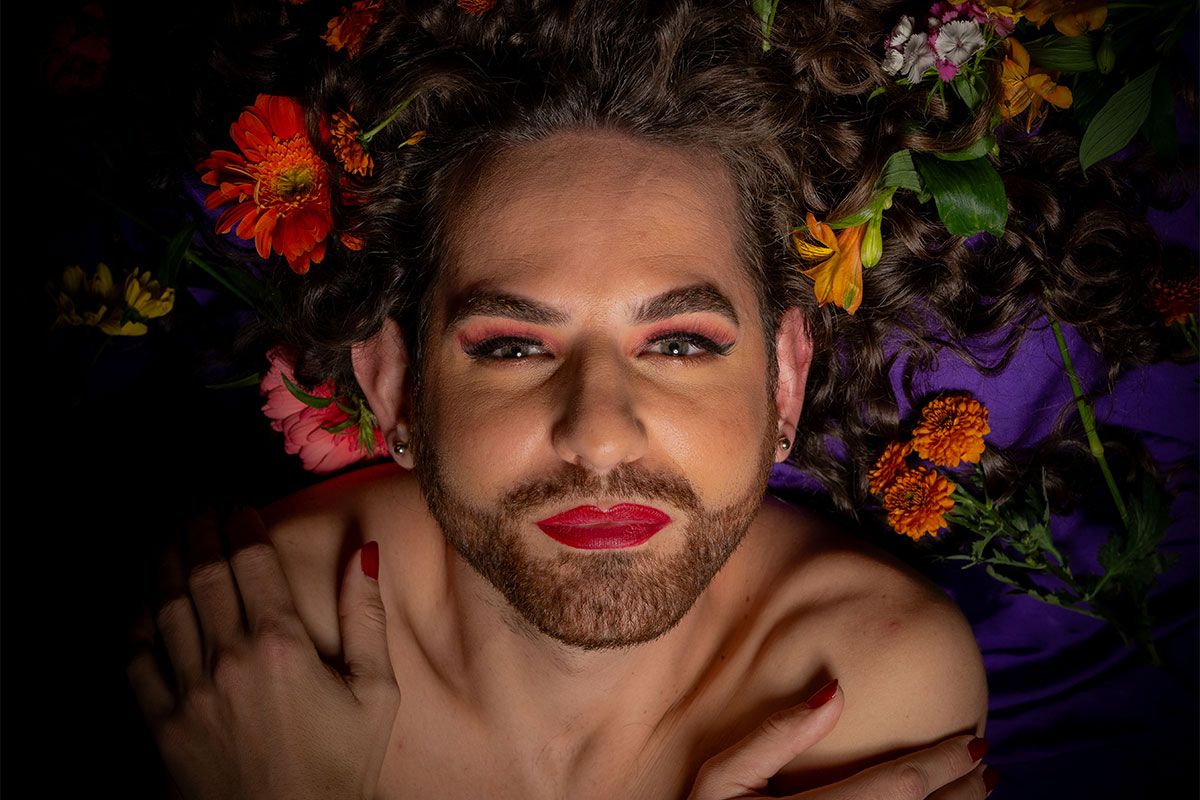
She captivates audiences on stage with her ancestral singing accompanied by the caja drum from northern Argentina. But she also commands attention with the raw, first-person narratives on her blog. In addition, she's an actress, amateur photographer, and performer. And in everything she does, she's an activist. Get to know this trans artist.

Share

By Paula Bistagnino
Photos: Lola Bhajan.
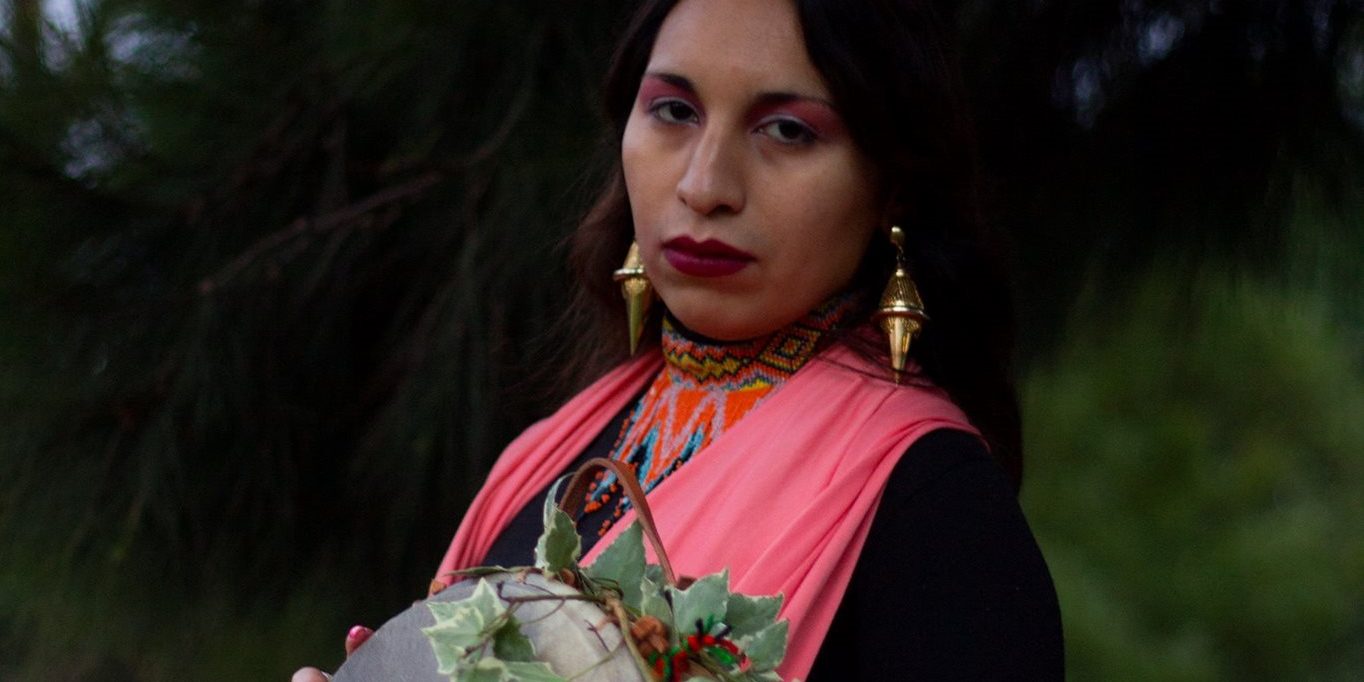
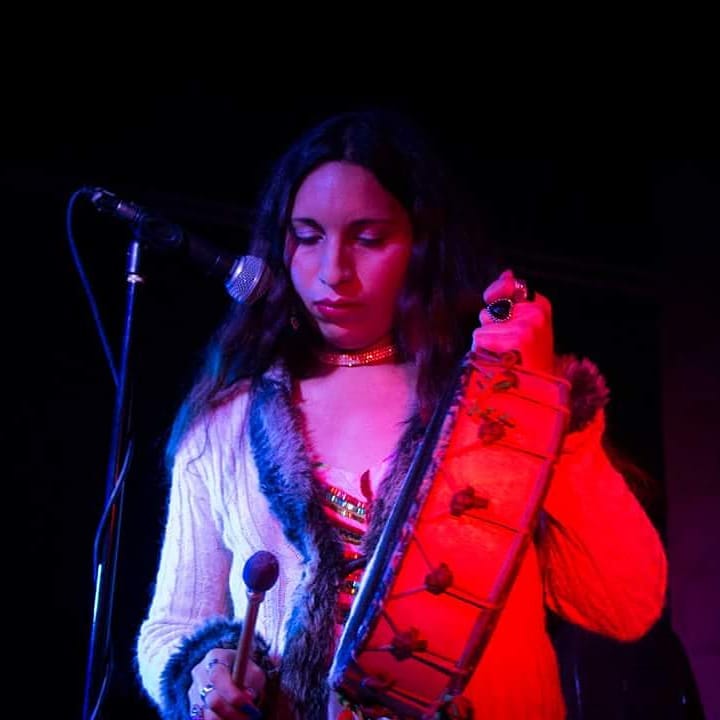
“Who is that girl singing?” The question, repeated at the latest rally in support of Analía “Higui” de Jesús, is asked every time that girl takes the stage and unleashes a dazzling voice: what she does is ancestral singing with a caja drum from northern Argentina. And she is Lola Bhajan, also the author of the blog lolacruda.blogspot.com , photographer, actress, and trans performer.
She was very young when she started writing and telling her stories. She did it without thinking about why: “I just did it,” she says. Like when she received her first digital camera at 16: “I used it to express my identity, even though I wasn't aware then of who I was. But I know that my writing and photos have impacted people, and that's what's important to me.” From photos and writing, she moved on to acting and music. And there she found a medium she hadn't expected: today she performs as a solo artist, but she also has an acoustic grunge-punk duo with her husband, Sergei Zver—who is Ukrainian—and another electronic and fusion music project with Enanomalhecho —they just recorded an album that will be released in 2019 by Plano Records. In addition, in March she will premiere an autobiographical film shot over ten years with the La Plata-based director Diego Leone.
 -What was your childhood and adolescence like, and how did art influence the construction of your identity?
 -What was your childhood and adolescence like, and how did art influence the construction of your identity?
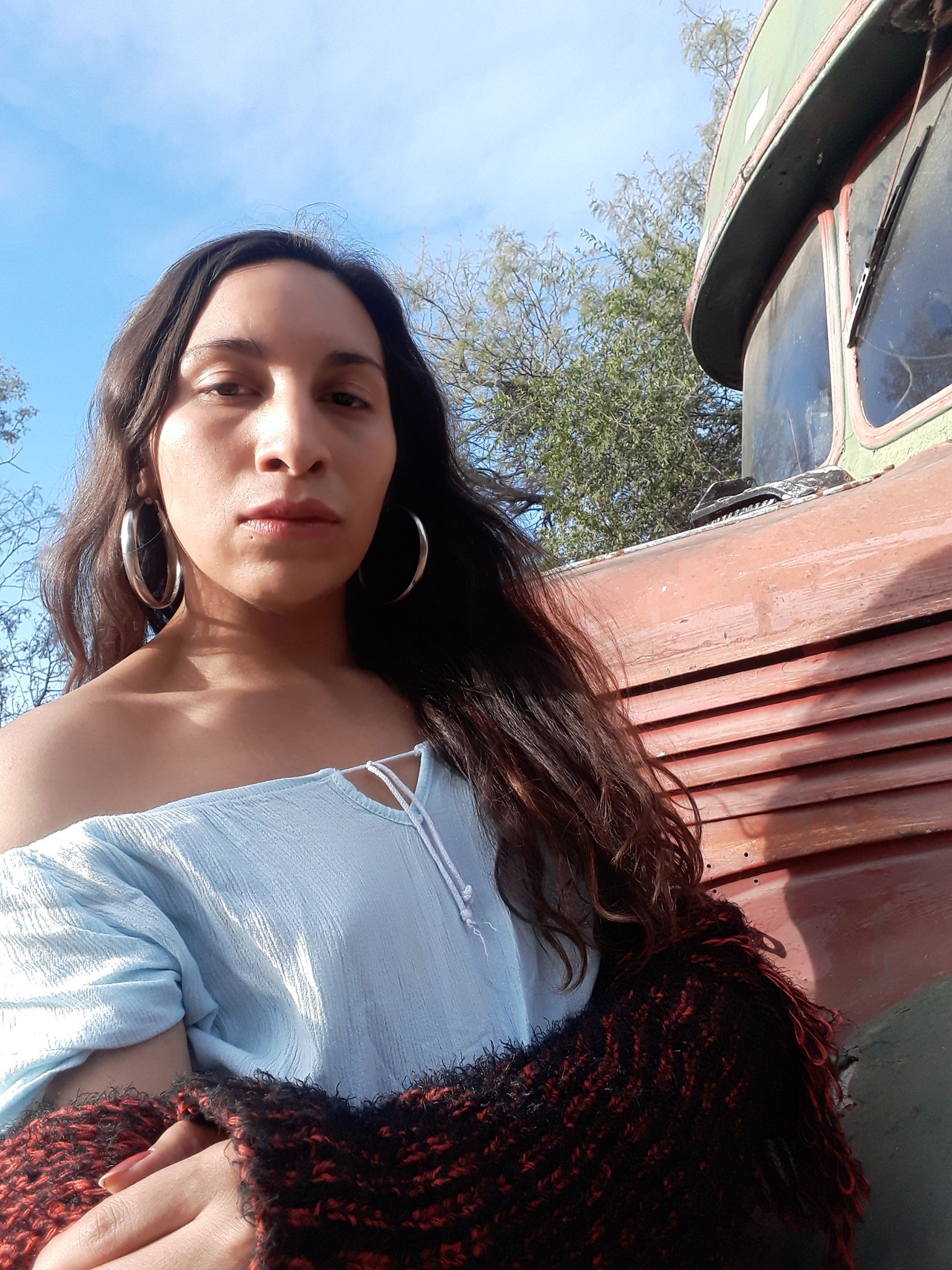
I had a fairly peaceful childhood within my family. I always felt very safe and secure at home, and that's where I liked to be. I was raised mostly by women: besides my mother, by my aunt and grandmother. My father always worked a lot, and I never felt very close to him. I also had an atypical childhood because my parents were hard of hearing, and I was always the daughter with deaf parents. They almost never participated in school meetings and things like that, but my aunt did, as she also worked at that private, religious school as a kindergarten teacher. From a very young age, I always saw myself as a girl, but it wasn't something I really thought about or considered, since I never had any information about gender, especially not back then. Even as a girl, I used to pray to God to wake up like a little girl the next day. Neither in my family nor at school. I remember one night we went to my aunt's house, and as we were leaving there were women standing on the corners dressed extravagantly. My aunt told me, "They look like women, but they aren't; they're men." I think that was the first time I'd ever heard anything like that.
My first few years at school were fine, although hanging out with girls and not playing soccer came at a price. Starting in fourth grade, things started going badly with my classmates, and the bullying began. They laughed at me and sometimes threw things at me. Also, my teacher was very strict, and I didn't feel supported. Eventually, I got fed up and didn't want to go to school anymore. I transferred to a public school near home, where I finished seventh grade and was happy. My classmates and teachers treated me very well. After turning 13, I started high school, but there was no opportunity for bullying since I was able to defend myself and earned the respect and affection of my classmates. It was at that age that I started going to internet cafes and chat rooms, first "straight" chat rooms, although I called myself Lola. Later, I ventured into gay chat rooms. My family never interfered much in what I did outside the internet cafe, so I could always go out and meet people without worry.
-How and when did you start singing?
 -How and when did you start singing?
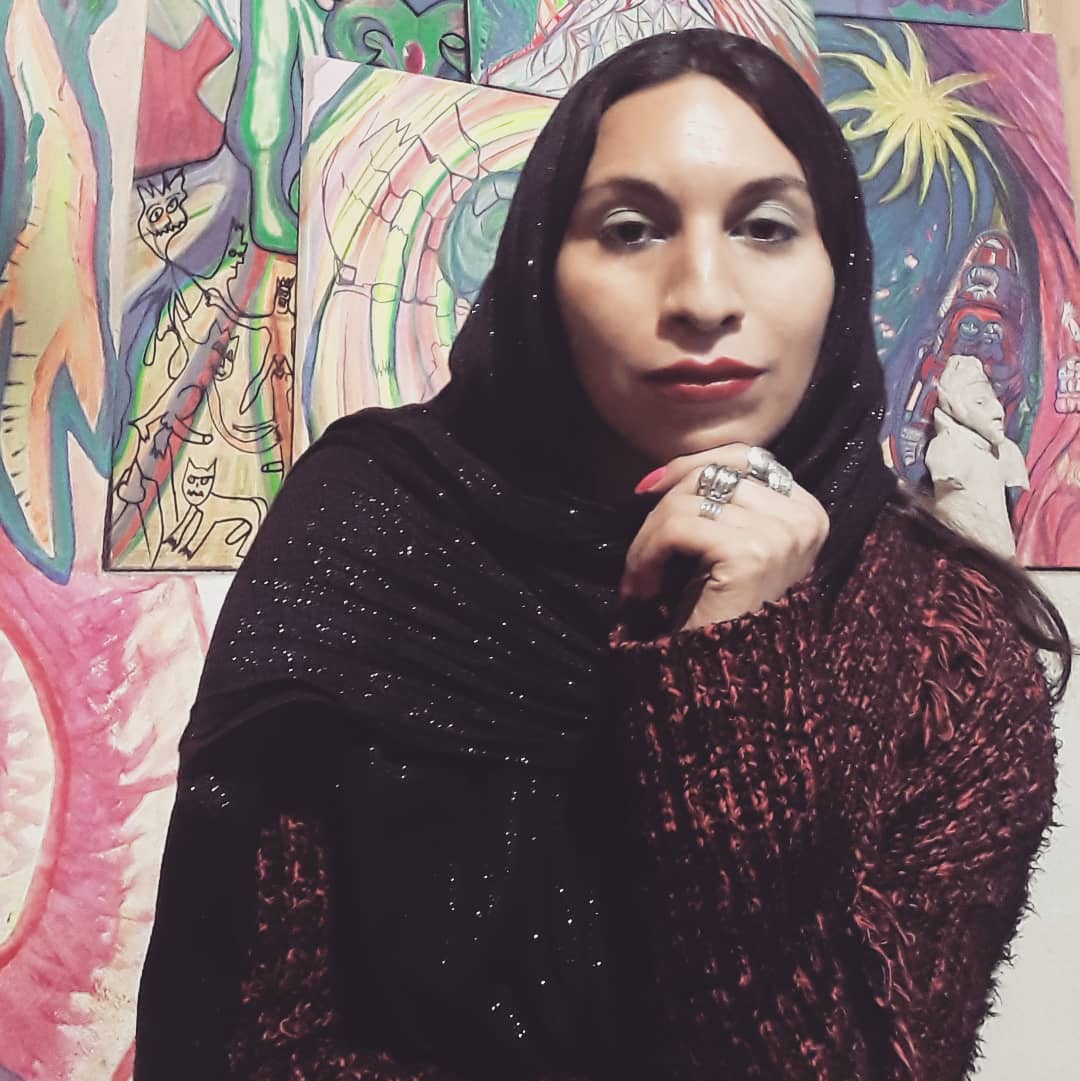
As an only child, solitude was my best friend, and my adolescence was a time of great self-discovery, musically as well. I always knew I wanted to act or sing, but my family never encouraged me in any way. Although I listened to a lot of music, I only started singing five years ago because I always thought it was an innate talent, not something you could learn. I began taking lessons with Érica García, who helped me a lot to discover my voice. Then, I found Leda Valladares and started listening to music featuring singing with a caja drum: I was blown away; I practically didn't know it existed, and that shows how invisibility indigenous music is often overlooked. I became obsessed with acquiring the instrument, the caja, and ordered it online from a website in Santiago del Estero. It arrived a few days later, but I didn't know what to do with it, so I kept it stored away for a few months. During that time, I tried making music with other people, but I was never satisfied. Until I met Professor Mauricio Cucien, whom I consider my great teacher in this music. After just a few classes, I felt it was my calling and started singing in a group with my classmates, then as a soloist. And I forged my own path.
-Your music is distinct from what is heard in the LGBT scene, how do you define your music and how was your style defined?
-To be honest, I'm not very familiar with what's being said within the LGBTQ+ scene. I know that what I do isn't very common, either inside or outside of it; singing with a caja drum is something that's invisible, as is that culture in general. Even more so with a trans voice. I think the interesting thing about this is being able to bring this singing to these spaces, and I don't want to forget to mention Susy Shock, who also sings this way, although I consider our styles and voices to be completely different, and that's what's good, that there's diversity. I don't know if I can define my music, which is really everyone's music. I don't believe that music has owners. I like to preserve and sing native music in its traditional form, obviously applying my own personality, but I also like being able to fuse music with modern elements and do both. I believe that traditional music has to be passed on and we should never stop singing it. But it's also good to be able to combine it with new things so that it can reach more people. The important thing is to be able to feel it. The important thing is to be able to do things with feeling, and that's what I do. Otherwise, I wouldn't do it.
-Activism has grown in recent years. How do you see it today and what is your involvement?
My activism is through art. I'm not a fan of political parties, nor am I a member of any. Being trans in this society already puts you in a position of activism and struggle; there's no other way. Luckily, I think things have progressed a lot today, especially for people in our community, but there's still a lot to be done. Obviously, I follow political discussions and I have an affinity with certain representatives of certain political parties, but I don't like to express it publicly; I keep it to myself and those close to me. Although I do say what I don't like or who I don't like. In general, I don't really like the world we live in; it's hard for me to have a good time. As long as there are people who suffer or find themselves marginalized, mostly because of powerful abusers who have no empathy for anyone and only think of themselves, that really affects me. But life goes on, and I want to contribute at least something so that we can all live better.
-What does it mean to be trans in Argentina today?
Being trans in Argentina today is difficult. Not many people understand what it means to be trans yet. I, who speak with many people, think there's a lot of confusion, and many people have to go through difficult situations simply for being who they are. For me, being seen as a cis girl by others saves me from many situations. And that this happens is truly sad. I think we have a long way to go as a society. However, I also see that we've made progress in many areas: talking about trans children and having organizations that address these issues seems wonderful to me. And I believe the future lies with the new generations; it's just a matter of time. I was lucky enough to be a strong person, which allowed me to express my true identity or being at a young age. By 15, I was already dressing in black and ambiguous clothing, and I also wore makeup and plucked my eyebrows. My parents didn't like it, but I confronted them and ended up doing my own thing, as always, until they got used to it. Even back then, I didn't define myself as trans because I don't think I'd ever heard that word before. That word defines me within society and within the political sphere. But I also use transvestite or trans woman, which are words I love. But for myself, I think words no longer matter, it doesn't matter what others call me or what I call myself in a group or society. I am more than words, I am myself, and nothing else matters. Unfortunately, I couldn't experience a trans childhood because of the era and the lack of information on this topic. But here I am as Lola, and that's what's important, that I made it. And if I could, others can too.
Upcoming dates: November 18 in Mendoza with Lola Bhajan & Enanomalhecho / November 29 with Susy Shock at the Margarita Xirgu Theatre.
We are present
We are committed to journalism that delves into the territories and conducts thorough investigations, combined with new technologies and narrative formats. We want the protagonists, their stories, and their struggles to be present.
SUPPORT US

FOLLOW US
Related notes
We are present
This and other stories are not usually on the media agenda. Together we can bring them to light.