

Killa, the trans model who is challenging the Peruvian fashion world
After struggling in the fashion world and creating her own modeling academy and cultural center, this year she was a finalist among 300 girls for the 2018 edition of Model of the Year Peru. On October 11, she walked the runway alongside 19 other models at Jockey Plaza. She was the only transgender woman.

Share

By Esteban Marchand, from Lima ( photos and text)
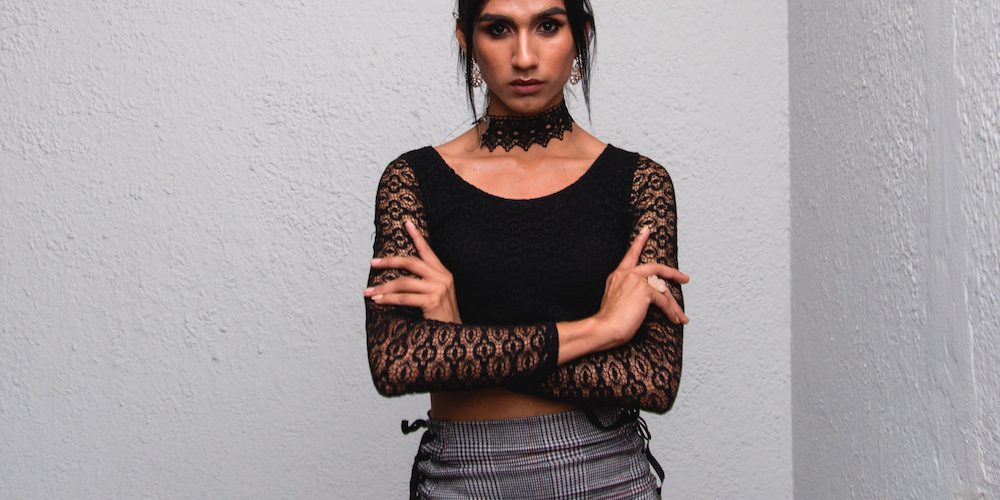
She's 19 years old and has a feline gait. Despite her youth, she has a story full of twists and turns and battles. Just seeing her, her name makes sense: Killasumaq means "beautiful and lovely as the moon" in Quechua. Born in the Peruvian jungle, she migrated to the city of Chiclayo, where the most important part of her life would begin. After working hard in the fashion world and creating her own modeling academy and cultural center, this year she was a finalist among 300 girls for the 2018 edition of Model of the Year Peru. On October 11, she walked the runway alongside 19 other models at Jockey Plaza. She was the only transgender woman.

From the market to the catwalk
When she moved with her family to Chiclayo at the age of 15, her reality changed completely. They lived in an adobe house, and shortly after settling there, her father lost his job, leaving them without any means of support.
They had to go out into the streets and search the area around the Moshoqueque Wholesale Market to find scrap metal to recycle. They collected bottles, cardboard, and cans.
“Once I was collecting trash and I found some little brown heels. They were my first heels, but they were kind of loose, so I had to buy some glue to fix them. The best part is that they were my size,” she tells Presentes.
From that first pair of heels, she realized she could create things with what other people considered trash. She collected wigs, fabrics, metals, and other materials to make dresses and outfits.
[READ ALSO: Another attack on a trans woman in Peru: that makes 8 so far this year]
But they couldn't survive on recycling alone. With their mother, they managed to sell food: juanes and mazamorra. They would have popcorn and coffee for dinner.
Empowered thanks to her two high school friends, who introduced her to LGBTIQ activism – there she learned terminology, there she read for the first time about sexual orientation and gender identity – at 17 she decided to enter a fashion design institute.
“Every word I was reading resonated with me. What am I? I feel like I am a woman.” At home, they began to accept her, and it was with the support of her family that Killasumaq began to feel that no one could tell her how she should live her life.
But during her design studies, she re-experienced the bullying she had endured in school. A teacher insisted on humiliating her and calling her by the name on her identity document. She decided to switch to modeling.

"You who are going to be a model"
“What are you going to be, a model? Look at yourself,” were some of the responses she received in markets, shoe stores, and galleries.
“I used the contempt people showed me to prove them wrong. I wanted to contradict them, I wanted them to know they were mistaken,” he says now.
[READ ALSO: A trans beauty pageant in the heart of the Amazon]
“When I was about to take the bus home, I saw a huge gallery with a lot of dreamy dresses covered in rhinestones and sequins. I went in and the designer Mirella Perez greeted me and told me to leave my number just in case, so I did.” She called me the next day.
Her debut as a model was on regional television. “Everyone wrote to me and asked what I was doing there, as if that wasn't where I belonged.”

With determination and a steady stride, Killa's life improved. She started taking photos with some friends she had in Chiclayo and traveled to Lima to model, and this year she was a finalist in the Model of the Year Peru competition.
There she did not feel discrimination and the organization called her by her chosen name.
“Many girls feel self-conscious because they are trans, but I believe they should never stop fighting for what they most desire. Do whatever it takes to achieve your dreams. I want to seek more visibility; I want people to not be surprised to see a trans girl walking down the street. That way, other people will see that we are normal and that we also suffer,” says Killasumaq.

We are present
We are committed to journalism that delves into the territories and conducts thorough investigations, combined with new technologies and narrative formats. We want the protagonists, their stories, and their struggles to be present.
SUPPORT US

FOLLOW US
Related notes


We are present
This and other stories are not usually on the media agenda. Together we can bring them to light.