

Attempted transvesticide case against Otrans leader sent to trial
The La Plata Justice system has brought to trial the attempted murder of Otrans activist Claudia Vázquez Haro, and considered hatred of gender identity as an aggravating factor.

Share

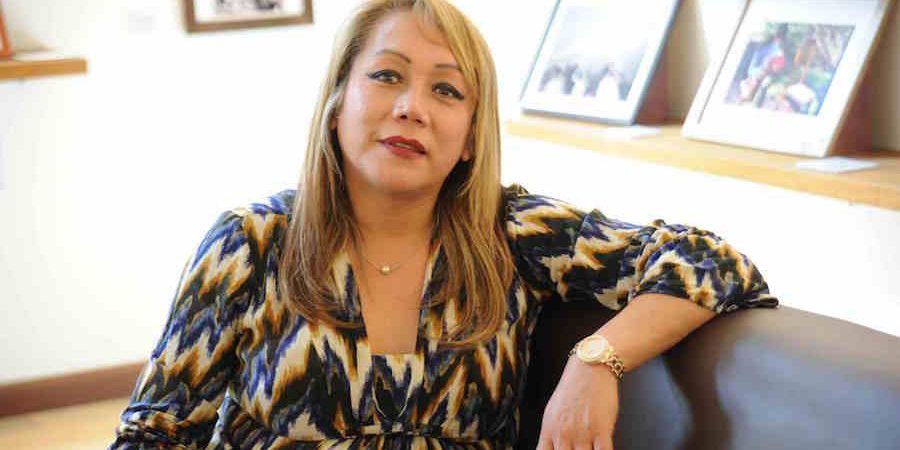
The president of Otrans Argentina, Claudia Vásquez Haro, had reported to the courts that on Saturday, May 13, 2017, a man, later identified as Leonardo Mendoza, attempted to kill her in her own home in the La Loma neighborhood of La Plata, Buenos Aires Province. On September 14, the Third Chamber of the La Plata Court of Appeals and Guarantees issued a ruling recognizing gender-based hate and sent the case to trial. The charges were "Aggravated homicide motivated by hatred of gender identity and attempted femicide."
[READ MORE: They tried to assassinate the leader of Otrans]
"It recognizes gender identity as an aggravating factor"
“The important thing about this decision is that the case will now go to trial with the charge of ‘Aggravated homicide motivated by hatred of gender identity and attempted femicide.’ This ruling recognizes hatred of gender identity as an aggravating factor,” said Luciana Sánchez, a lawyer with Otrans. Sánchez represented the family of Diana Sacayán in the trial for the transphobic murder of the activist and human rights defender, which resulted in a landmark ruling: for the first time, the courts recognized that it was a homicide aggravated by hatred of gender identity and sentenced Gabriel David Marino to life imprisonment as a co-perpetrator of the murder.
[READ MORE: Historic ruling in the transvesticide case of Diana Sacayán: A day of justice and trans fury in court]
"It's progress"
Although the Guarantee Chamber does not explicitly mention it, this ruling for the transvesticide of Diana Sacayán is a precedent that was taken into account and marks the path to reach this resolution of the La Plata justice system.
“It’s a step forward. The Third Chamber interprets that my attacker intended to harm me, even to the point of killing me,” Claudia Vásquez Haro told Presentes. In a context where very few deaths of transvestites and trans people result in justice, “when we survive, the justice system generally doesn’t consider us valid interlocutors,” Vásquez Haro added. She assessed that this court decision “is on its way to setting a precedent that doesn’t exist in the province of Buenos Aires. We constantly fight with the justice system regarding the treatment of cases involving the trans and travesti community, and until now our voice has been ignored. We are fighting to ensure that the oral proceedings address my lawyers’ arguments that it was an attempted transvesticide/transfemicide motivated by hatred of gender identity.”
"Little by little, the concept of transvesticide is gaining ground."
Coralía Ojea, the other lawyer from Otrans also handling the case, explained that this ruling by the La Plata court rejected an appeal filed by the defense to change the case's classification. “But the court rejected the motion and upheld the original classification (article 80, sections 4 and 11). This means it's moving in the direction this could be considered attempted homicide motivated by hatred of gender identity. This is significant because, little by little, the concept of transphobic hate is gaining traction in the La Plata judicial district.”
"These are invisible crimes."
The CELS (Center for Legal and Social Studies) was one of the organizations that appeared in the case as an amicus curiae. Lucía de la Vega, a lawyer with the CELS Litigation and Legal Defense team, explained: “At CELS, we presented ourselves as amicus curiae in the case and, on the one hand, we brought forward standards of protection for human rights defenders, understanding that Claudia is a defender of the rights of LGBTIQ people. On the other hand, we argued that it was necessary to change the charge to attempted transphobic murder because we understand that the defendant's motive was that Claudia is a trans person.”
The lawyer from CELS emphasized that these steps by the Judiciary, “as well as the sentence for the transvesticide of Diana Sacayán , and the possibility of classifying Claudia’s case as attempted transvesticide, are very important because these are crimes that have historically been made invisible . In fact, there are no statistics on murdered transvestites and trans people, and judicial investigations are usually inadequate . Lohana Berkins told us for our annual report that since the time of the police edicts, when justice finally arrived for transvestites, it did so punitively, never to protect them. That is why we are following this case with particular attention.”
More than 50 local, national, and international organizations also joined the demonstration. “This overwhelming support shows that justice cannot be detached from reality and the necessary legal reforms regarding transphobic and transfemicide cases,” said Vásquez Haro. The Faculty of Journalism at the National University of La Plata, where Vásquez Haro is a professor and director of Sexual Diversity, expressed its support for the leader of Otrans .
We are present
We are committed to journalism that delves into the territories and conducts thorough investigations, combined with new technologies and narrative formats. We want the protagonists, their stories, and their struggles to be present.
SUPPORT US

FOLLOW US
Related notes



We are present
This and other stories are not usually on the media agenda. Together we can bring them to light.