

Mendoza will not penalize those who transmit HIV and STIs
The Mendoza Chamber of Deputies debated a bill yesterday to amend the Provincial Code of Misdemeanors, which had already passed the Senate. Among its provisions, the bill criminalized the transmission of HIV/STIs. Mobilization by organizations and public awareness campaigns led to the removal of this article. The bill will now return to the Senate for further consideration with amendments. Concerns remain regarding several articles.

Share

By Lucas Fauno Gutiérrez
Illustration: Florencia Capella
The Mendoza Chamber of Deputies debated a bill yesterday to amend the Provincial Code of Misdemeanors, which had already passed the Senate. Among its provisions, the bill criminalized the transmission of HIV/STIs. Mobilization by organizations and public awareness campaigns led to the removal of this article. The bill will now return to the Senate for further consideration with amendments. Concerns remain regarding several articles of the bill.
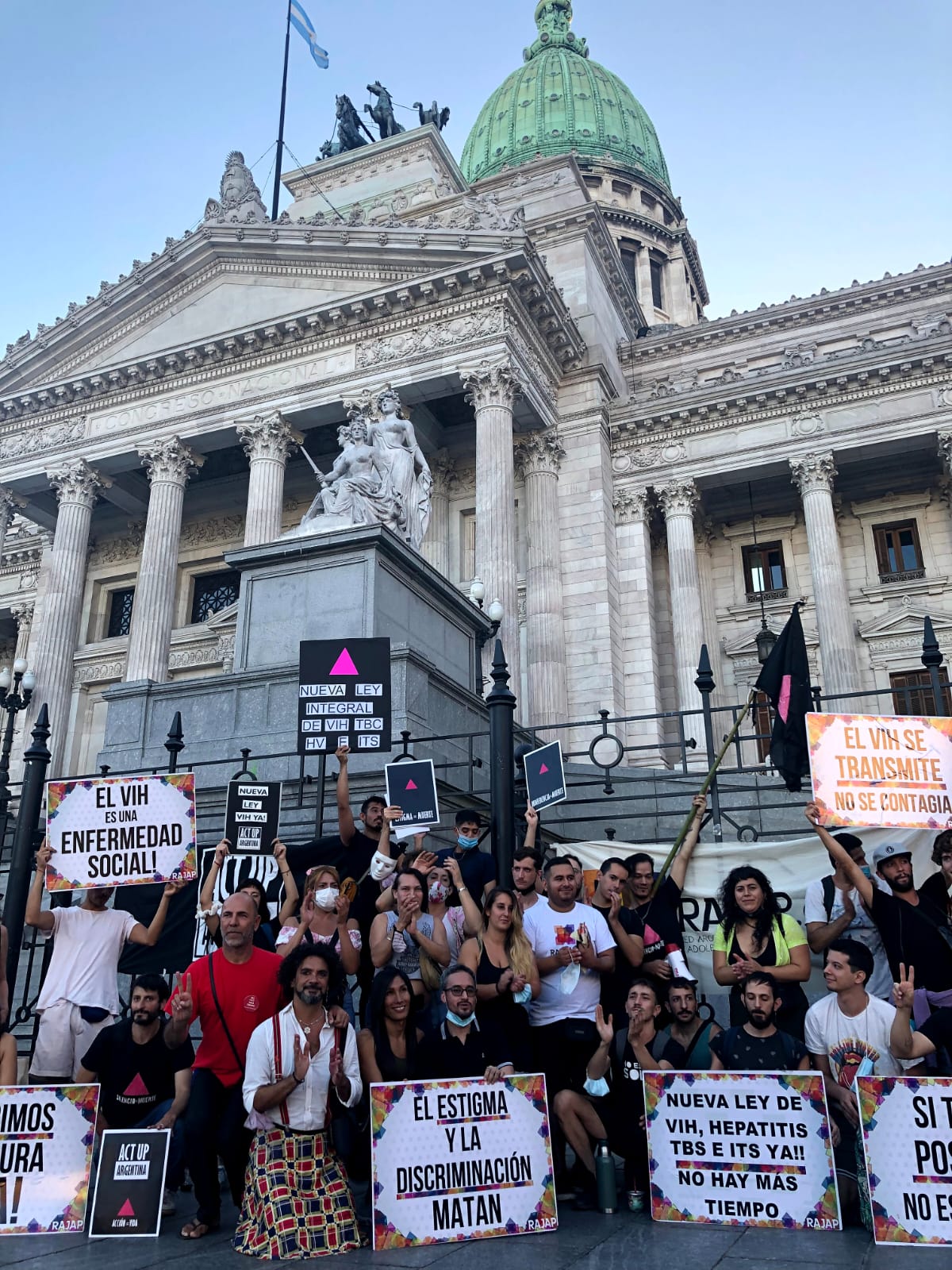
While the Mendoza legislature began discussing the proposed amendment to the Code of Misdemeanors, numerous social, political, and student organizations mobilized outside to condemn many of the articles included in the bill.
Article 126, which was proposed in the reform, sanctions with fines and even arrest anyone who "transmits venereal or contagious disease" and indicates forced hospitalization.
Rebeca Rodríguez, president of VIHvo Mendoza, told Presentes that “some deputies presented a proposal to eliminate article 126 and modify others, but it was not accepted during the parliamentary working group. They went down to the chamber and there they found out that Cambiemos had made modifications but did not allow them access to them.”
During the session, Representative Claudia Segovia mentioned that the article had been removed, but this wasn't confirmed until later. "Until 2 p.m., when the President's office read the amendments and reached article 126, they confirmed the removal; we weren't certain," Rebeca explained.
“We are left with a bittersweet feeling,” continued the president of VIHvo Mendoza, regarding the other articles of this reform: “They are not going to criminalize us for transmission, but if tomorrow we lack medication and have to go out and block a street, they are going to fine us for social protest.”

The session
Outside the fenced-off legislature, the presence of police and gendarmerie created a tense atmosphere that led to some clashes. “It didn't escalate, but it was violent that they put police and gendarmerie in the streets,” said María Laura Chazarreta, president of the civil association Mujeres Cotidianas (Everyday Women).
On Tuesday the 11th, Chazarreta submitted a letter to the president of the Committee on Rights and Guarantees, Representative Carlos Sosa, and another to the president of the Committee on Legislation and Constitutional Affairs, Representative Jorge Albarracín. In these letters, he argued for the urgent elimination of Article 126, citing several laws it would violate, such as the National AIDS Law (23.798), which prohibits mandatory HIV testing, and the 2012 Oslo Declaration, which states that any mandatory serological testing is a violation of medical ethics and human rights. He also cited the National Patient Law (26529), which guarantees the right to autonomy. Chazarreta told Presentes that “the code is rejected by most political and social groups within the popular movement. We emphasize Article 126 because the discrimination against HIV-positive people is very evident.”
With 24 votes in favor, 22 against, and two abstentions, the bill will return to the Senate for further review. In addition to the elimination of Article 126, Article 118, concerning "voluntary absence," was also removed, and other articles, such as Article 46, which addresses personal offenses against public officials (excluding political and judicial officials), were modified. However, many articles, such as Article 55, which penalizes "disturbing acts and public disorder," remained unchanged.
A project to criminalize
“I can’t celebrate because the entire code of conduct is discriminatory; it criminalizes protest and the most vulnerable sectors, and we can’t think about our struggles without thinking about all struggles. We managed to remove this article because it criminalized and discriminated against people with HIV, so we’re not going to accept the criminalization of other sectors of society,” Chazarreta said.
In an Argentina where the 2019 budget for HIV medication remains unconfirmed, with the Ministry of Health downgraded to a Secretariat, Rebeca Rodríguez commented that the demands continue: “Now we are regrouping and making ourselves available to political and social organizations to support the measures they deem necessary.”
We are present
We are committed to journalism that delves into the territories and conducts thorough investigations, combined with new technologies and narrative formats. We want the protagonists, their stories, and their struggles to be present.
SUPPORT US

FOLLOW US
Related notes

We are present
This and other stories are not usually on the media agenda. Together we can bring them to light.