

CHILE Senate approved Gender Identity Bill: excludes children
With 26 votes in favor, 14 against, and no abstentions, the Chilean Senate approved the Gender Identity Law for people over 14 years of age. Five years and four months of discussion and postponements had passed since it was first introduced.


Share

By Airam Fernández, from Chile
[News updated at 11:45 on 5/9]
With 26 votes in favor, 14 against, and no abstentions, the Chilean Senate approved the Gender Identity Bill for people over 14 years of age. However, with 22 votes in favor and 18 against, it did not reach the required quorum to include those under 14 in this bill, which seeks to recognize and protect the rights of transgender people. The next step for it to become law must be taken by the Chamber of Deputies. This morning, the parliamentary committees decided that the vote will take place during the session on Wednesday, September 12.
“We have passed a law that grants rights and guarantees to the trans community. We have demonstrated that it is possible for Chile to advance in equality and justice. But I regret that this time the opportunity to legislate for minors was lost. This was a tribute to families and their diverse forms, and today we failed to achieve it. In the future, we must continue to insist, because it is unacceptable that religious fundamentalism continues to be imposed on legal and civic discussions,” said Adriana Muñoz, senator and president of the Joint Committee, at the end of the vote.
READ ALSO: Deputies approved the gender identity law: now it goes to the Senate
For Constanza Valdés, a lawyer, trans activist, and specialist in diversity and gender issues, the biggest surprise on Tuesday was securing more votes than needed for the measure to pass. “Today was historic , and we are very happy,” she said. At the same time, she expressed her regret over what happened to the children.
Franco Fuica, head of legislation and public policy at Organizing Trans Diversities (OTD), also applauds what was achieved in this session: “It’s a tremendous step forward. Today, at least, we can almost guarantee that we will have a law that will ensure the rights of a part of the trans community .”
The explanation she offers for the case of children is based on a cultural issue: “They were left out because within our culture we have a infantilizing view of young people. There is a widespread belief that they lack the capacity to make decisions. Many members of parliament still don't fully understand what a legal gender change entails; they don't understand that children ultimately have a masculinized or feminized gender experience and expression, depending on the case, and that this legal change validates that expression,” she points out.
“I am 9 years old and I am trans”
For the past couple of weeks, since the debate was postponed due to lack of time , children have faced a complex situation. Activists warned that at least four votes were needed to pass the article that would allow them—with the authorization of one of their parents or legal guardians—to legally change their gender marker in a family court. And so it was.
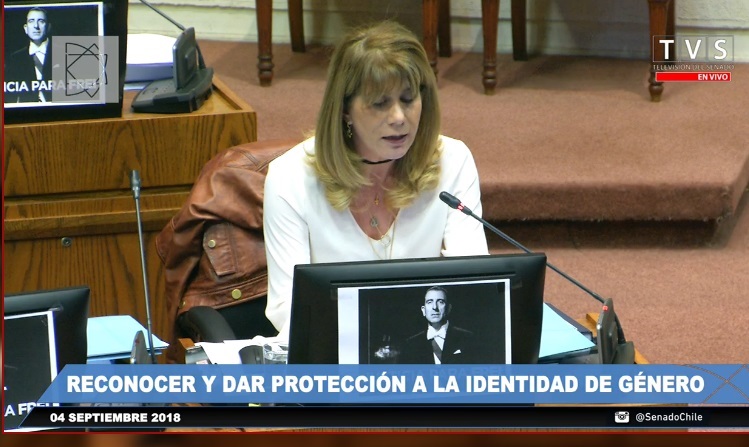
Senator Ximena Rincón was the first to speak at the session, which began at 4:00 p.m. and lasted until 8:10 p.m. "It is false and absurd to say that this law intends to subject children to surgeries. When they are not recognized and are discriminated against, suicide follows. Not all of them reach the age of 14," she said during her address. During her speech, she played several audio recordings of transgender children for the Senate, asking to be recognized: "Hi, I'm Emma. I'm 9 years old and I'm transgender. I would like to have my name on my ID," was the first one heard in the chamber.
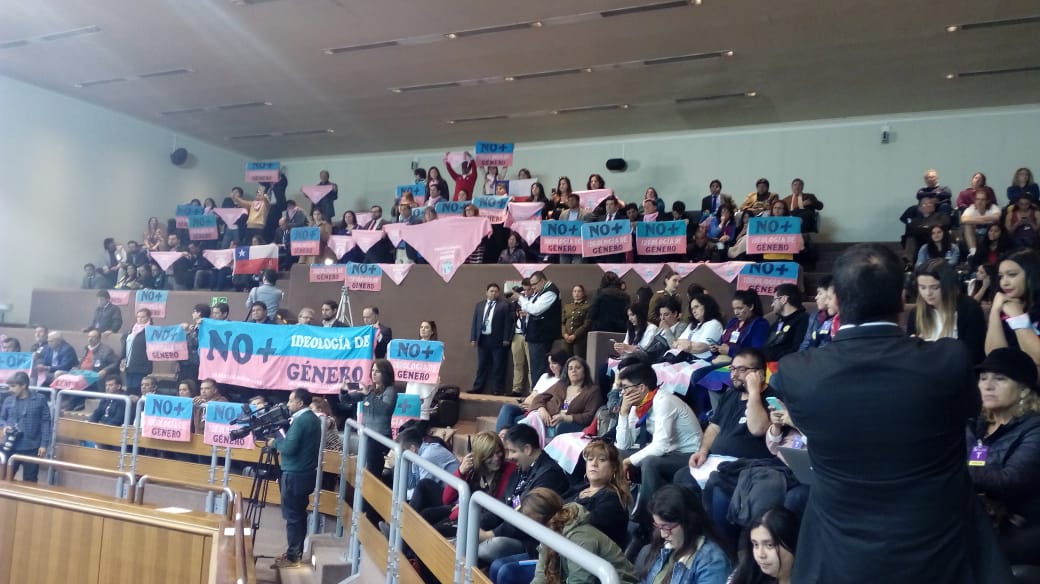
That moment was met with shouts and boos from opponents of the initiative who were watching the session from the gallery. Many were religious zealots and carried signs with the colors of the trans flag and the slogan "No to gender ideology." They did the same every time the senators who argued in favor of the bill spoke. And on several occasions, the Senate president had to interrupt to ask for silence.
a family court judge and mother of a trans girl was referring to : “I am grateful for what just happened. The rights of trans people are guaranteed and made visible. Despite the verbal violence of the opponents of this project, who interrupted the debate every so often, love prevailed over hate speech. Not all children will be protected in the legal system. Those under 14 are protected only by their families; but we hope that they will also be protected by the entire community .”
Jimena Lizama, legal director of Iguales, highlighted the achievement but also questioned the exclusion of children under 14. “It is a tremendous achievement that the Senate approved the bill and recognized the right to gender identity for transgender adolescents. However, it is regrettable that it excluded children , who are also subjects of rights and, therefore, also have the right to recognition of their gender identity, as recognized by the executive and judicial branches, the Inter-American Court of Human Rights , among others,” she said.
For adults, the difference lies in whether or not they are currently married. If they are not, they can apply at the Civil Registry, accompanied by two witnesses who can attest that the applicant understands the legal implications of such a request. Those who are married must apply before a family court, and if the judge approves the change, the marriage will be dissolved.
READ ALSO Tension at public hearings for the Gender Identity Law
As follows?
The bill debated in the Senate on September 4, 2018, had been introduced by the organizations Fundación Iguales and OTD on May 7, 2013, with the intention of having the State recognize the right to identity for transgender people. That is, to allow them to update their identification documents to reflect their gender identity.
Until last week, the bill was expected to return to the Chamber of Deputies for a final vote the day after the Senate vote. This morning, the LIG Committee scheduled a vote for Wednesday, September 12, on "the report of the Joint Committee on the bill that recognizes and protects the right to gender identity."
“I believe this discussion will be much easier, given that the representatives are younger and have a different way of thinking,” says Franco Fuica of OTD. Valdés shares a similar opinion and is certain that a law will be passed very soon: “While it excludes those under 14, it’s not one of the most severe laws worldwide,” he maintains, referring to European countries like Norway and Ireland, which have legislation on the matter, although they allow changes from the age of 16.
If the bill is approved by both chambers, it will be subject to preventive review by the Constitutional Court because it contains provisions of an organic constitutional nature, explains Constanza Valdés. After the bill is passed, the President of the Republic can issue vetoes of an additive, substitutive, or derogative nature if he deems the bill's content unsuitable. In this case, the bill returns to the Senate for debate and must be approved by both chambers. If no objections are raised during this period, the law is ready for promulgation and publication. The standard procedure is for it to enter into force within six to ten months of its publication in the official gazette.
We are present
We are committed to journalism that delves into the territories and conducts thorough investigations, combined with new technologies and narrative formats. We want the protagonists, their stories, and their struggles to be present.
SUPPORT US

FOLLOW US
Related notes



We are present
This and other stories are not usually on the media agenda. Together we can bring them to light.