

For the first time, violence against LGBT people reaches the Inter-American Court of Human Rights.
The Inter-American Commission on Human Rights (IACHR) presented the case of Azul Rojas Marín to the Court. Rojas Marín was illegally detained and raped in 2008 by three police officers in Trujillo, Peru. This case marked a turning point for the rights of LGBTI people in the region.

Share

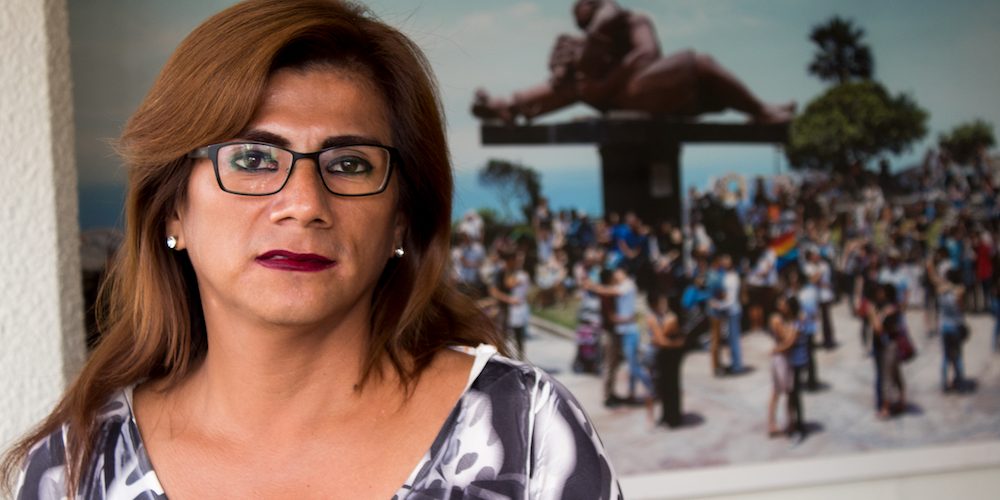
Photo: Promsex
On February 25, 2008, three police officers in the town of Ascope (Trujillo, in northern Peru) arbitrarily detained Azul Rojas Marín, sexually abused him, and denigrated him because of his sexual orientation. Azul had not yet transitioned and identified as a gay man. The court dismissed the charges against the perpetrators in 2009 and closed the case.
Then, with the support of organizations such as the Center for the Promotion and Defense of Sexual and Reproductive Rights (Promsex) , and activists, she presented the case to the Inter-American Commission on Human Rights (IACHR) .
Last week, after verifying the allegations and understanding that it was "violence motivated by prejudice and with elements constituting torture," the case was referred to the Inter-American Court.
That morning, Azul was walking home when a very bright light shone on him. Then he heard the policeman Luis Quispe Cáceres shout: “Get in the car, you son of a bitch!” With the help of two municipal officers, they forced him into a car and took him to the Casa Grande police station. There, two other policemen, Juan Isaac León Mostacero and Dino Horacio Ponce Pardo, were waiting. They beat him, insulted him, and sexually assaulted him .
The arguments of the IACHR are compelling: the severity of the psychological, physical and sexual violence against Azul Rojas Marín; the particular cruelty with the identification or perception of Azul Rojas Marín, at that time as a gay man; the illegal and arbitrary deprivation of liberty based on subjective assessments; the failure to investigate with due diligence from the initial stages , among others.
[READ MORE: #Peru: Police beat and abused him for being gay: he went to the IACHR ]
Furthermore, the Commission determined that throughout the investigation, the victim was discredited and her credibility questioned in a revictimizing manner ; time and again, both during the investigation and in the decision to close the case and dismiss the charges against those responsible . “ The State violated its obligations to care for and protect a victim who reports sexual violence, with the aggravating factor of existing prejudice against LGBT people .”
A turning point in the rights of LGBTI groups
This is a historic event: it is the first case of violence against an LGBTI person that the IACHR has brought before the Inter-American Court of Human Rights . The ruling is also expected to be groundbreaking, as Azul's case received no justice in her country. Organizations and activists see it as an opportunity to strengthen jurisprudence in cases of physical, psychological, and sexual violence perpetrated by state security agents; but also in cases of hate-motivated violence and in the standards of evidence, investigation, and punishment of those responsible.
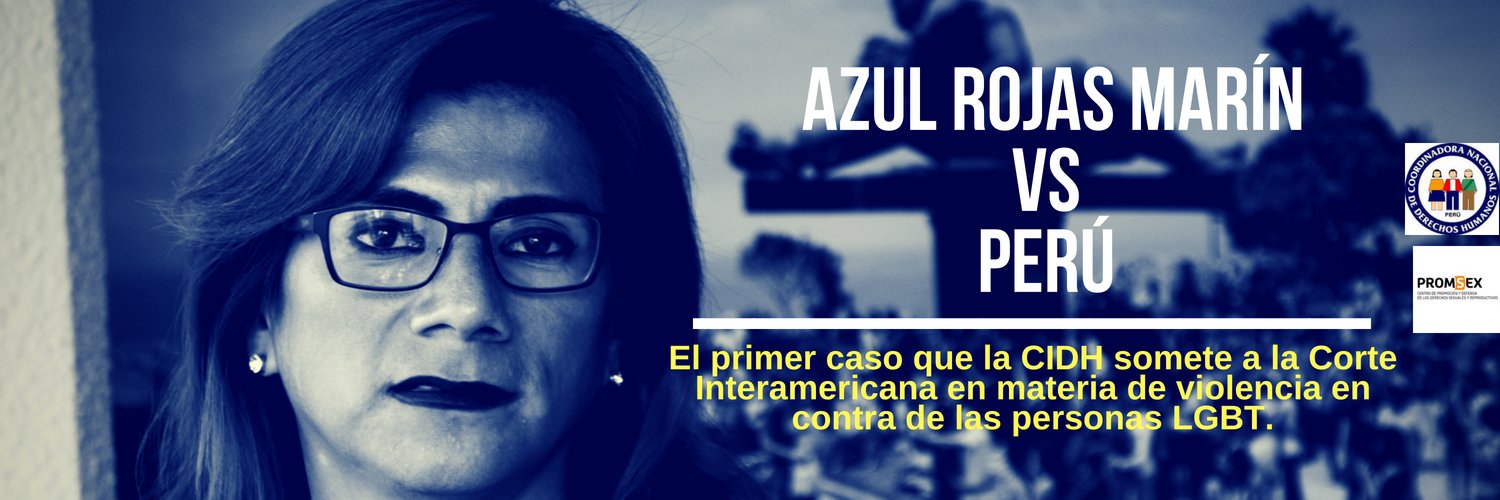 The Court may also take up Azul's case to rule on the stigmatization, disqualification, and discrimination that an LGBTI person may suffer in the context of a criminal investigation.
[READ MORE: How the Inter-American Court of Human Rights' decision to respect LGBT rights affects Peru]]
In its Merits Report, the Commission had recommended that Peru provide full reparations to Azul Rojas Marín and her mother, Juana Rosa Tanta Marín, for the human rights violations they suffered. These reparations should include financial compensation and redress for moral damages, as well as a public act of acknowledgment of responsibility by the State towards the victims.
But on August 22, the IACHR considered that the Peruvian State “did not present any proposal for comprehensive reparation, despite the seriousness of the sexual torture of which he was a victim” and elevated the case to the Court .
We are present
We are committed to journalism that delves into the territories and conducts thorough investigations, combined with new technologies and narrative formats. We want the protagonists, their stories, and their struggles to be present.
SUPPORT US

FOLLOW US
Related notes



We are present
This and other stories are not usually on the media agenda. Together we can bring them to light.