

She is a family court judge and the mother of a trans girl: "I lived with many gender stereotypes"
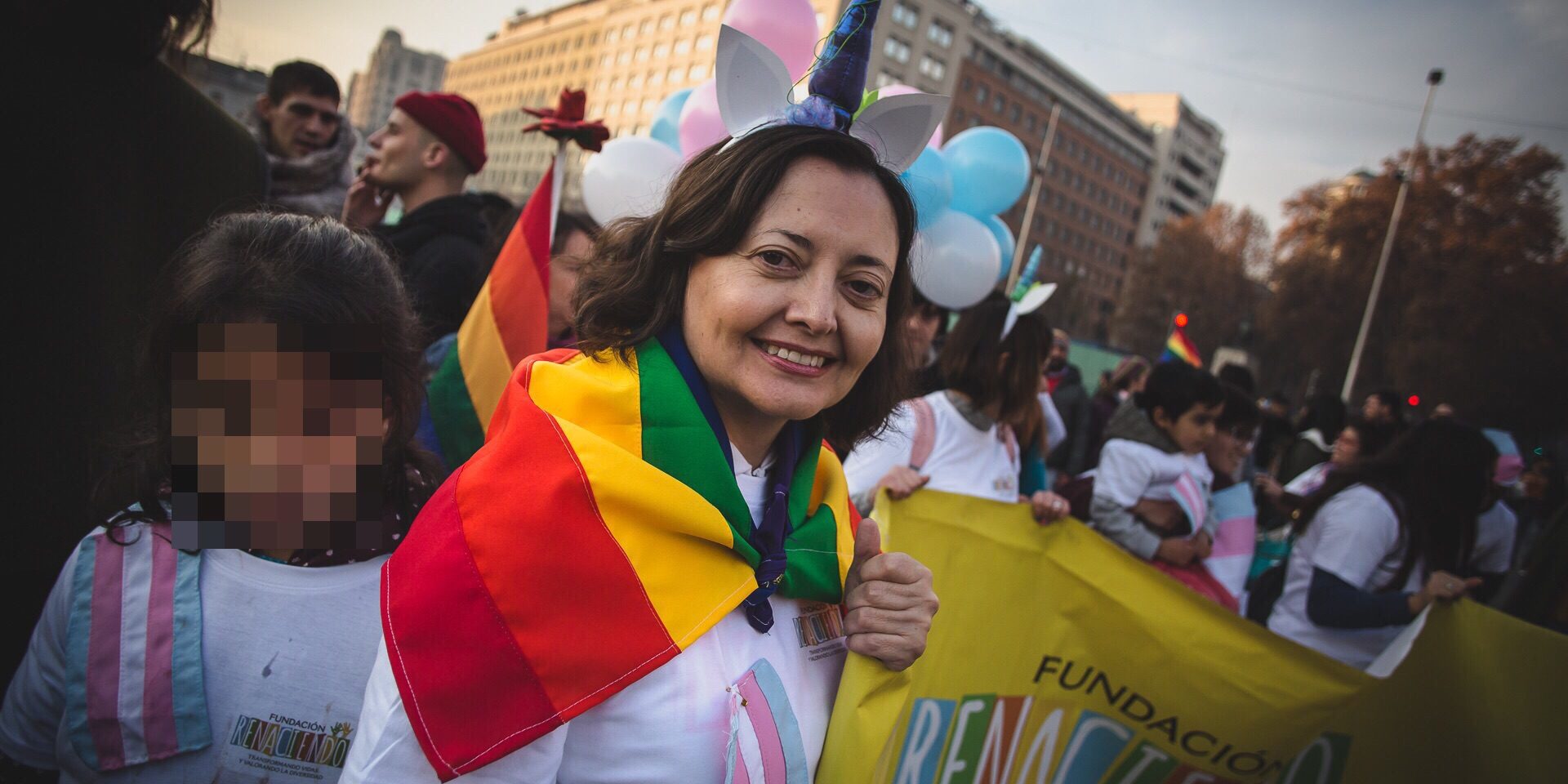
Luisa Hernández is a family court judge. After a long and difficult process, she was able to adopt a six-month-old baby with a disability and little chance of ever learning to walk. Today, Josefina is 11 years old, a trans girl who has undergone numerous diagnoses, walks, and challenges Luisa daily, making her question her own beliefs and convictions.

Share

By Airam Fernández, from Santiago, Chile
Photos: Josean Rivera
Luisa Hernández is a family court judge. Every day she deals with children who suffer domestic violence. She is 52 years old. At 36, she received an infertility diagnosis. She was married then, but they separated. At 41, after a long and difficult process, she was able to adopt a six-month-old baby with a disability and little chance of ever learning to walk. Today, Josefina is 11 years old, a trans girl who has undergone various diagnoses, walks, and challenges Luisa daily, making her question her own beliefs and convictions.
“Mom, when I grow up, will I be able to be a mother?” Josefina asked her last year. Every time the question comes up, Luisa is honest: she tells her she doesn’t know, but that if advances in medicine and science allow it, she will be able to. She also tells her that there are other ways to build a family.
“When she asks me that, I always remind her of her story. I tell her that I couldn’t have babies and that’s why I adopted her, because I’ve never lied to her about that. I remind her that we’re a different kind of family, but a family nonetheless. She’s always understood. When she insists and I remind her, she calms down.”
 “Look at me closely, I’m a girl”
 “Look at me closely, I’m a girl”
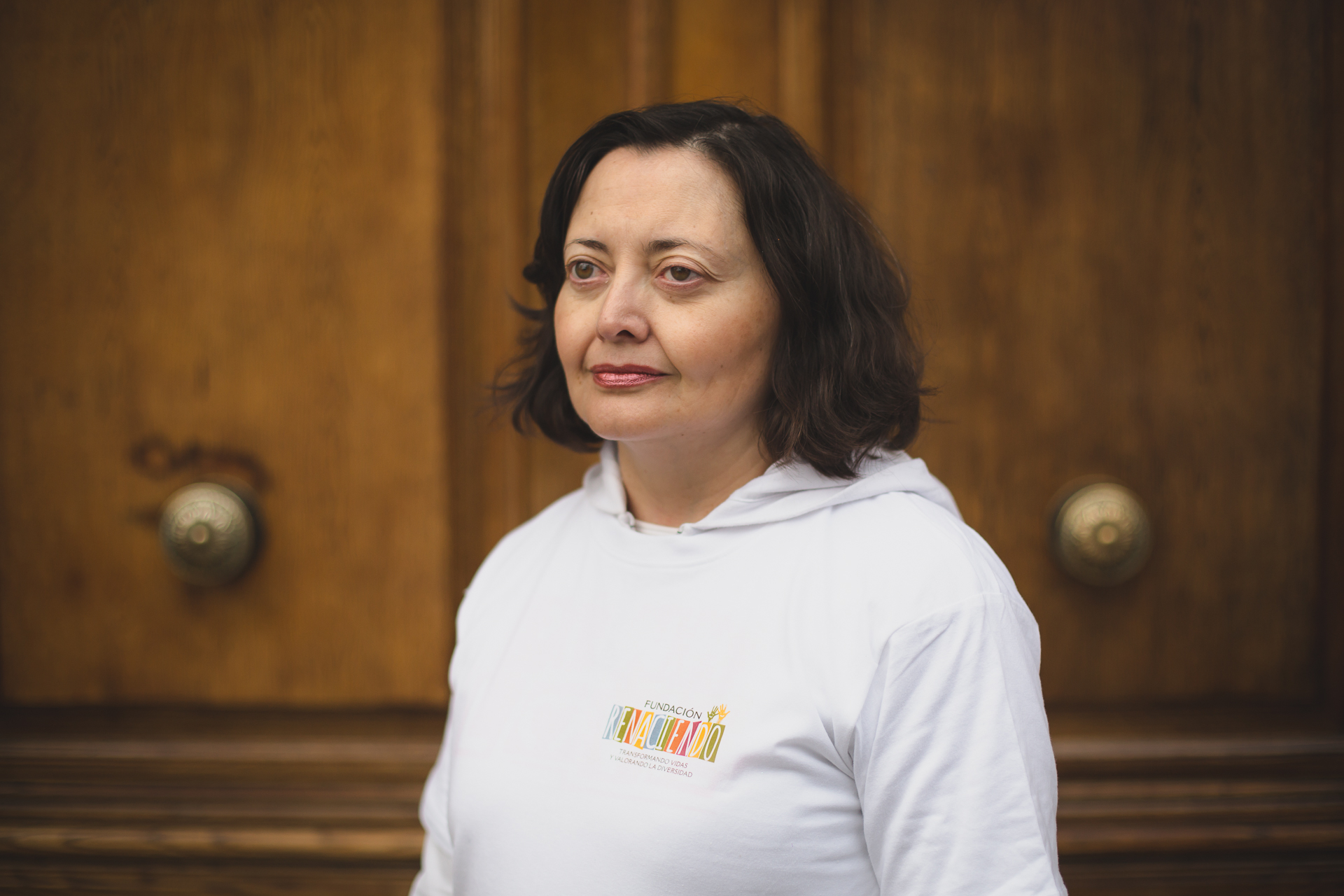
Josefina liked to dress up in her mother's clothes and play with her shoes. At school, Luisa was "warned" about her child's preferences in role-playing games; her child always wanted to be a princess. "I thought they were going to be gay," Luisa says. But during a visit to the psychologist, they were advised to explore whatever they wanted. And Josefina wanted to dress as a girl. "Look at me, Mom. Look at me closely. I'm a girl," she told her when she was 8 years old.
“That moment was very painful. I had to ask the principal of the school she was attending to let her come in different clothes, but she wouldn't allow it,” she recalls. Josefina stopped going to that school. Her mother opted for homeschooling, with the help of an occupational therapist and a special education teacher, to address her special needs and work on some cognitive issues. That's how her transition began.
-She recently gave an interview to a television channel and spoke about this incident. She said that the principal of that school refused her request and called her daughter "crazy." What exactly happened?
What happened was that I ran into her prejudice. She told me she wasn't going to allow her to come dressed as a boy one day and dressed as a queer person the next. Just like that. I burst into tears. She apologized, said she didn't mean it that way, but that's what she said. Despite that and my decision to withdraw her and homeschool her, I still recommend that school, not for trans children, but for cases like Josefina's, where the intellectual level isn't so low, but neither is it so high cognitively that it would be suitable for inclusion programs or attending another school. In that respect, this school is very good, with a good educational program that unfortunately didn't meet my daughter's needs. In fact, I've received offers from directors of other schools, but the truth is that for now we prefer to continue with homeschooling.
[READ MORE: Chile has its first school for transgender children ]
"I work with vulnerable children and I took care of a vulnerable girl."
-How did you start this journey together?
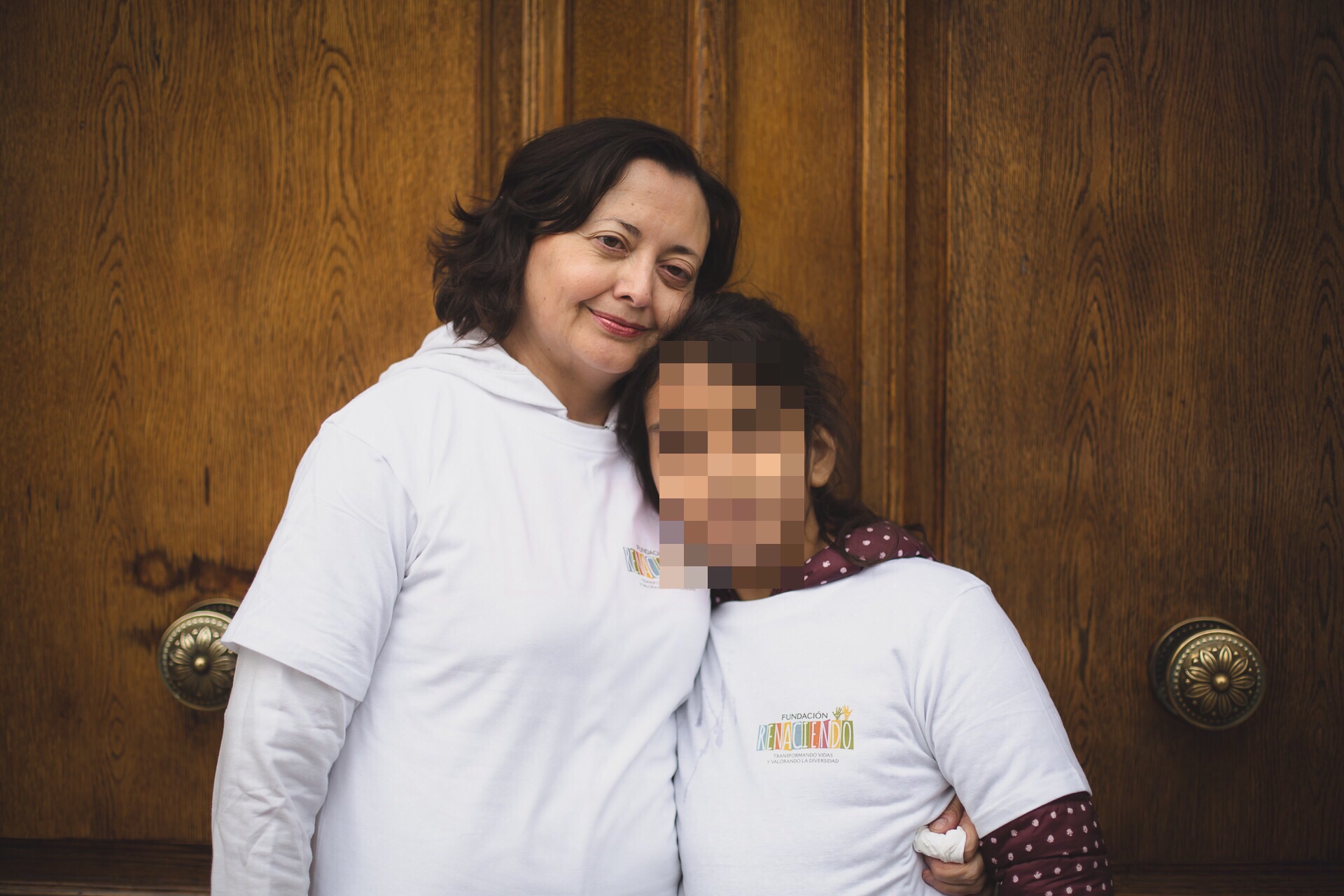
When I was in the process of becoming eligible to adopt, I learned about Josefina. But I had been told she wasn't suitable for adoption because of the problems she was having at the time. I didn't understand how a child, simply for being different, couldn't have the right to a family . That touched me deeply, because children with disabilities need more care and attention. They told me she wouldn't learn to speak, but with love and proper attention, we succeeded. She chose the name Josefina. They also said she would never be able to walk. Now we even go to Pride Marches together.
 -How has your work and experience with childhood cases helped you navigate this journey with your daughter?
I work with vulnerable children, and I took in a vulnerable girl. But I've also seen several cases of transgender children. All very dramatic. I had a case of a transgender boy raped by his father and then hospitalized after a suicide attempt. I also had a girl who decided to come out to her family that she was a lesbian and ended up in the hospital in very serious condition because her father beat her. In my position, I have to witness the saddest side of childhood, but somehow, seeing these cases so closely has helped me realize that my daughter and I are fortunate because we are in a safe space, with a family that loves and supports us. Along the way, we have also met wonderful people, like everyone at the Renaciendo Foundation , which has been a fundamental support.
[READ MORE: “Pink boys, blue girls”: a documentary about trans children ]
"I lived with many gender stereotypes"
-What has been the most difficult part of this whole process?
– The hardest thing for me has been recognizing that I lived with many gender stereotypes. Before this, I saw myself as a much more evolved person, more open because of my work, more aware of role and gender stereotypes, and with this, I realize that I myself lived by them. It's very difficult to see it that way. Despite the work and experience, it's another thing entirely to live it yourself. At first, when Jose showed the first signs and I had to start reacting, I sought professional help without saying it was my daughter, but rather a very close friend. I think it's because we're embedded in a community that's so patriarchal that it ends up affecting you without you wanting it to or even realizing it . Now I accept it and I go to therapy a lot. That has also helped me dare to tell our story and try to help other families. It took me two years to be able to talk about this publicly without crying. Now I cry much less.
-Have you ever spoken with Josefina about her biological mother?
"She once asked me if I knew her or if I'd seen her in photos. I told her no, only that I imagined she was probably as beautiful as her. In Chile, adoptions are closed, and by law, Josefina can only request that her file be reopened to search for her when she turns 18, if she so chooses. I imagine that's something we'll also be working on in the future."
[READ MORE: #ARGENTINA Gabriela Mansilla: “The battle for trans children doesn't end with the document” ]
"I can't make my daughter visible because there are no rules that allow her to be seen."
-Do you have any fears about your daughter's future?
"Of course. Not everyone is Daniela Vega ; not everyone will win an Oscar and be applauded by the whole world. Daniela has had a privileged position, with parents who understood her from day one and overflowing talent, but that's not the case for everyone. My daughter has been discriminated against because of her physical disability, because she's adopted, because she has a single mother, and even more so because she's a trans girl. It scares me to think that she'll become a trans woman in this society we live in, where cases of violence against women are so common."
-Have you felt judged or discriminated against for making the decision to be a single mother?
Yes, in general, women here are questioned much more when we're like this, without a husband. Several times I was advised that instead of adopting, I should get a pet. It's insulting. Now I'm single, but I'm not alone in this because my brother has been with me every step of the way and is practically my daughter's father.
-How has it been received in your work environment?
I've had the support of all my colleagues, and I'm very grateful for that. But an ironic situation has arisen in my life: as a family court judge, with a duty to make all children visible, I can't make my own daughter visible because there are no laws that allow her to be seen . It's very ironic. With the position I hold, which is, in a way, a position of power, I can't protect my own daughter under domestic law .
-Are you referring to the gender identity law ? What future do you see for this discussion?
Yes, I think life has placed me in a very special position regarding this issue. Chile is a country of endless debates. I believe it's a cultural issue, and the law has taken so long because it's a way of keeping everyone happy without making any real decisions. For me, it was a great victory that we were able to get the law for children approved in the Joint Committee, which is so conservative. We have high hopes, and we're all campaigning to raise awareness among the members of Congress. But it's going to take a little more effort.
We are present
We are committed to journalism that delves into the territories and conducts thorough investigations, combined with new technologies and narrative formats. We want the protagonists, their stories, and their struggles to be present.
SUPPORT US

FOLLOW US
Related notes


We are present
This and other stories are not usually on the media agenda. Together we can bring them to light.