

The Uruguayan Senate is discussing the comprehensive trans bill
Uruguay has had a gender identity law since 2009, but it is limited to changing the name on identity documents. Until now, there has been no law that guarantees the rights to health, housing, and employment for transgender people. Therefore, a comprehensive transgender bill has been drafted, which includes these rights as well as historical reparations for survivors.

Share

*Note produced in partnership with the Uruguayan media outlet la diaria
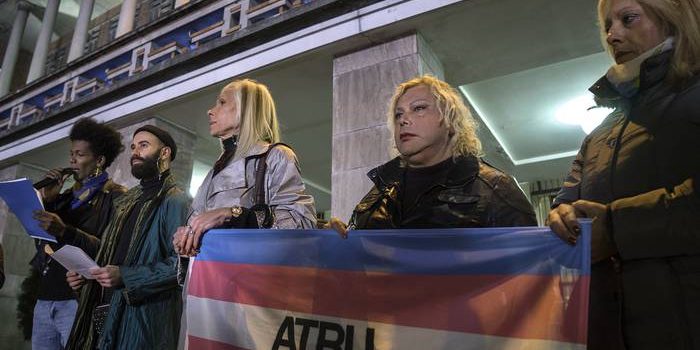
Photo: Mariana Greif
Uruguay has had a gender identity law since 2009, but it is limited to changing the name on identity documents. Until now, there has been no law guaranteeing the rights to health, housing, and employment for transgender people. For this reason, a comprehensive transgender rights bill , which includes these rights as well as historical reparations for survivors. After being shelved, it finally entered the Senate on Monday, August 13, amidst controversy over Article 17, which addresses children and adolescents and their access to hormone therapy and surgeries. After pressure from the National Party (PN), an agreement was finally reached yesterday between the Broad Front caucus (which introduced the bill) and the other parties to remove this article.
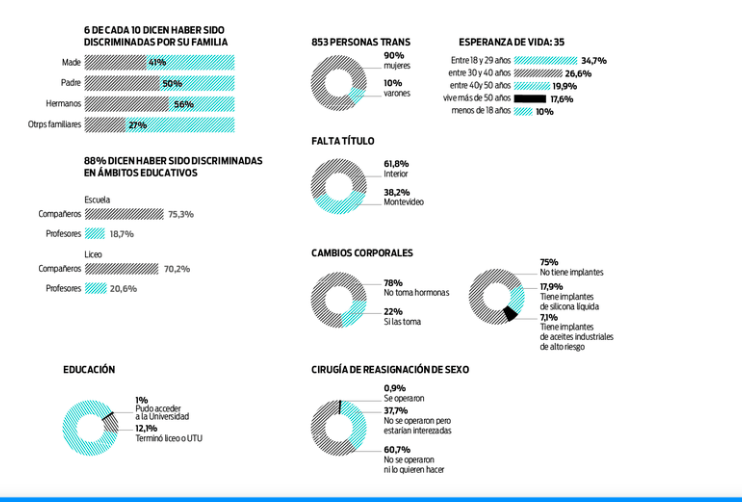
According to the National Census of Transgender People, conducted by the Ministry of Social Development and the University of the Republic, there are approximately 853 transgender people in Uruguay. 90% are transgender women and 10% are transgender men.
The vast majority of trans people are adults: 34.7% are between 18 and 29 years old, 26.6% are between 30 and 40 years old, 19.9% are between 40 and 50 years old, and only 17.6% live past 50. Only 10% are under 18 years old.
Protests against
On August 13, the Senate's Population, Development, and Inclusion Committee began discussing the comprehensive transgender rights bill. At the request of the National Party (PN), the first articles were read aloud without a vote. That day, while the senators analyzed the first five articles, a group of people protested against the bill outside the Legislative Palace.
The following day, Santiago Suárez, one of the organizers of the mobilization, said in an interview with the program " Esta boca es mía " on Channel 12 that the trans population "doesn't realize the reality of success and acceptance they are experiencing." According to Suárez, this is demonstrated by the fact that there are currently "trans politicians and professors." When asked about the discrimination the community suffers, he asserted: "We are all discriminated against in some way. I was discriminated against as a child for being overweight, [and] I also had a squint […] and they called me 'One-Eyed Cross-Eyed Man' […]. Many, many years ago, there was stigmatization; nowadays it's not real. We see television programs, I can name countless places [where] the presence of trans people is perfectly normal."
Karina Pankievich, president of the Trans Association of Uruguay (Atru), told La Diaria that there are no more than 40 or 50 people who could receive financial compensation, because "most of the girls have died."
Minors
Parliament reached a consensus to revise Article 17 of the bill, which states that all individuals will have access to “total and partial surgical interventions and/or comprehensive hormonal treatments to adapt their bodies.” This article includes minors under 18 years of age with the consent of their legal guardians and establishes the possibility for those without such consent to also access these treatments through a legal process.
Marcos Otheguy (Broad Front, FA) told La Diaria that his party's caucus is exchanging opinions on the matter, but added that "the position is favorable to this bill; that's the first thing that needs to be made clear." He indicated that he supports removing the provision allowing minors to access sex reassignment surgery from the wording because "it's an element that adds nothing to the law and doesn't address an objective need." "The census conducted by the Ministry of Social Development (MIDES) says that only 1% of transgender people have undergone sex reassignment surgery," and that, "furthermore, there are no records of requests made by minors under 18," he argued.
[READ ALSO: Uruguay has the first state census of trans people]
Otheguy referred to the appearance of representatives from the Uruguayan Society of Endocrinology to explain their position on hormone treatments. “What they told us was that there are a series of protocols established by the Ministry of Public Health that are already being applied. Hormone therapy is already being administered with parental consent; therefore, there is no need to cause alarm,” he stated.
According to the senator, the article needs to be more specific regarding minors under 18, since those under 16 are not given hormones to modify their bodies. “In the first stage of treatment, to allow for the person's maturation, the first thing done is to block the development of puberty. This treatment is reversible at any time. It is from the age of 15 or 16 that endocrinologists recommend hormone therapy, which has an impact on physical characteristics,” he explained. Otheguy maintained that the wording needs to be more precisely defined, and reiterated: “Twelve-year-old children are not being given hormones to change their bodies. That doesn't happen.”
On Monday, when the mobilization against the project took place, almost 40,000 signatures were delivered from people who reject it.
We are present
We are committed to journalism that delves into the territories and conducts thorough investigations, combined with new technologies and narrative formats. We want the protagonists, their stories, and their struggles to be present.
SUPPORT US

FOLLOW US
Related notes
We are present
This and other stories are not usually on the media agenda. Together we can bring them to light.