

There are millions of us living with HIV. Why do we seem invisible?
Out of 120,000 people locally, and 37 million worldwide, it's unlikely we'll be the first positive case someone comes into contact with. "Should I tell them?" is often the question that divides opinions. And even though we're not obligated to do so, even though there are laws protecting our confidentiality, the question should be: Why should I tell them? And in what context?

Share

By Lucas Gutiérrez and Jon Amarillo
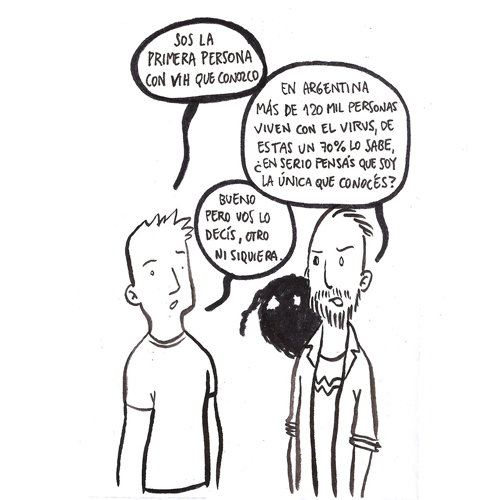
Currently in Argentina more than 120,000 people are HIV+: of these, 70% know it (1).
UNAIDS reported that in 2017 almost 37 million people were HIV positive worldwide (2).
So every time we are told that we are the first person with HIV they know, it makes us think about the invisibility we experience.
Out of 120,000 people locally, and 37 million worldwide, it's unlikely we'll be the first positive case someone comes into contact with. "Should I tell them?" is often the question that divides opinions. And even though we're not obligated to do so, even though there are laws protecting our confidentiality, the question should be: Why should I tell them? And in what context?
I would also add the question: what leads a person to not disclose their HIV status? Why don't we create safe spaces where people can share this information? This question reflects much of the violence and prejudice in society. If 70% of HIV-positive Argentinians know their status, this means that 30% do not. And many of the reasons for not getting tested range from a lack of information and awareness campaigns to a desire to remain ignorant in order to avoid facing stigma.

In 2017, there were 1.8 million new infections worldwide (2), and in Latin America, one of the regions with the most alarming numbers is Chile. The Chilean Ministry of Health reported that almost 70,000 people tested positive in that country, registering 5,816 new infections during 2017 (3), with the 20-29 age group being the most affected.
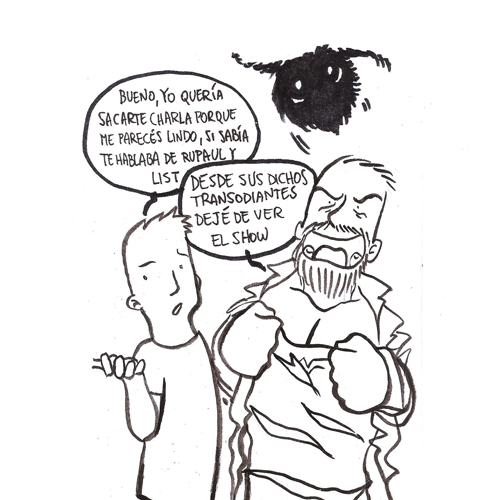
And amidst all these numbers and statistics, the questions we ask ourselves are: Do you really think I'm the first positive person you know? Why is it so hard for us to be visible? Why is this expected of us? Why do so many people avoid getting tested or not knowing?
We don't have the exact answer, but it's surely related to what was mentioned before: lack of campaigns and information, stigma and prejudice.
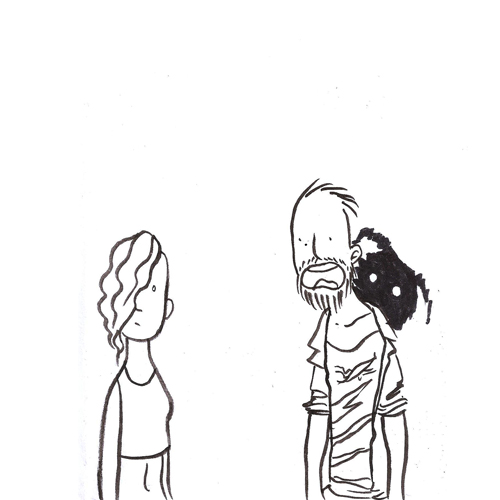
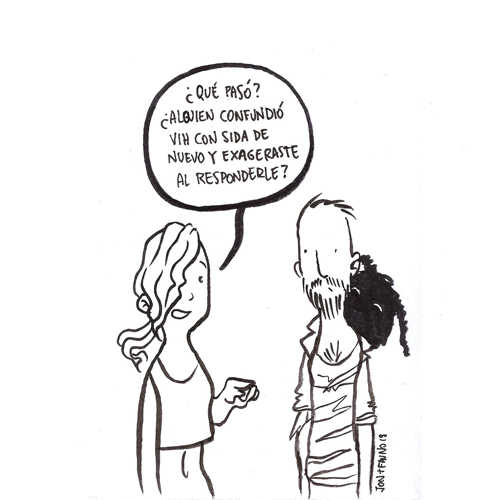
2: http://www.unaids.org/es/resources/fact-sheet
Visit Presentes every Thursday to find a new installment of Bicho and me.
Bug and I#36: Bug and I: Let's talk about other sexually transmitted infections
Bicho y yo#35: #HIV: Bicho y Yo gives you truthful info about condoms (unlike the Albino Dino)
#BichoYYo #34: “We are not finished, we are present, with information and action”
Bicho and I #33: Bicho and I to Dr. Abel Albino: “AIDS is not a virus, your words are”
Bicho and I #32: #LivingWithHIV Bicho and I and the words: “How would you prefer I call you?”
Bicho and I #31: With HIV they want me "healthy": I prefer to be a monster
Bicho and I #30: It's not our World Cup, HIV is not a game
Bicho and I #29: Bicho and I against the patriarchy: “It’s going to fall! Or better yet: we’re going to knock it down!”
Bicho and I #28: Laying the cards on the table
Bicho and I #27: The drama of the "little prick"
Bicho and I #26: Debts and progress 35 years after HIV
Bicho and I #25: #LivingWithHIV Bicho and I: From Words to Deeds
Bug and I #24: In the medical world, containment is everything
Bicho and I #23: “No one is obligated to say they live with HIV”
Bug and Me #22: Until the cure, always!
Bicho and I #21: Take a hug
Bicho and I #19 go to the movies: 120 beats per minute
Bug and Me #18: Your question is annoying
Bicho and I #17: “Yes, I live with a strain of HIV”
Bug and I #16 “It’s not contagious!”
Bicho and I #15: #8M Three women living with HIV explain why they stop
Bicho and I #14: #LivingWithHIV “Where is Bicho?”
Bicho and I #13: “We are not carriers”
Bicho and I #12: “How can you not tell me you have a Bicho?”
Bicho and I #11: HIV and AIDS are not the same
BichoYYo#10: Bicho, me and medication: “People with HIV are much more than a pill”
BichoYYo #9: We urgently need our medication
Bicho and I #8 The Dangers of Activism
Bug and I #7 Superpowers for an X-Men cover
Bicho and I #6 “Happy New Year!”
Bicho and I #5: “Nine years with Bicho”
Bug and I #4: “The scapegoat”
Bicho and I #3 “Without Grindr there is no paradise”
Bicho and I #2 “The best thing about medication”
Bicho and I #1: the comic strip that tells in the first person what it's like to live with HIV
We are present
We are committed to journalism that delves into the territories and conducts thorough investigations, combined with new technologies and narrative formats. We want the protagonists, their stories, and their struggles to be present.
SUPPORT US

FOLLOW US
Related notes

We are present
This and other stories are not usually on the media agenda. Together we can bring them to light.