

Buenos Aires: San Isidro approved the transvestite-trans job quota
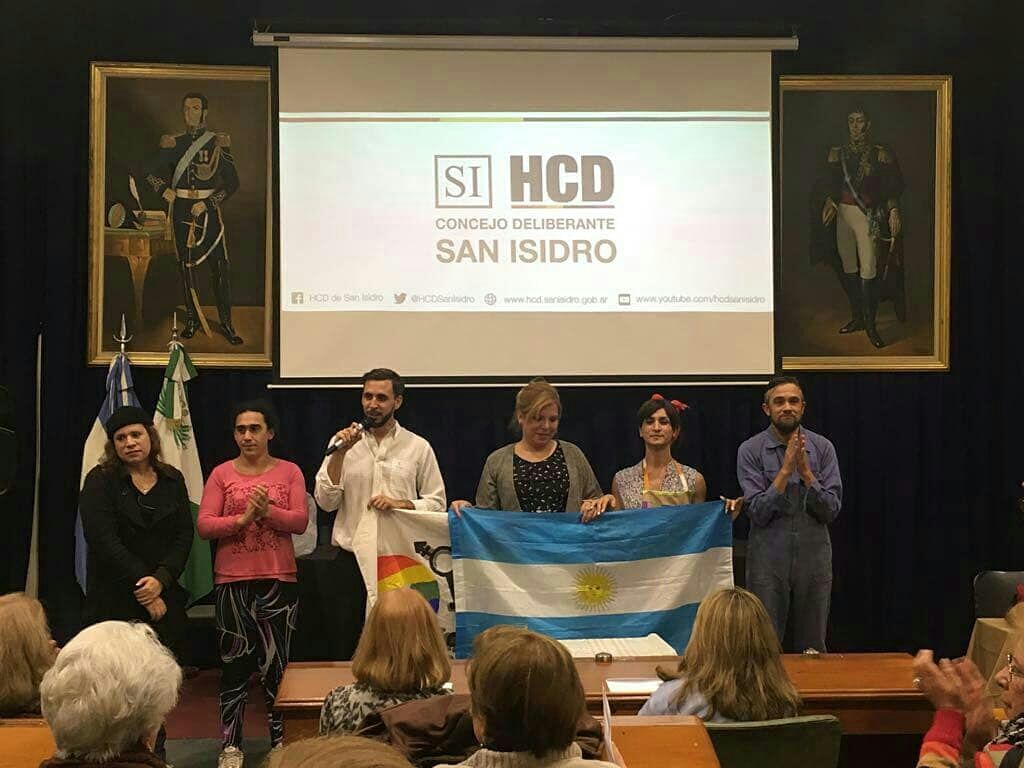
Employment quotas continue to be implemented in Argentina. The city council of San Isidro, in the province of Buenos Aires, approved an ordinance establishing that 1% of public positions must be filled by transgender, transsexual, and gender-diverse people.


Share

The transgender employment quota continues to expand in Argentina. The City Council of San Isidro, Buenos Aires Province, approved an ordinance establishing that 1% of public positions must be filled by transgender, transsexual, and gender-diverse people.
“It’s a huge step to have achieved a trans and travesti job quota in a conservative municipality with a strong Church presence. We veteran trans women are very happy about this achievement, which younger generations will be able to build upon,” Yohana Lencina, a leader in the San Isidro trans community and an activist with Cámpora Diversia, told Presentes.
 [READ ALSO: #BuenosAires Transgender employment quota approved in Florencio Varela]
 [READ ALSO: #BuenosAires Transgender employment quota approved in Florencio Varela]
The law was passed with broad consensus: 22 votes in favor out of a total of 24 (there was one abstention and one absence). It adheres to Law No. 14,783, Diana Sacayán, approved in October 2015, but which the government of the province of Buenos Aires has yet to regulate, and therefore is not being applied.
The Diana Sacayán Law is a response to the context of high vulnerability of the transvestite-trans population, where more than 86% practice prostitution as their only means of survival, have a life expectancy that does not exceed 35 years and face structural obstacles to accessing formal work, such as the lack of real opportunities, stigmatization and violence.
[READ ALSO: MAP: This is the trans job quota in Argentina]
“This law represents a major step forward in terms of rights for the trans community in a district historically governed by the right. We hope it will serve as a tool to continue fighting for the inclusion of the trans community and everyone else, and as a fundamental milestone in building a more egalitarian society. Now, the next fight is to ensure the trans quota is implemented,” said Nicolás Abratte, a member of the La Cámpora Diversia group. Following the municipal legislature's approval of the quota, the next step is for Mayor Gustavo Posee to issue regulations for the ordinance. “We understand there won't be any obstacles because it was approved almost unanimously,” Abratte added.
The project was presented in April at the request of councilman Marcos Cianni (Unidad Ciudadana). It was developed by Unidad Ciudadana in conjunction with La Cámpora Diversia, Conurbanos x la Diversidad, the Movimiento Antidiscriminatorio por la Liberación (M.AL), Nuevo Encuentro, and the local trans community.
[READ ALSO: Transvestite-transgender employment quota: the Diana Sacayán bill has entered Congress]
 [READ ALSO: Transvestite-transgender employment quota: the Diana Sacayán bill has entered Congress]
They estimate that 1% equates to 50 positions out of the approximately 5,000 that the Buenos Aires municipality has. “For the district, this is a very important step forward. It’s a first step. Now the concrete work begins, continuing to work so that our colleagues can start working as municipal employees,” Cianni told Presentes.
“We, the older trans women, hope to have a dignified retirement because many of us do not have pension contributions because we did not have the possibility of having a formal job due to discrimination,” said Yohana.
We are present
We are committed to journalism that delves into the territories and conducts thorough investigations, combined with new technologies and narrative formats. We want the protagonists, their stories, and their struggles to be present.
SUPPORT US

FOLLOW US
Related notes


We are present
This and other stories are not usually on the media agenda. Together we can bring them to light.