

What is sexile? A Peruvian filmmaker embarked on a project to explain it.
Lucía Florez is a Peruvian audiovisual communicator specializing in portraying inequality at all levels: from environmental to social. This led to the creation of her production company, El Taller, which focuses primarily on environmental issues. Previously, she created and produced the series Siete y Cuarto: six audiovisual pieces that depict the lives of LGBTQ+ people in Peru.

Share

Lucía Florez is a Peruvian audiovisual communicator specializing in portraying inequality at all levels, from environmental to social. This led to the creation of her production company, El Taller, which focuses primarily on environmental issues. Previously, she created and produced the series Siete y Cuarto (Seven and a Quarter ): six audiovisual pieces depicting the lives of LGBTQ+ people in Peru.
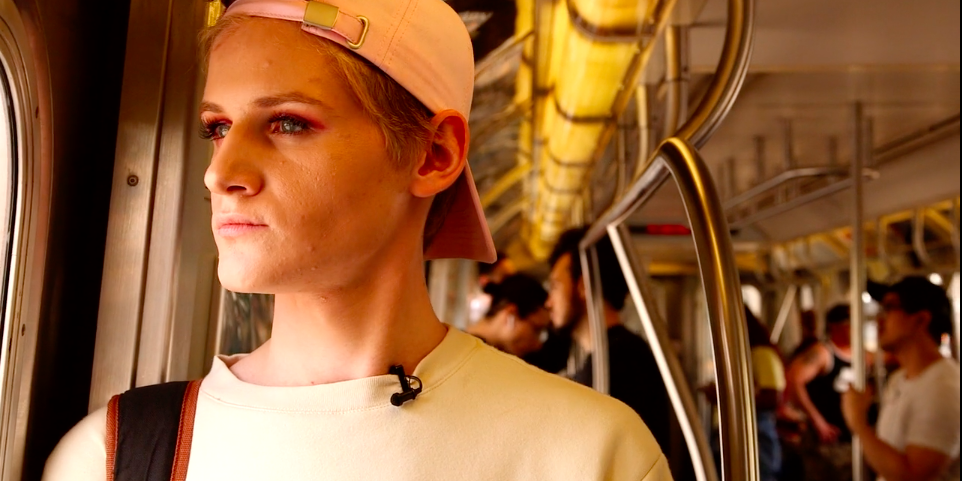
Today he seeks to tell the story of Anton, a Russian boy on his way to becoming a trans woman, and his process of seeking asylum in the United States.
Anton's story, like that of many LGBTI people who migrate from their countries due to anti-LGBT laws or to seek more LGBTQ+-friendly environments, falls under the umbrella of what has been termed "sexile." "Sexiiles" are exiles motivated by sexual orientation or gender identity.
– You're starting a new project during your stay in the US about LGBT migration from Russia to the US. Having been close to contexts of inequality in the US, Peru, and now indirectly with Russia, what common patterns do you find among those affected?
– In a city like NYC, which has been in some ways the cradle of civil rights, including LGBT rights, the difference with Peru is enormous. I think that while there are spaces specifically for the LGBTQ+ community, you can see how much more integrated and visible they are in all social spheres. The debate is much more widely agreed upon as a society, and it's rarer to find yourself in the classic situation where you have to explain your identity and make everyone else understand who you are, which is always uncomfortable.
That's just New York, which doesn't represent the rest of the United States where the situation is different. Being a city with so many immigrants, you find neighborhoods and communities where a lot of discrimination still exists, and that's where the similarities with my country become more apparent. With the project I'm working on, I had the opportunity to learn more about the situation in Brighton Beach, Brooklyn, where most of the Russian community lives. Here, the level of discrimination and invisibility can be compared to that in Peru, with the difference that there are legal tools that support the community.
The comparison with Russia is a bit more extreme. Homophobia in that country is supported by the state under the 2013 law against "gay propaganda"—which could be as simple as holding hands with your partner in public. I think that in Peru the debate is gradually becoming more visible, and people don't tend to hide, worried about their lives. However, I believe the feelings and emotions we face are the same. The feeling of not being heard in your country and not having a safe place to belong breaks you inside, and I think that in that sense, people in the LGBTQ+ community, in different ways, identify with and relate to this, regardless of where they come from.
 Andre left Russia in order to transition
What has it been like documenting issues of discrimination, minorities, and inequality in a context different from your own country?
– It's always difficult to gain access to communities you don't fully belong to. Since I decided to move to NYC, I knew that was going to be an obstacle I would face, but that in a way it would help me grow as a documentary filmmaker.
I think the key is finding common ground with the people you're portraying. And there's always one. In the case of this project, where the community consists of LGBT exiles from Russia, it might not seem so obvious, but in reality, it was. Despite the vast differences in discrimination we encounter in a country like Russia, the Peruvian LGBT community, which includes myself, faces similar challenges. Ultimately, discrimination based on your own identity hits you in the same place and makes you question the same insecurities, which is what unites us.
– Your work has always had a socio-environmental focus. What has motivated you to continue creating audiovisual content on these topics?
My work began with a socio-environmental focus, and it remains a topic that drives me to this day. I believe that when we examine the challenges that come with a systemic problem like the socio-environmental crisis we face, we realize that all injustices are interconnected behind the scenes. If we move away from the "ecological" conception of climate change and see it as a political problem and a matter of corruption, I think it becomes clearer how it's linked to human rights issues, especially those affecting the most vulnerable populations. This is why it wasn't such a far-fetched idea for me to move from these stories to working with the LGBTQ+ community. For me, it's important to keep my work moving in the same direction, and as long as I feel that the stories I tell contribute to a more equitable world with less social injustice, I'll continue to be motivated to work on these issues.
– How are you funding this project? How can people help you? What other challenges do you face besides financial ones?
– Currently, this project is self-funded as it's part of my studies. I'm starting a crowdfunding campaign where people who are interested can contribute to help finish it, post-produce it, and hopefully distribute it at different festivals. I think it's important that these kinds of projects remain somewhat independent so we can tell these important stories without any ulterior motives. The issue of discrimination against the LGBTQ+ community in Russia, and in many other parts of the world, is a purely political one. So is the issue of immigration in Trump's US. In that context, it makes sense to me that censorship cannot be allowed in order to remain objective and tell the story with dignity.
– What are your next projects upon your return to Peru? Is there a particular aspect of Peruvian society you'd like to explore in a future documentary?
– I tend to see my work as a kind of activism through which change can be achieved, and hopefully, we can gradually change the situation. In that sense, the issue of LGBTQ+ rights will always interest me, especially in a country like Peru where there is so much to be done and so many injustices. I would like to start documenting stories in different parts of the country and see how, when you add more intersectionality to the equation, the situation becomes more complex. I also think I would like to start working on the issue of domestic violence, where Peru is a major problem. It truly hurts and outrages me to hear the stories of femicide victims from afar. This situation cannot continue to be the norm, and I believe we need more visibility on this issue.
We are present
We are committed to journalism that delves into the territories and conducts thorough investigations, combined with new technologies and narrative formats. We want the protagonists, their stories, and their struggles to be present.
SUPPORT US

FOLLOW US
Related notes


We are present
This and other stories are not usually on the media agenda. Together we can bring them to light.