

Letter from a trans activist to her grandmother: "These are times of injustice"
In a society that has historically denied us its love, in a difficult context for the trans community where militancy and activism erode our bodies, facing the enormous burden and consequences of visibility, the pain that seems to be the only possible reality, thinking about affective bonds can be a caress.

Share

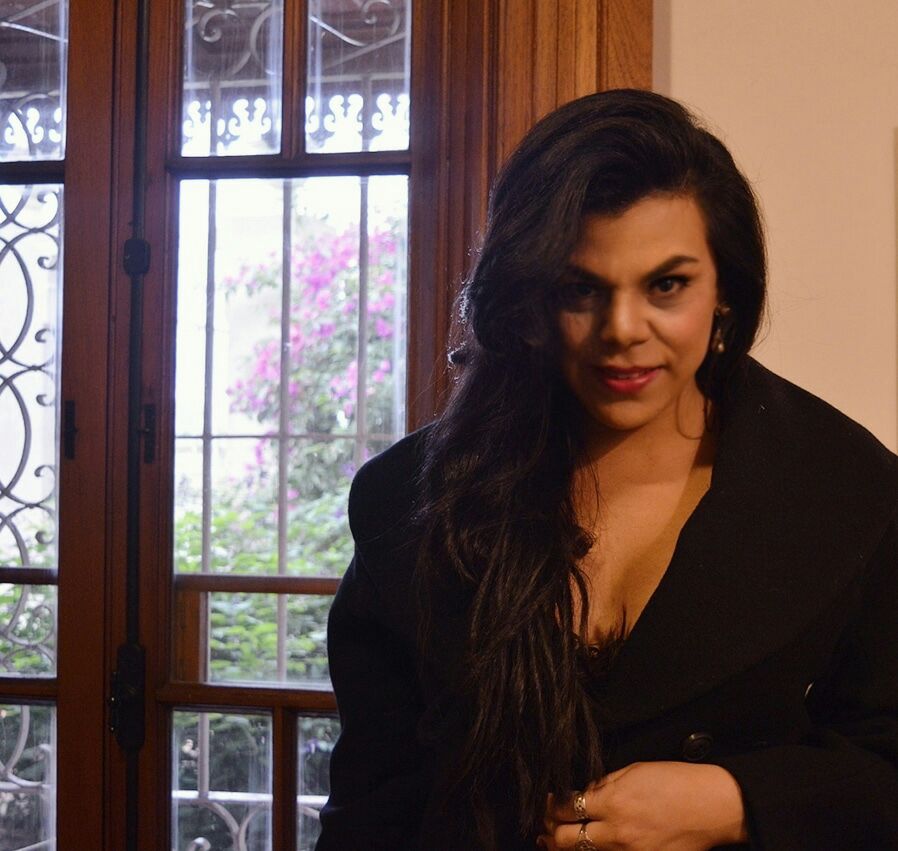
By Keili González, from Nogoyá, Entre Ríos
Dear Grandma:
Today, words fail me. I strain my throat to escape the dry knot that traps a scream.
I'm writing to you because I miss your mate sessions, my cheeks long for your kisses, because my eyes don't see your smile, my bones don't purr, they don't dance today.
Eroded by a relentless struggle, thinking of you is a band-aid for this pain that won't stop bleeding. Time has stood still. My body seems to be giving out. I'm pushing this cart. These are difficult times. Guilt has been my best treacherous friend, and the challenge seems to be defined as "waiting."
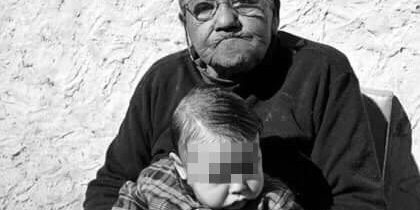
My dark-skinned tobacco-colored woman with nails heavy with wear and tear, whom life forged through hard knocks, I write to you because your memories inspire me; the wrinkles of your hands and your tears are the story that this heteropatriarchal and macho society has buried.
I search, I don't know where, for that strength of the trans grandmother who sheltered me. Who, to the rhythm of my arrival at your ranch, where among candles you hid your saints, often told me that you didn't understand.
The southern village sheltered you, the castor bean plant your roof during the harsh summers, which you scrubbed with rags among basins on the flat ground. The kettle's shouts announced its arrival, that bag of affection it sought, the bitter mate was the intermediary of those long, sweaty conversations.
At that moment I would tell you that your party would make a strong change: demagoguery is strong, and injustice.
"Worry about your allies, not those who criticize you," you would say.
Today I sense that I too have fallen into those models of conceiving a struggle; I know that self-destruction is not the answer; it seems that my heels no longer sound on the road, that's the reckoning.
I thought being smart meant solving problems. How naive this body is; you can't do everything, and meanwhile, the days go by. Frustration has become ingrained in me and keeps me in agony.
The mere thought of trying overwhelms me. I was taught to rise above myself, to surpass myself, as if I were my own problem to be overcome. Of course! I am not omnipotent, what did I think?
Dangers loom, needs cannot be met with willpower and effort. It was true, plans fail, Grandma! Fears haunt me today.
Living between guilt and chance made me feel inept at leading my life, a sad system that presents it to me as an individual problem that my denied attitude would not change.
Help me, you've been through this before, and back then the harsh machismo made it seem so. Believing that everything can be solved with willpower has been the problem of habit. "Be patient with yourself," you would tell me.
There is no capable personal will, nor a space of equality built from a top-down perspective. Realizing that I won't recover from everything and that I don't have to do it all the time, nor do I have to do it alone—what is natural is cultural—here the utopian aspect of what seems to be reality returns.
Share
We are present
We are committed to journalism that delves into the territories and conducts thorough investigations, combined with new technologies and narrative formats. We want the protagonists, their stories, and their struggles to be present.
SUPPORT US

FOLLOW US
Related notes
We are present
This and other stories are not usually on the media agenda. Together we can bring them to light.