

“I don’t want to make jokes about being a lesbian anymore”: why you should watch 'Nanette'
By Ivana Romero. She doesn't want to do comedy anymore. The air grows thick when Hannah Gadsby says this in front of 2,700 people at the Sydney Opera House. The building is a classic, built in the seventies, with layers of white tiles that seem to unfurl like the scales of a prehistoric animal in front of…

Share

By Ivana Romero
She doesn't want to do comedy anymore. The air grows thick when Hannah Gadsby says this in front of 2,700 people at the Sydney Opera House. The building is a classic, built in the 1970s, with layers of white tiles that seem to unfurl like the scales of a prehistoric animal facing Port Jackson Bay. Gadsby isn't a classic: she's a comedian, until recently unknown outside of Australia, who was born in a tiny town there around the same time the Opera House opened. She has just become a global sensation thanks to her stand-up special, Nanette . Filmed in that iconic theater, it has quickly become one of Netflix's biggest hits, even though it premiered just a few weeks ago.
In Nanette, Hannah begins by explaining that she has built her career around jokes about being a lesbian (“although I don’t exactly feel like a lesbian; I’m just tired of being told what I should be,” she clarifies). Without being fully aware of what was happening, she became accustomed to the jokes being humiliating. And she was the one being humiliated. Then she adds: “I don’t want this for myself or anyone who identifies with me.” Something in the air resonates. Because now Gadsby’s words have a global impact, and thousands around the world are recommending Nanette, including the writer Roxane Gay, the director of several Marvel films, Jon Favreau, and, of course, people from the world of comedy like Kathy Griffin and Ellen Page.
“What happened was a bit much,” Hannah admitted in several interviews published recently. For example, she had planned to do a few performances in New York, but her show ran for four months. “I just wanted to go home,” added the actress, who is used to keeping a low profile. She also appeared in another Netflix series, Please Like Me , with an endearing character who shared her name and had autobiographical elements.
Invisible lesbians
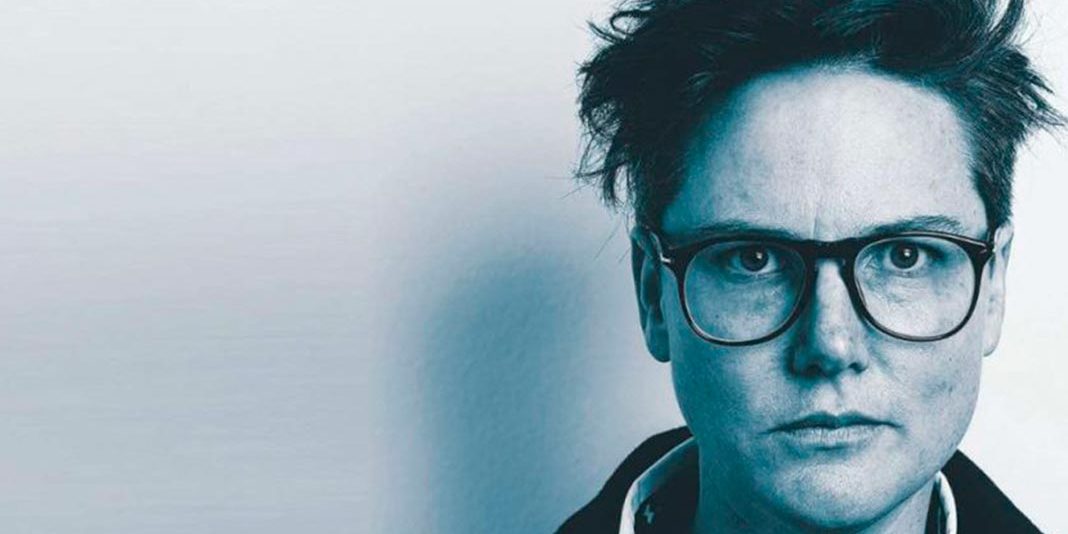
Her dogs, Douglas and Jasper, are the first to appear on screen, in front of a nearly imperceptible sign that reads, “Nanette will be in charge of this bar today.” The name refers to a waitress who treated Gadsby very badly. “So I had the name of the show before the script,” Hannah says. And that's that. The shot of her and her pets on the couch at home cuts to Gadsby being cheered as she appears on stage in a navy blue jacket (her favorite color), with very short hair and dark-framed glasses.
In just over an hour, this comedian builds a show that starts light and funny but then takes the risk of venturing into deeper, more personal territory. At the beginning, Hannah evokes her hometown in Tasmania, a small island southeast of Australia. She had to move to Sydney when she began to realize she was “a little bit of a lesbian.” It turns out that in Tasmania, between 1987 and 1997, there was a debate in which 70 percent of the population considered being gay a crime. Even her mother thought so. “So, all the people who raised me and grew up with would have considered me a criminal,” she says. However, no one mentioned lesbians, who remained invisible because what caused a scandal was “the possibility of anal sex.” “And I’m technically a virgin,” she adds. The audience laughs.
Gadsby adds that a “major lesbian icon” criticized her for her recent shows being “not lesbian enough.” “She forgets I’m here,” she says, gesturing to her body.
The limits of humor
But that's just the tip of the iceberg. Hannah takes up the challenge and delves into common prejudices; for example, that lesbians have no sense of humor. "That's what men say," she states. And she adds: "I wouldn't want to be a straight white man today. Although I would earn more money." Indeed, heteropatriarchy is going through a period of profound questioning. "You set the rules and you criticize us for not laughing. Take responsibility," Gadsby counters. And indeed, in her dual role as a woman and a lesbian, she hasn't had an easy time of it. "If you think those things only happened to me, it's because you don't talk to the women in your life," she warns.
This raises the question: is there any turning back after challenging her audience and herself in this way? Some magazines have taken it quite literally, focusing on whether or not Gadsby will quit acting at the height of her success. In truth, Hannah seems to be questioning the boundaries of a genre she has chosen to transform. It's unlikely she'll leave just when things are getting so exciting.
Born in 1978, she is the youngest of five siblings. Since adolescence, she has never fit the mold: she is used to being mistaken for a boy; although she works in stand-up comedy, she doesn't crave easy laughs and prefers the subtle sound of a porcelain cup being placed on a saucer to the raucous celebrations of LGBTQ+ pride. In her country, she gained notoriety in 2006 when she won the Raw Comedy competition. Since then, she has written and performed about ten of her own monologues. She also has a degree in art and uses that knowledge in her new show to explain why she adores Van Gogh and detests Picasso (for being a misogynist, of course).
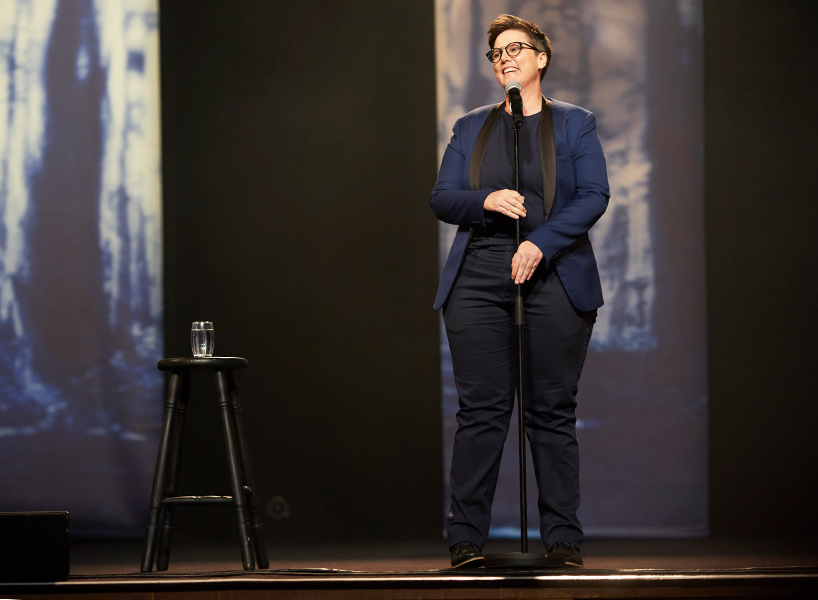 Last year, Nanette became a hit in her country, winning awards such as Best Comedy at the Edinburgh Fringe and the Melbourne International Comedy Festival. But this show transcends the conventional idea of stand-up comedy as a barrage of politically incorrect jokes. Gadsby does take some detours, yes, but above all, she reveals a story: her own. In doing so, she recovers an oral tradition that stand-up comedy drew upon but often overlooked. What Hannah buried beneath a pile of jokes lies trauma. And that's what she wants to talk about now.
Humor pervades her entire monologue, though there are moments when she doesn't seem to be trying to be funny. Even the intensity of her story is unsettling because what she reveals is a secret that many people around the world have kept until the emergence of movements like #MeToo. And it is there that Nanette transforms into an unexpected political manifesto on sexual dissidence, on respect for human dignity, and even on the role of a society where people are abused with hatred as the sole excuse.
Accompanied
In recounting her experience, Hannah says she wishes she could let go of the anger, even though the wound is deep. At that point, there's no acting: there's only pure truth. And it's precisely where she could be alone that she finds the most support. Thousands of comments on Twitter show her fans sharing that this is the same anger they had to suppress and silence when they suffered violence simply for being women, lesbians, gay men, or trans. Ultimately, for not fitting in.
Nanette (with that French-sounding, almost naive name) has a soundtrack featuring two songs: “Bobby Reid” by Canadian folk artist Lucette and “Better Son or Daughter” by Rilo Kiley, a band from Los Angeles. It's about fighting prejudice even when you feel awful. And it resonates perfectly with an artist who possesses a fiery intensity and strength.
The good news is that Gadsby has now broken through and become a brilliant, flamboyant star shining on screens everywhere. In that journey, he managed to reinvent himself as a comedian. I hope he can enjoy it while sipping tea at home, surrounded by his dogs and whoever else he feels like spending time with. That's what freedom is, too.
We are present
We are committed to journalism that delves into the territories and conducts thorough investigations, combined with new technologies and narrative formats. We want the protagonists, their stories, and their struggles to be present.
SUPPORT US

FOLLOW US
Related notes


We are present
This and other stories are not usually on the media agenda. Together we can bring them to light.