

Natalia Oreiro: “Rights and freedom are also my causes”
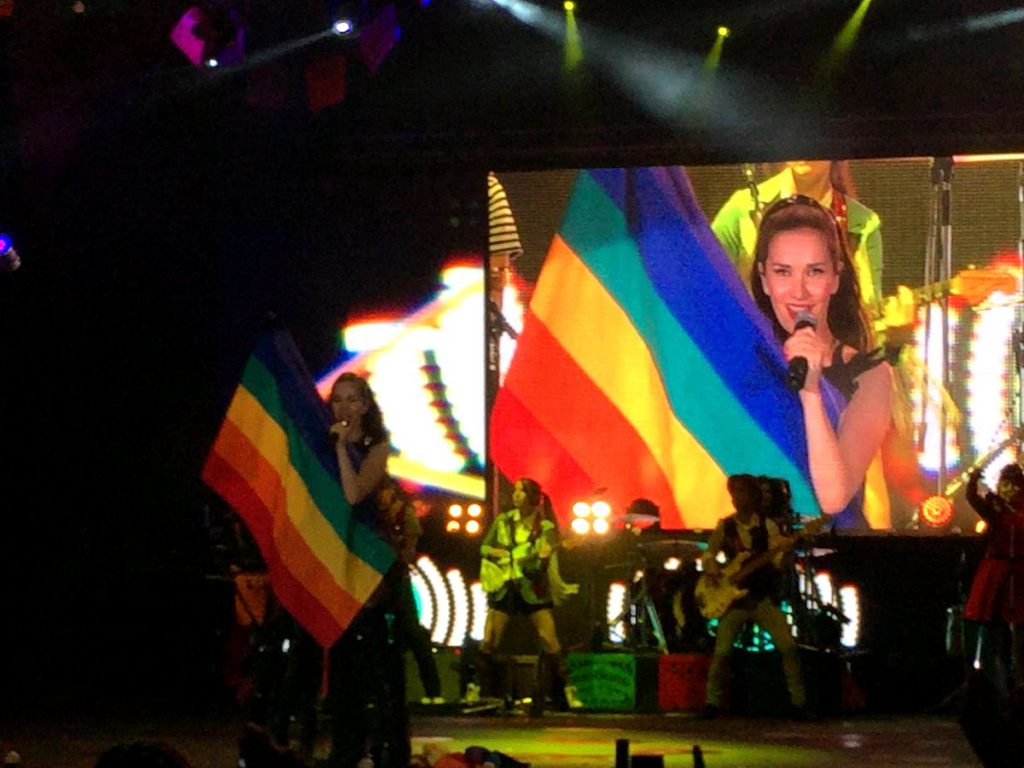
By Paula Bistagnino. Natalia Oreiro, currently promoting her film "Re Loca," went to Russia to present her song "United by Love" at the World Cup and dressed in the colors of the LGBTQ+ flag. A direct message against repressive policies and violations of…


Share

By Paula Bistagnino
Natalia Oreiro, currently promoting her film "Re Loca," traveled to Russia to perform her song "United by Love" at the World Cup, wearing the colors of the LGBTQ+ flag. This was a direct message against Vladimir Putin's repressive policies and human rights violations stemming from the "anti-homosexual propaganda" law.
– In your life, did you have to overcome many obstacles like your character in “Re loca”?
For me, it all felt quite organic because I wanted to act from a very young age and I was always pursuing my desire. It has happened that I've found myself on a path that wasn't right for me and decided to stop and start over. I call it the price of my freedom. Because that's what we're talking about: freedom. Saying what I want and how I want it, regardless of the consequences. In my case, it was very difficult to stop doing something that was very successful. At the time, it was doing daily television and touring with my albums. And I wanted to make films and stop singing for a long time. And of course, the people who were working with me professionally weren't at all in agreement, and I was very young. In each case, I would say: well, that's the price of my freedom I'll have to pay.
-You took the rainbow jumpsuit to Russia.
Yes, it was definitely on purpose. I'm not afraid to express myself or to join causes I believe in. I always try to take advantage of moments of visibility to say something more, to join in, to offer support. And I wore the sweatshirt without making any statement; I wore it intentionally, and I didn't have any problems. I have a deep love and respect for the Russian people. But rights and freedoms are also my causes. I'm very proud to be able to say something, to join in, to support causes I believe in, even if people call me "crazy."
 – Just like that?
"You don't need them to explicitly tell you you're crazy to realize what they're thinking. But it's happened to me, and it still happens in many ways. I think it's because of what others expect of you. They get used to something and want you to always be that way, and you can't. And I think the first reaction is always rejection and questioning, but then people get used to it, it becomes normalized. That's why you have to pursue your own desires and happiness. I think conviction and inner strength are fundamental, and you have to pay attention to your desires and stop repeating patterns out of comfort and fear. It's very hard to break free from routine and social alienation. You don't want to stand out from the crowd, and then you end up being a bunch of people who aren't you."
[READ ALSO: Behind the World Cup: In Russia she was persecuted for being a lesbian and took refuge in Argentina]
-Your character in “Re loca” is attacked for being a woman.
She takes up that banner of “being crazy,” because it’s also an accusation. The director’s complete openness allowed not only me but several women on the team to question fundamental assumptions that we felt were detrimental to the film. This film had a mostly female technical crew. And that’s something we discussed from the beginning. I asked the director how many women were on the team, and there was an imbalance, so that was addressed. Because it stars a woman and because of this historical moment for feminism we’re experiencing, we felt it was important to have a clear perspective.
– How are you experiencing this moment in feminism?
I was at the Plaza the other day, and also at every Ni Una Menos march I could, and I've played characters... I think it's a transformative moment that Argentina is experiencing very intensely, but it's not just an Argentine phenomenon; it's a global one. And I think no one is immune to it, because men aren't either, and we're all learning. Me too. And I greatly celebrate individual freedoms in every sense.
We are present
We are committed to journalism that delves into the territories and conducts thorough investigations, combined with new technologies and narrative formats. We want the protagonists, their stories, and their struggles to be present.
SUPPORT US

FOLLOW US
Related notes
We are present
This and other stories are not usually on the media agenda. Together we can bring them to light.