

Paraguay: The lesbian love story that was a smash hit abroad but booed in its own country
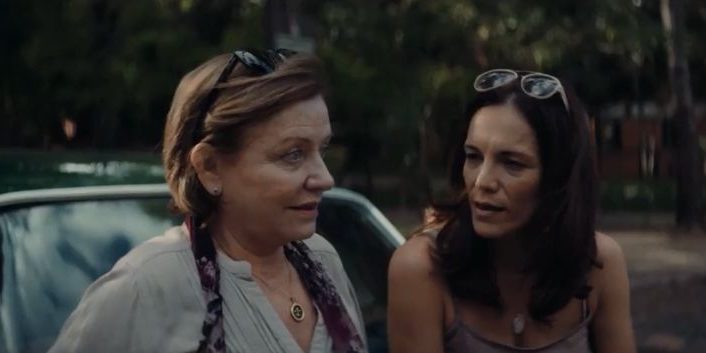
The film, which tells the story of a lesbian couple from Asunción's high society, garnered four awards at its premiere at the Berlin International Film Festival, including the Silver Bear for Best Actress for its star, Ana Brun, and the Teddy Award - the festival's queer award.

Share

By María Sanz
For Paraguayan filmmaker Marcelo Martinessi (Asunción, 1973), honesty is a gift. Martinessi is the author of short films such as Karai Norte and Calle Última , and documentaries like Diario Guaraní . He founded and directed Paraguay's public television until the coup against President Fernando Lugo in 2012, a week after the Curuguaty massacre , which resulted in the deaths of 17 people during a peasant eviction. The pain caused by that massacre was captured years later in his short film La voz perdida (The Lost Voice ), which earned him the Orizzonti Award for Best Short Film at the Venice Film Festival in 2016.
With her first feature film, The Heiresses , she raised the stakes. The film, which tells the story of a lesbian couple from Asunción's high society, garnered four awards at its premiere at the Berlin International Film Festival , including the Silver Bear for Best Actress for its star, Ana Brun, and the Teddy Award—the festival's queer award .
Critically acclaimed, the film has continued to receive awards at various festivals in Colombia, South Korea, Puerto Rico, Romania, Ecuador, and Australia, while in Paraguay it sparked outrage among more conservative sectors. The film returned to Paraguayan screens this week as part of the Lesbigaytrans Film Festival , organized by Aireana – a group advocating for lesbian rights.
The story of Chela and Chiquita, its protagonists, poised between a poorly disguised clandestinity and a hypocritical open secret, traverses taboos such as sex between older women, prison, loneliness, infidelity, confinement, and the loss of class privileges. Martinessi insists: the secret formula for navigating so many complex contradictions is to construct a narrative based on honesty.
Four awards at the Berlinale, two at the Cartagena International Film Festival , and even more in South Korea , Puerto Rico , Romania and most recently , Ecuador and Australia. Critical and audience acclaim for the film. Interviews with the actresses everywhere. The Heiresses is on everyone's lips. And meanwhile, in Paraguay, newspaper polls are asking whether or not people will go to see the film, conservative sectors are angry, and calls for a boycott are circulating. When the film crew attends an award ceremony at the Congress, several members of parliament walk out of the room, and even a senator insults them. Is no one a prophet in their own land?
– What's happening has two sides. On the one hand, influential groups still exist in our country that have historically kept society blind, ignorant, and divided. That's why they show their claws when they feel threatened. And in this case, the positive visibility of a film like The Heiresses is a threat.
But on the other hand, I'm convinced that talking about Paraguay today means talking about a diverse country. The problem is that this diversity is slow to manifest itself in daily life, given the balance of power with the proponents of intolerance. Cinema, and art in general, can be a way to value our differences, and above all, to begin transforming the way we relate to one another. That's why I greatly appreciate that, beyond everything that could be done or said against the film, there has also been a counterpoint of great support.
-In the film, the protagonists' relationship isn't clandestine, but neither do they openly or militantly identify as a lesbian couple. Given the contradictions surrounding Paraguayan high society today, how much of Chela and Chiquita's story is based on reality?
– Our aim was, first and foremost, to make an honest film. It's narrated through the eyes of women from a privileged social class, with their certainties and their denials, the two sides of that contradiction. There's a 'class' component that they prioritize, which is why they're so careful about appearances. In that sense, we wanted the confinement to be felt—like walls—both within that social class, in their romantic relationships, and even in their sexual orientation. I think it's the most sincere way to portray characters like Chela and Chiquita, where there's also a generational aspect that contributes to the sense of shame that pervades their lives.
The film also shows how, when Chela visits Chiquita at the Buen Pastor prison, they never have any privacy: they meet in the courtyard, in the hair salon, or half-secretly in a cell. This situation mirrors what happens in reality, when lesbian women incarcerated in this prison are denied private visits from their partners. Did the incarcerated women who participated in the filming of the movie tell you about this situation? Why do you think they still lack access to this right?
I still don't understand the legal framework of this situation, which I find appalling. It adds to the existing discrimination against female inmates in the Paraguayan prison system because they are women and—mostly—living in poverty. Simply by being deprived of her liberty, a woman cannot be forced to submit her body to the decisions of others. Moreover, many of these cases lack even the minimum guarantees of a fair trial. One of the most beautiful expressions we have is the loving and sexual connection with other beings, which liberates us, builds us up, and humanizes us. Behind this attempt at denial, there is also a clear intention to impose authority over love and desire.
-Upon arriving at the Asunción airport, returning from the Berlin Film Festival, you told the press that The Heiresses is “a film that looks to the future.” What future do you think awaits the Paraguayan LGBTI community, with a conservative president-elect and heir to the Stroessner dictatorship ?
Presidents come and go. The president-elect speaks a great deal about the role of 'family' in our society . And on that point, we might even agree. But what we need is to redefine and broaden the concept of 'family.' Although a significant portion of society is already much more advanced in practice than conservative political rhetoric suggests, there are still positions and attitudes that remind us of the long road ahead in building a tolerant society.
The Heiresses has received recognition from the National Senate and the Municipal Government. Its promoters were declared Distinguished Citizens of the city. The film was featured on newspaper front pages during the Berlinale and its premiere in Paraguay. I don't feel we can complain about that. At least in part of the public/media sphere, there has been significant progress. It would be fantastic if these changes also began to be felt within families and institutions, especially in the way we educate future generations. That is the great challenge.
Sexual desire in women—lesbians and older women, to be precise—the loss of class privileges, prison, infidelity… the film tackles a long list of taboos. At the preview screening, many people laughed at Pituca's classist comments or Chela's attitude toward Paty, her housekeeper. Do you think "The Heiresses" manages to challenge viewers and confront them with their own prejudices?
Throughout the entire writing process, I tried not to judge the characters, to let them be, without manipulating the script toward any particular vice or virtue that would create a story of heroes and villains. Mainly because I don't believe in that polarity in life, nor in film. The films I like best are those that manage to challenge the viewer through the act of observing and becoming part of the story's environment. For The Heiresses, I was able to work with an ensemble of extraordinary women who perfectly understand the society we live in and carry it beneath the skin of the characters they portray. I believe it is their presence, in their honesty, that manages to engage us.
We are present
We are committed to journalism that delves into the territories and conducts thorough investigations, combined with new technologies and narrative formats. We want the protagonists, their stories, and their struggles to be present.
SUPPORT US

FOLLOW US
Related notes

We are present
This and other stories are not usually on the media agenda. Together we can bring them to light.