

Nicolás Oyarce: “We want to change heteronormativity with love”
A visual artist, professor, and activist, he is one of the founders of the LGBTI film festival Amor, now in its third edition. He says that Chile is still very conservative but that some things are beginning to change: “I really like how people are starting to stand up for themselves.”


Share

By Airam Fernández
Photos: Karin Yunge Lehner
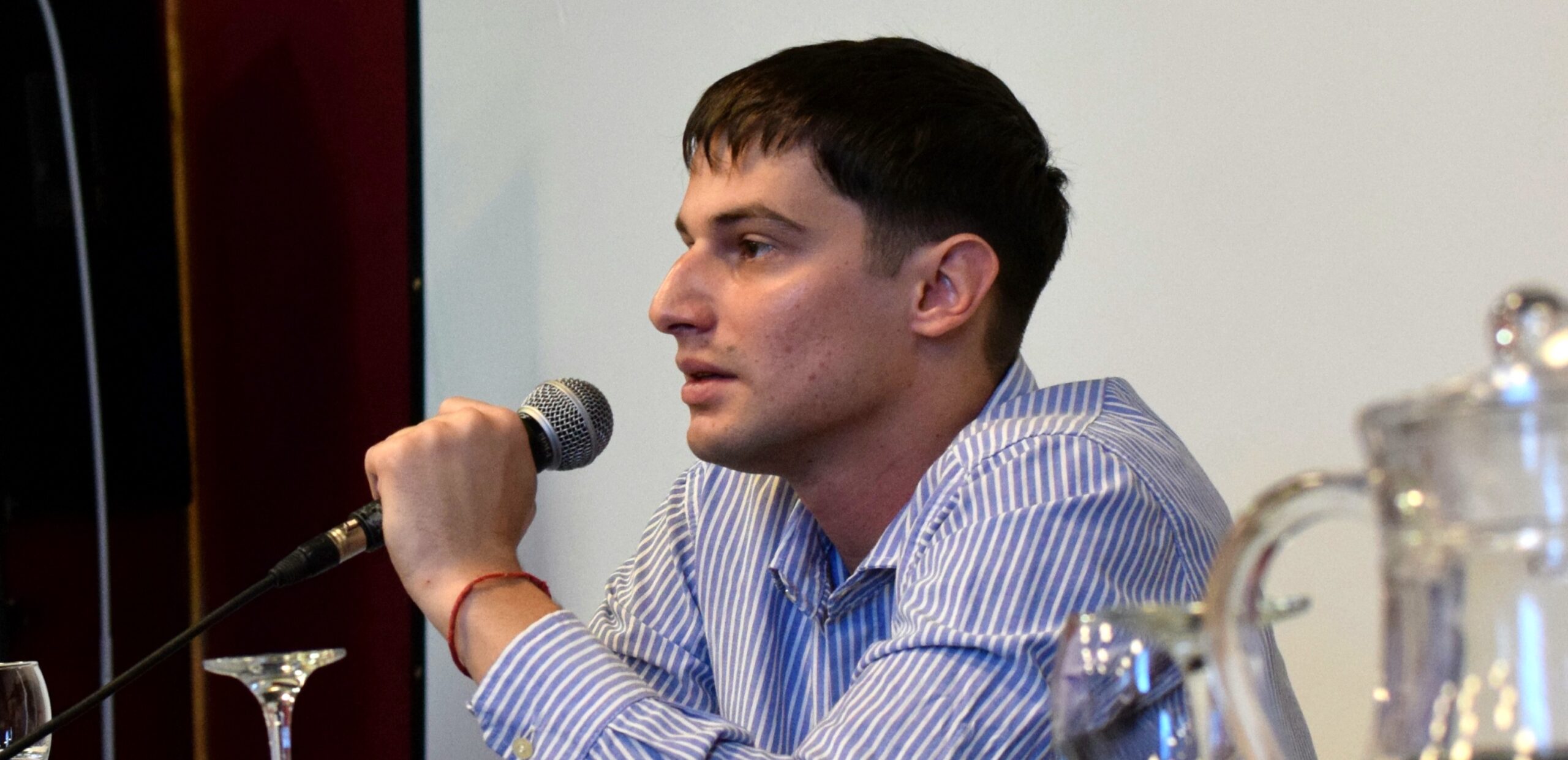
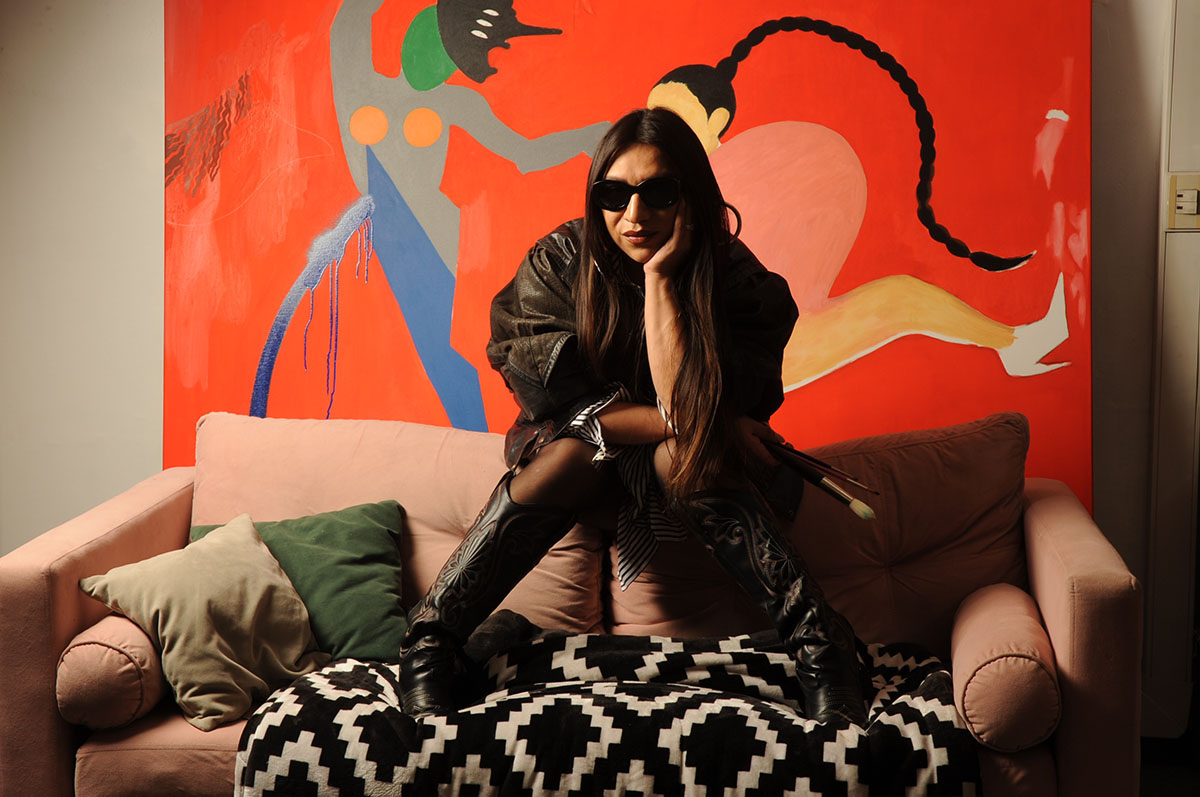
Nicolás Oyarce was present throughout the Pride march last Saturday, holding a huge sign that read “The revolution has no borders.” He had made it for a demonstration the day before, in front of the U.S. Embassy in Santiago, Chile, just as the scandal broke regarding the thousands of children separated from their migrant families at the U.S.-Mexico border. He felt it was appropriate to celebrate Pride with the same banner because, in addition to being a visual artist involved in the film industry and a professor, he also considers himself an activist. He was part of the team behind the Amor Festival, which he co-founded with Sebastián Inostroza and Gabriela Sandoval, and which recently concluded its third edition, including an incident of censorship. Why is it called Amor? “Precisely because it is love that we do to change this heteronormative world,” says Oyarce. In his audiovisual work, queer aesthetics are almost always present and intertwined with transfeminist politics. It's evident in Naomi Campbell, a film by Nicolás Videla and Camila José Donoso where he worked as art director to tell the story of a trans tarot reader who wants to undergo gender reassignment surgery. Or in the music video he recently directed for the song 'Fuego' by the artist Alex June, which overflows with sensuality and promotes free bodies.
-What do you think is the most valuable contribution of Chilean cinema to the local LGBTI context?
-Film is a great generator of stereotypes. The more cinema develops with different production systems, the more the collective imagination will expand and diversify. Currently, queer theory is in vogue, and for me, it's fascinating to see how a theory of abnormality has become an object of academic glamour. How this political practice is carried out within spaces of discussion like the festival we created is another contribution.
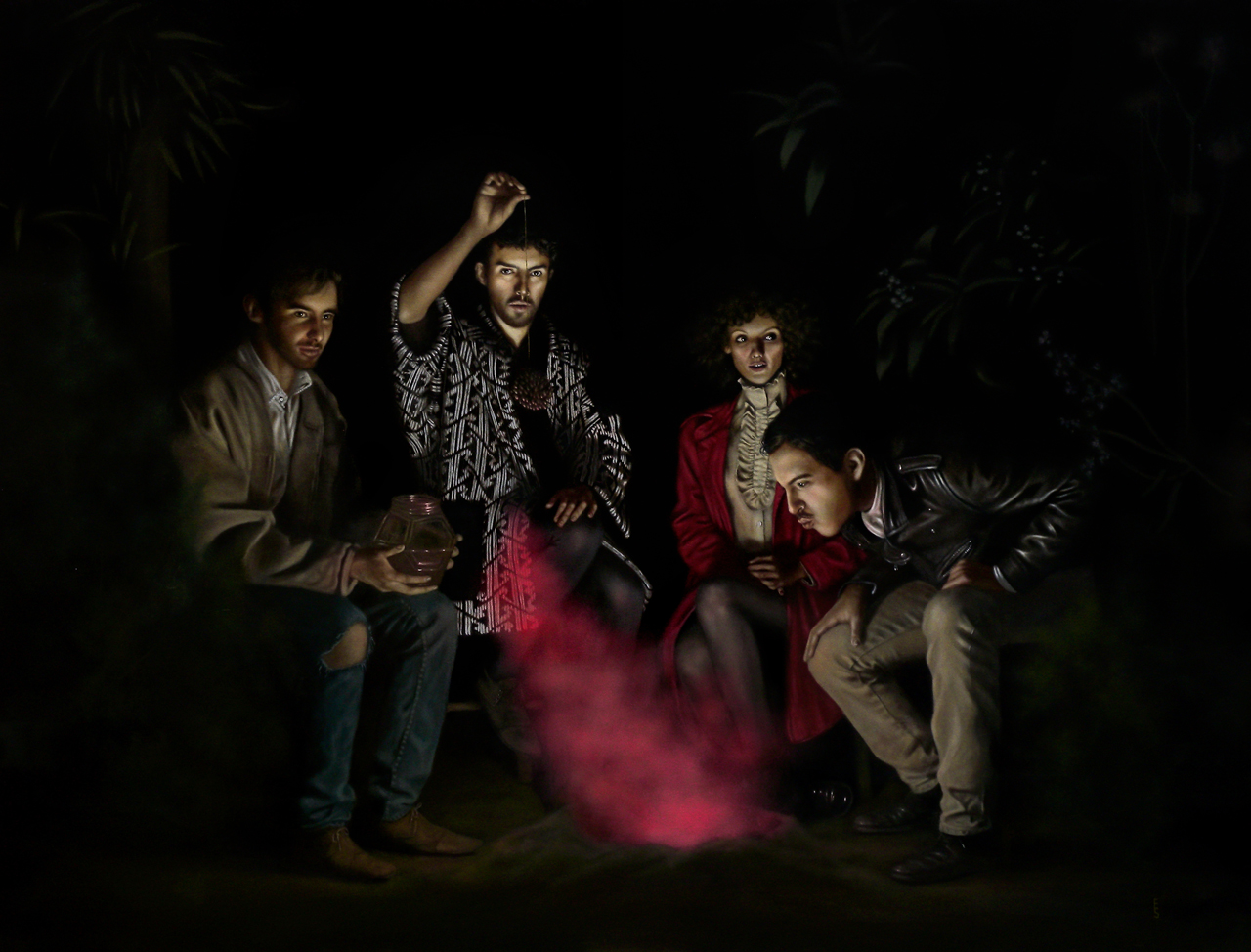
Painting by Elias Santi.
-With the new government of Sebastián Piñera, how do you see the outlook for community rights?
"I find it difficult, especially with the gender identity law, but on the other hand, I also really like how people in Chile are starting to defend themselves. Because we're up to our necks in it. I don't want to be pessimistic because I'm usually quite positive about life, but I see that now everything will be a bit more difficult for our community. Recently, at the Festival, they censored a documentary that was going to be shown in a theater in Providencia, a district where the right wing holds sway, but since they initially supported us, we thought change was possible. And the truth is that here in Chile things haven't changed as much as people think; there's a lot of double standards. Thinking about laws, our movement should be able to play a more strategic role in addressing the realities of integration policies for gay, lesbian, trans, and intersex people."
-How was your coming out?
"I didn't have a single problem, not even because I grew up under a dictatorship. I was born in the '80s, I've been gay since I was very young, I've always been queer, I was a very strange kid, I had boyfriends, girlfriends, very gender fluid. But I come from a super open environment, my mom is an artist and I was always immersed in a queer and polyamorous worldview. Although I grew up in Chile, I belonged to a 'sannyasin' community, we were followers of Osho, we meditated, we danced every Saturday at 7 pm. A very special environment that was really a bubble in the middle of chaos. It was the way my parents managed to live through such a difficult time, they created a creative bubble like in the movie Life Is Beautiful, where the father invents a whole fiction to protect his son from an ordeal. So I was lucky enough to have that and I never suffered. I remember I loved that the 'No' flag (the 1988 plebiscite campaign) was like the gay pride flag." In the 90s, when democracy arrived, my parents and I would go out into the street with those flags, very happy. And I'll never forget the time a neighbor snatched one from my dad and tore it up; it was a shocking scene for me. Things like that, in a different way, still happen.
-What projects are you working on now?
Right now I'm working on a film called *Las Demás*, a comedy about abortion directed by Alexandra Hyland. We just finished shooting a film in Valdivia called *Los Fuertes*, directed by Omar Zúñiga, a gay drama about fishermen. I'm also working on the second phase of a project called *Museo del Hongo* and on a transmedia project for the dissemination and preservation of audiovisual heritage and music videos, which is closely linked to a small school I co-founded called the Chilean Music Video School, where we're also doing a lot of research. I teach a specialization workshop in art direction for film at the Institute of Communication and Image at the University of Chile. And of course, I'm also thinking about next year's Amor Film Festival, as one of the ways I've found to leave my mark on this planet and make some noise.
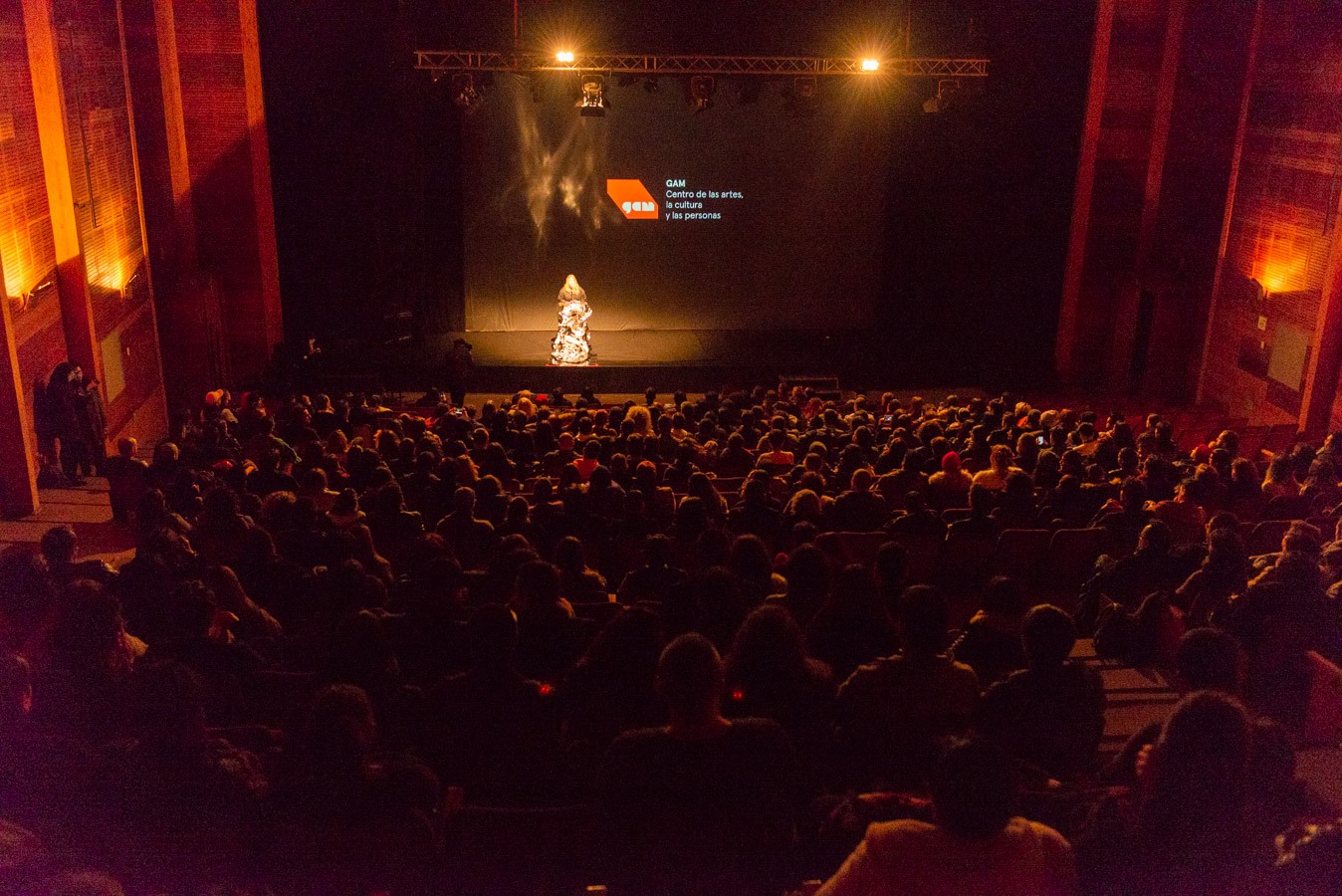 -How has queer aesthetics changed in the audiovisual industry?
I love opening up the discussion about what can be understood as queer discourse in the audiovisual universe. Understanding points of view, approaches to what the body and desire are, often exposes the sexist and misogynistic use of visual language. In my case, the idea of queerness is a bomb that explodes precisely from within aesthetics. But talking about queer methods within audiovisual media is proposing methods of subjectivity. I like the idea of projecting a kind of visual terrorism in time and space, where new questions are constantly being raised. It's somewhat what has happened historically. For me, the great reference point for the local queer imaginary comes from the era of the dictatorship with Las Yeguas del Apocalipsis (Pedro Lemebel and Francisco Casas), and they have always had a great influence on queer aesthetics in general. But what happens with the local industry is that at that time there was a lot of control over what was recorded, what was shown, what existed; much of that was burned. So there's a great historical gap in the record. Obviously there has been a change in formats, discourses, narratives, but there is little record of it.
We are present
We are committed to journalism that delves into the territories and conducts thorough investigations, combined with new technologies and narrative formats. We want the protagonists, their stories, and their struggles to be present.
SUPPORT US

FOLLOW US
Related notes
We are present
This and other stories are not usually on the media agenda. Together we can bring them to light.