

Behind the World Cup: In Russia she was persecuted for being a lesbian and took refuge in Argentina
By Quimey Ramos* Ivve is 42 years old, a psychologist, and has lived almost her entire life in Chelyabinsk, an industrial city in southern Russia. Last year, she was forced into exile due to the persecution of LGBTQ+ people stemming from anti-gay propaganda adopted in 2013 and the media virulence against the community that began in…

Share

By Quimey Ramos*
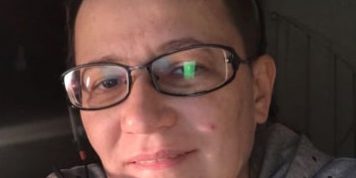
Ivve is 42 years old, a psychologist, and lived almost her entire life in Chelyabinsk, an industrial city in southern Russia. Last year, she was forced into exile due to the persecution of LGBTQ+ people stemming from anti-gay propaganda adopted in 2013 and the media onslaught against the community that began in 2008. Ivve arrived in Argentina in November 2017 after the police “suggested” she leave the country, following an interrogation and accusations of being an “extremist.” Her testimony reveals how state-sponsored hate policies operate and how a World Cup can serve as an international smokescreen for a region experiencing systematic persecution of sexual minorities.
The Russian government assured foreigners who expressed their LGBT identity with flags during matches that they would have full freedom of expression. But what is happening to the Russian LGBT population right now?
What was it like growing up in Chelyabinsk?
– It wasn't easy. When I was a teenager, I was terrified to even think about telling someone I was a lesbian. I thought they'd send me to a psychiatric hospital.
– Was it just your fear?
No. It was a huge problem back then. If you were gay and you were found out, you were deprived of your freedom. But mostly gay men ended up in prison. Women were taken to the psychiatric hospital. Imagine. You live in a country like that, you hear people talking, and you think, "I'm sick, I'm not well, I can't tell anyone." I thought, "Maybe I'm sick, maybe I just need to sleep with a man, and that's it." And I tried. I don't want to remember much, but believe me, I tried.
– Then you studied psychology. Was homosexuality discussed in the course?
No. It was 1993 when I started studying. The USSR had collapsed two years earlier, and nobody was thinking about these issues. It was a very difficult time for the country; nobody was even thinking about gay people. There was a terrible famine. I remember my father saying that the most caloric food we had in the refrigerator was vodka.
– From the fall of the USSR until the 2013 anti-propaganda law, was there any legislation that criminalized LGBT people?
– No, there weren't any. When the USSR collapsed, Soviet law also fell. It was necessary to sever all traces of that past in order to build a new, free country, so during that time, there were no laws that criminalized us.
[READ ALSO: TyC Sports apologized for its homophobic ad (to the Russian government)]
– And how did you feel at that moment? Did you ever feel free to express yourself as a lesbian?
– I think we felt, more or less, quite free. Until 2008, at least. We even had different clubs and pubs where we met up. At least my friends, my ex-girlfriends, and I felt free. We didn't flaunt our relationships in public: we never held hands, much less would it have occurred to me to walk into my job one day and tell my boss, "I'm a lesbian." But we didn't have any major problems. I focused on doing my job well, paying my bills, and just being at peace. I suppose everyone knew about me, but I hoped they understood that it was part of my personal life, and that was it. There were always whispers behind my back, yes. But it didn't escalate; there was no police or government persecution. Well, I don't want to speak for all gay people in Russia, because I lived my life pretty quietly, in hiding.
– You mention a change starting in 2008. Do you remember how it manifested itself?
– In newspapers and on television, there began to be more and more information about homosexuals, saying that we are unnatural and things like that. More and more cases of violence against us began to be reported in the media. At the same time, Putin's broadcasts increased significantly, and the media began to resemble much as it was during the USSR. The Orthodox Church also began to speak out against us a lot.
– Why do you think the law happened?
– I'll never fully understand why it happened. But I think it was a matter of national security. If you were a country, and you had a major funding or healthcare problem, and you needed to find an enemy: the United States, Europe, or gay people are the best enemies you could create.
– The “others”.
– Exactly. We Russians are portrayed as “the good guys”: children of a country with tradition, versus the United States and Europe, outsiders who supposedly want to harm us. In truth, the responsibility is shared; neither country bears it entirely. But Russia doesn't only have problems with LGBTQ+ people. It also has a very high level of racism. I think it's because it's easier to fight against someone else than against yourself.
[READ ALSO: Football and advertising: the elite of the irresponsible]
– However, you became a social enemy within Russia.
– Yes, that's right. But look, when they insulted gay people, they'd say "go to Gayropa" (a combination of the words gay and Europe). You see? Even though I was Russian, they made me feel like an outsider: for the government and homophobic people, being gay is something Western, it's being a foreigner in my own country. Sometimes, I'm filled with hatred… I still can't understand how my homeland, which I would never have harmed, simply doesn't need me anymore.
Would you like to tell me how it happened from the chase until the moment you left?
– A group of friends and I intended to hold a street rally on a small avenue to conduct an opinion poll on LGBT marriage. In Russia, you can only hold a demonstration or rally in the street with permission from the city administration. We submitted a formal application on October 3rd. The state had 10 days to respond. The next day, they responded negatively. On October 5th, two days after submitting the application, the police called my house and told me to report immediately to the police station. Once there, they took me to the Internal Affairs Department, where three officers received me. They identified themselves as part of the unit created to combat extremism . They interrogated me for an hour. They asked me if I was part of an organization, what our capacity for action was, if we were against the government, if we collaborated with the opposition, and what our goals were regarding marriage equality. I kept telling them that I didn't care about politics in general. They made me sign a document taking responsibility for my extremist actions . One of the officers escorted me to the police station. There, he advised me to leave the country because I was now under surveillance. Knowing that people were imprisoned simply for sharing a post on social media, I was terrified. On the 10th of that month, I was summoned to the prosecutor's office to sign a list of the penal articles I "could potentially violate." I sold everything, even my car, and on November 20th, I crossed into Belarus because the border there is less heavily guarded. Once in Minsk, I took a flight to England, then another to Barcelona, and finally, after 30 hours, I arrived in Argentina. I chose Argentina because, of all the countries in Latin America, I didn't need a visa and it had good legislation.
– How was your arrival here? Do you know of any other Russian LGBT refugees in Latin America?
No, I don't know. I'm not in contact with any other refugees. I'm very grateful to Argentina. When I arrived, I was taken in by ADRA (Adventist Development and Relief Agency), which gave me money for three months, a bank account, and free Spanish classes. I'm worried about finding work, but I hope to stay: I'll be very old when this is over in Russia, and who will be waiting for me there? I hope I can start over here.
1* – When Ivve talks about gay men in prison and lesbian women in psychiatric hospitals, she also means to imply that the same thing happened to trans people according to their gender assigned at birth.
2* – Ivve refers to “gay people” to refer to the entire LGBT-dissident collective.
*Quimey Ramos is a trans activist and English teacher
Share
We are present
We are committed to journalism that delves into the territories and conducts thorough investigations, combined with new technologies and narrative formats. We want the protagonists, their stories, and their struggles to be present.
SUPPORT US

FOLLOW US
Related notes
We are present
This and other stories are not usually on the media agenda. Together we can bring them to light.