

LGBTI Pride Parade: "Increasingly visible to confront hate speech"
“With this march, by taking to the streets, we have just given a lesson in citizenship. Insults will no longer force us back into the closet. Sooner rather than later, oppression will end,” said Simón Cazal, director of Somosgay, from the stage.

Share

By María Sanz, from Asunción
Photos: Fernanda Rivas
The Asunción LGBT Pride Parade, convened by the Somosgay and Lesvos , called this Saturday in Asunción for greater visibility of sexual diversity to confront fundamentalist groups.
“With this march, by taking to the streets, we have just given a lesson in citizenship. Insults will no longer force us back into the closet. Sooner rather than later, oppression will end,” said Simón Cazal, director of Somosgay, from the stage.
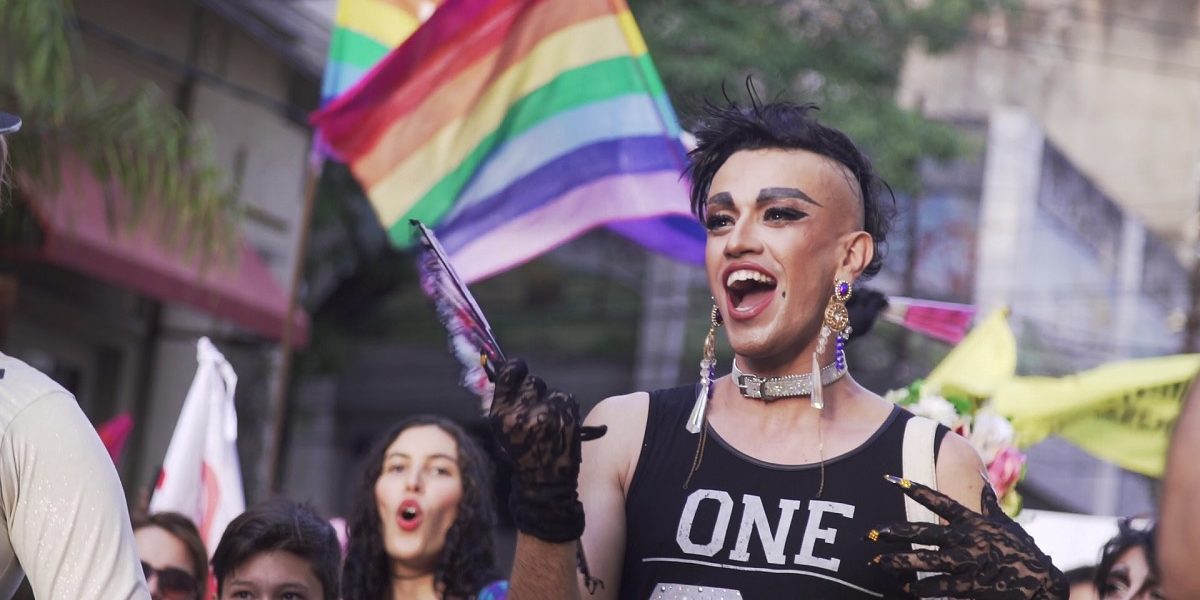
The march through the streets of downtown Asunción and the subsequent celebration in Plaza de la Libertad saw a large turnout of young people and teenagers. Rainbow flags, drag queens , and banners against intolerance and hate speech were on display. The atmosphere blended a colorful celebration with calls for rights such as marriage equality, recognition of gender identity, non-discrimination against diverse family structures, and respect for the civil, social, economic, and cultural rights of LGBTQ+ people.

More visibility for lesbians and bisexuals
At the head of the march, carrying the Parada banner, were the activists from Lesvos, who demanded greater visibility for lesbians. Many of them wore pink scarves around their necks, similar to the green ones used in the campaign for legal abortion in Argentina, but with drawings of scissors, ironically alluding to sex between women.
Victoria Wolfgang, a 24-year-old graphic designer and lesbian, told Presentes that she participated in the march to express herself “against all forms of discrimination, in support of same-sex marriage, and for greater lesbian visibility.” “It’s time for people to stop seeing lesbians as something abnormal. Love and sex between women exist; they’re just hidden. It’s not a perversion, not a mental illness. We’re loving each other, nothing more,” she emphasized.
 Bisexuals also embraced the demand for greater visibility of their sexual orientation. Wrapped in a fuchsia, purple, and blue flag—the colors that represent bisexuality—Alejandra Chamorro, a 28-year-old publicist and art student, told Presentes that the rejection and invisibility faced by bisexuals occurs even within the LGBTQ+ community itself. “They tell you it’s just confusion, that you’ll figure out what you like eventually. And I’m almost 30, and I already know what I like: being bisexual. We are here, we exist, and there is a struggle and support behind us,” she declared.
More spaces to express oneself
Marcos Rojas, a 31-year-old industrial design student, and Martín Cuevas, a 29-year-old architect, celebrated their second anniversary on Friday, and on Saturday they decided to move the celebration to the Parade. “Our love story is very contemporary,” Marcos told Presentes. “We met on Grindr, an app that still carries a strong stigma among the gay community, as if its only purpose is to find sex,” he said.

[READ ALSO: Pride, pain and demands on the State at the 14th LGBTI march in Paraguay]
They walked the entire march hand in hand, and upon reaching Liberty Square, they remained embraced. “This march is a space where we feel safe to express our love openly in a public place. We came because we wanted to experience being together in public, because it’s something you can’t normally do. Many people maintain this hypocrisy, this double standard of saying they accept us, but don’t want us together. That’s why it’s sometimes impossible for us to be in a restaurant or a pub and behave openly as a couple,” said Marcos.
More organizations
In addition to Somosgay and Lesvos, the organizing groups, the march also included high school and university student groups. The event brought together groups advocating for apostasy from the Catholic Church with organizations like Inclusive Christians, which unites LGBTQ+ individuals who identify as Christian and practice the faith while also advocating for sexual diversity.
Also present were activists from Amnesty International, which this week launched its campaign in support of sexual diversity, featuring testimonies from LGBTQ+ individuals. The campaign's slogan is Ndeichagua , a Guarani word meaning "I am like you," and it joins the calls that various Paraguayan civil society organizations have been making for years for a law against all forms of discrimination. According to Amnesty International, Paraguay is the only country in South America that lacks this type of legislation.
[READ ALSO: #Paraguay: LGBTI Pride Parade for diverse families and against discrimination]
The march was also attended by the ambassadors to Paraguay from the United States, Lee McClenny, and the United Kingdom, Matthew Hedges. Hedges gave several interviews to Paraguayan media outlets on May 17, the International Day Against Homophobia, Transphobia, and Biphobia, and in all of them he declared himself openly gay.
 Attempt to ban the bus stop
 Attempt to ban the bus stop
On Friday, lawyers Agustín Olazar Villar and Gilberto Fabián Maldonado Piñánez, linked to pro-life organizations, filed a constitutional protection action against the Pride Parade. In their petition, they alleged that the event "involves the public display of sexual acts (kissing, touching, groping, and others) between people of the same sex (...) without due care regarding the presence of minors, who have even participated in and witnessed homosexual and lesbian acts, thus jeopardizing their harmonious and integral development," according to the document.
 Both lawyers had already filed another constitutional appeal against the Kiss-In Festival, which took place on May 17, but the request was rejected outright. Following this event, the artist Bruno Almada Comas was charged with alleged "exhibitionist acts ," while the Supreme Court announced it would audit the judge who rejected the appeal.
In the case of the Pride Parade, the appeal sought to prevent the celebration of an activity that, for nine years, has had the authorization of the Municipality of Asunción.
We are present
We are committed to journalism that delves into the territories and conducts thorough investigations, combined with new technologies and narrative formats. We want the protagonists, their stories, and their struggles to be present.
SUPPORT US

FOLLOW US
Related notes



We are present
This and other stories are not usually on the media agenda. Together we can bring them to light.