

Dusan Fung: “Art cannot be detached from social struggles”
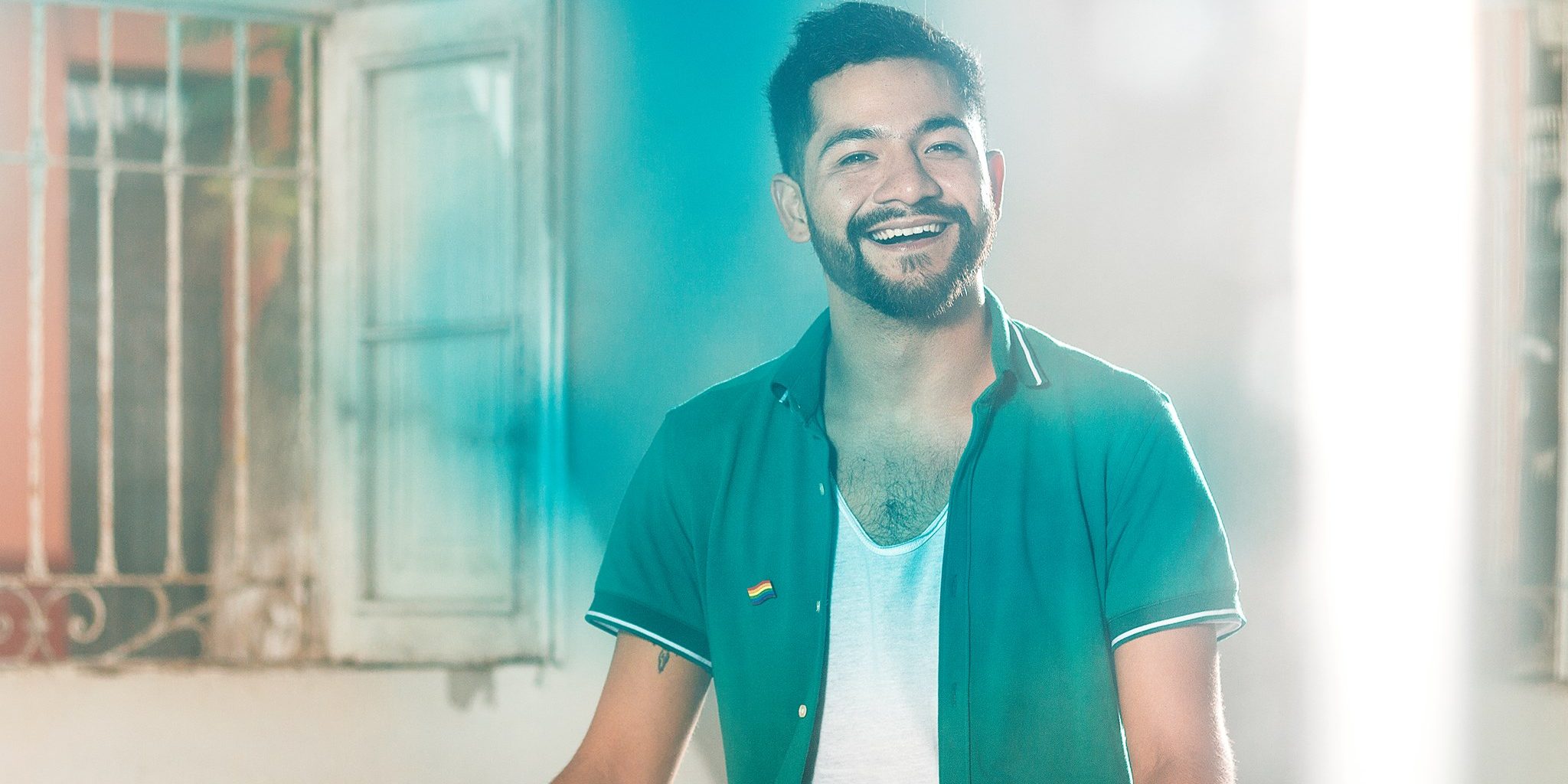
Dusan Fung is an actor, playwright, theater director, and professor. At the age of 26, along with four friends, he founded the independent, multidisciplinary arts company Imaginario Colectivo. From its inception, this company has focused on uncomfortable and urgent issues: social inequality and diversity.

Share

By Esteban Marchand , from Lima. Photos: Ian Ilbert and courtesy of Imaginario Colectivo. Dusan Fung is an actor, playwright, theater director, and professor. At 26, along with four friends, he founded the independent, multidisciplinary arts company Imaginario Colectivo. From its inception, this company has focused on uncomfortable and urgent issues: social inequality and diversity. In 2017, they premiered 'El Arcoiris en las manos' (The Rainbow in Our Hands), a play that tells the story of Marita, a trans woman searching for a dignified life in a conservative Lima society. In 2018, they are preparing 'Las Gardenias' (The Gardenias), a multidisciplinary project that will depict the violence against LGBTQ+ people during the era of terrorism in Peru.
 -What is the role of art in society in seeking change?
-Art is a mechanism of expression for transformation, which seeks to remove common senses in our society through empathy and recognition. Art is an invitation to take an active role in the struggle for a more habitable world for all.denouncing the problems that perpetuate discrimination, violence, and exclusion is our duty as artists. to make visible the political nature of art as a right in constant disputeIt is a current manifestation of diverse realities through different artistic languages, which in turn aims to reconstruct and reclaim our memories from our own voices and bodies.
 -What is the role of art in society in seeking change?
-Why does Imaginario Colectivo focus on creations that seek to highlight sensitive issues such as those related to LGBT groups?
First, we want to clarify that these are not just sensitive issues, they are urgent. We believe that theater is a medium that fosters encounter, recognition, and critical thinking among people with diverse identities and life experiences, and that audiovisual art is a mass medium that is accessible. For Imaginario Colectivo, these represent potential platforms to report problems affecting LGBTIQ lives, which are constantly at riskIt is worth noting that The personal is political, and these issues are not foreign to our lives.Therefore, our commitment is firm, critical, and ongoing.-In the art world, despite being considered quite liberal, does homophobia, transphobia, and sexism still exist?
-Obviously, just like other problems such as racism and classism, among others. While it's currently politically incorrect to call oneself misogynistic or homophobic, these problems have found new ways to remain relevant, becoming increasingly subtle and promoting their normalization. Furthermore, the idea that the end justifies the means persists. And art is being instrumentalized as a tool to legitimize power relations based on violence. Unfortunately. Artistic spaces continue to be complicit in these acts of violence, through indifference and silence. That is why Imaginario Colectivo reaffirms that Art cannot be disconnected from various social struggles, such as feminism, the anti-racist struggle, among others.
-What are the next projects that Imaginario Colectivo has in mind for the stage?
Our major project for 2019 is called “Las Gardenias.” It is based on a historical act of violence against the LGBTIQ community that occurred in the jungle during the internal armed conflict of the 1980s in Peru, as one of the many mechanisms of social cleansing. This project is divided into three areas: a research document, a play, and a feature film.-At Imaginario Colectivo, they not only produce content but also carry out educational work. Why is this important?
Yes, we have "The Imaginary School," our educational project and one of the main pillars of our company, created with the aim of contributing to the human development of our society through the performing arts, using new pedagogies based on love, care, and questioning. Our School embraces sexual, gender, cultural, ethnic, racial, and social diversity and dissidence; it is a safe space where everyone can live together collectively. We have established the "Imaginary Scholarship," a scholarship program for four of our singing and theater improvisation courses, aimed at historically discriminated-against population groups (LGBTIQ+, women, Afro-descendants, Indigenous people, people with disabilities/functional diversity, among others). This is a collective effort to democratize access to training opportunities in the arts, which have historically been a privileged and closed-circle space. We want the arts to reach all spaces and be enriched by all life experiences.We are present
We are committed to journalism that delves into the territories and conducts thorough investigations, combined with new technologies and narrative formats. We want the protagonists, their stories, and their struggles to be present.
SUPPORT US

FOLLOW US
Related notes
We are present
This and other stories are not usually on the media agenda. Together we can bring them to light.