

The State must compensate a young trans woman abused by two police officers.
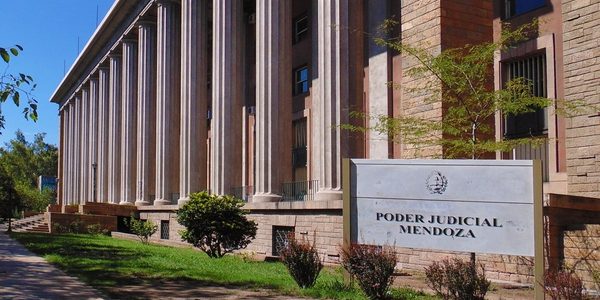
The government of the province of Mendoza will have to pay $500,000 in moral damages to a young trans woman who was abused by two police officers when she was 17 years old, in January 2011. This was ordered by a ruling of the Civil Court No. 16.

Share

[READ ALSO: #HateCrimes2017 Drastic increase in street attacks in Argentina] The ruling states that the State must be held civilly liable for the actions of the two public security officers in the performance of their duties, since it has been proven that they abused the young woman after they were convicted. The ruling was upheld by the Supreme Court.
The facts
On January 18, 2011, in the early morning, officers Osvaldo Palorma Palma and José Greco Romano, while on patrol, forced the victim, JB, into their patrol car, claiming she needed to be taken to the police station because she didn't have her ID. However, they took her to the sheds located near Central Park and sexually assaulted the young woman, "with penetration and in an outrageous manner," as she stated in court.[READ ALSO: Mendoza: activists on alert over the creation of a state registry of LGBT people]
The police officers were sentenced to eight years in prison for aggravated sexual assault, and the Supreme Court of Justice of Mendoza upheld the sentence. Following this conviction, Jazmín filed a lawsuit against the provincial government seeking compensation for emotional distress. She stated that the rape "affected her life in every aspect of her relationships," emphasizing that at the time she "was a minor, was repeatedly abused, and feared for her life and personal safety." Jazmín, now 25, dropped out of school at 17 and received numerous threats. During the two years of the trial, she remained confined to her home. She now lives in Córdoba with her sister because, according to the court ruling, "she no longer likes Mendoza and fears for her safety."Access to decent work
“Most trans people don’t have access to decent work; for the vast majority, prostitution is the only way to survive. In the province of Mendoza, there are three job inclusion projects that are languishing in legislators’ drawers,” said Daniela Flores.
Contradictions and Codes of Misdemeanors
“We celebrate that the State can acknowledge the violence it systematically perpetrates against our community, and this ruling addresses, in one individual case, situations that have been occurring throughout the trans and travesti community forced into prostitution. But while we celebrate this, we understand that it only goes so far as to show, in one instance, the experiences that travestis have to endure every night in the prostitution system of Mendoza.” The contradiction lies in the fact that this ruling benefits a trans person, but on the other hand, the entire political and legal system of Mendoza fails to consider the necessary tools to end the police's total impunity over trans people. In Mendoza, we still have codes of conduct that criminalize and persecute prostitution, and increasingly restrictive measures continue to be implemented. The fundamental issue of how these codes are systematically used by the police to persecute a vulnerable group remains unaddressed, she said. Mario Vargas of the CLIK group added: “In any case, it’s good because it shows other women that they can report it, that there’s a ruling in their favor, it sets a good precedent. I also think that the organizations’ fight is to repeal the codes of conduct that continue to criminalize people in prostitution.”[READ ALSO: Life imprisonment requested for those accused of the murder of Natalia Sandoval, a trans woman killed in Mendoza]
The ruling states that the sum of 500,000 pesos “could be useful to her and for her consolidation as an independent woman; as it appears sufficient to, for example, cover her university education at a private institution, should she decide to resume her studies. I favor an institution of this type because I understand that it could provide her with greater flexibility to work simultaneously, given that she is already 25 years old,” the ruling concludes. It adds that, in addition to the compensation for Jazmín, the provincial government must cover the fees of the lawyers and experts involved in the proceedings, which amount to 75,000 pesos.We are present
We are committed to journalism that delves into the territories and conducts thorough investigations, combined with new technologies and narrative formats. We want the protagonists, their stories, and their struggles to be present.
SUPPORT US

FOLLOW US
Related notes


We are present
This and other stories are not usually on the media agenda. Together we can bring them to light.