

Alexa, the first trans skater in Argentina
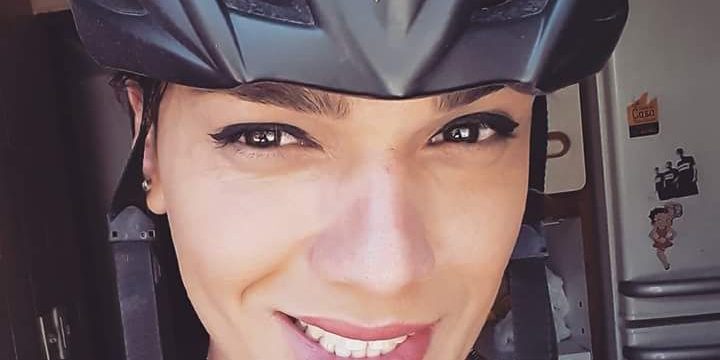
She is 31 years old and the first transgender skater accepted by the Argentine Speed Skating Confederation and the third athlete competing in the female category. Today, she seeks to raise awareness of the transgender struggle in San Pedro, where she was born and raised.

Share

By Paula Bistagnino Photos: Alexa Pettone's personal album She was eight years old when her mother placed a pair of skates in front of her, changing her life forever. Until then, her childhood had consisted of playing "girly" games at home, hidden from her father. "My mother introduced me to skates, and I felt she was giving me a chance to be happy ," says Alexa Pettone, the first trans skater accepted by the Argentine Speed Skating Confederation. Alexa is 31 years old, born, raised, and living in the city of San Pedro, Buenos Aires province. She is the daughter of a couple who had her very young. The second of five siblings—two girls and two boys—her father worked in agriculture and would be gone for days at a time when she was little, and her mother dedicated herself to raising them. She hadn't even turned four when she "let them know" she wasn't the boy they thought she was. She had gone to a private daycare where everyone wore the same apron without gender distinction, and then she was transferred to a public kindergarten where the girls wore pink and the boys wore light blue. “They couldn’t put it on me. I cried and screamed so much that there was no way. And the only solution they found was to put me in one that was neither pink nor light blue, but dark blue. That was my first outburst,” she laughs now. “I say I had a trans childhood and I had the embrace , even though I didn’t fully transition. I didn’t dare to make those changes outwardly, but I was a child. Because even though my dad repressed me, or tried to repress me, because he was the one who struggled the most and still struggles the most, there was my mom, who embraced me during playtime and at home. My mom let me do everything. She bought me dolls, or a pink notebook, or whatever I wanted. And when my dad came home, we hid everything so he wouldn’t find out.” That's how my entire childhood went until the theme of my life appeared: skating.
-What changed in skating compared to the other games?
It was something I enjoyed and could do outside my house, without hiding. That same year I had played soccer… Well, I would go to the little field a block away to hang out with my neighborhood friends, because I didn't play myself. But Roller skating was something my dad allowed me to do, and it made me feel like a girl. And that changed my childhood.And life: because I was happy. That's how I started skating at the Paraná club in San Telmo. And for several years I was free to be happy.-At what point did that freedom cease to be attainable?
-When I was 12 or 13, it was over. I was happy skating up until then, but in pre-adolescence, you start to see everything differently. And that's when I said: no. I was already competing, but I didn't identify with the category. I didn't want to do it that way anymore. I didn't want to stand on the starting line with other kids anymore. The only option was to quit. And it was incredibly painful because it meant losing a right, being confronted with reality at such a young age. And not because I didn't want to, but because society wouldn't allow it. It was my first major disappointment. I stepped away from racing, but I didn't step away from skating.-How was the transition?
–Once I finished high school, I had fulfilled the formal requirements, and that's when I said, "That's it," and I started to let go. And to give myself the freedom to be who I was. And it was all very slow, but with very firm steps. Month after month I changed and built this woman I am today. And it wasn't difficult, because I had freedom. Although I live in a very conservative society, I didn't suffer discrimination. At school I had the freedom to be who I was, I had excellent classmates. I never experienced violence. So I wasn't expelled. I graduated from a public school, a technical school.-How much did you know about activism and the fight for the Gender Identity Law?
-Here in San Pedro, activism was never strong, and the few trans women I knew were older and had had terrible lives, living on the streets. There was no one to tell me which way to go. So I found myself being a teenager, with all that entails, but not knowing whether to be or not to be. There was a struggle there. It was a struggle against myself. And Once again, it was the skateboard that saved me.
Live like Alexa, compete like Alexa, serve like a trans woman
After the Gender Identity Law was passed, a post about an amateur skating competition and the encouragement of a friend led her to call the organizers to see if she could participate. They said yes: “We’re going to respect you for who you are. As a woman,” Juan Cruz Araldi, a skater on the Argentine national team and organizer of the tournament, told her. It was 2014, she won the championship, and that opened the door for her to achieve more: she took some time and decided to try the Argentine Skating Confederation. She spoke with the president, Esteban González. He told her he was going on vacation and that he would write to her a month later when he returned. She thought he was dodging the question, but he did. “He called me a month later and told me they had discussed my case and that yes. That I should find a club and that was it. I couldn’t believe it.” For the past year and a half she has been competing at the Cermun club in José C. Paz, where she is trained by the multi-champion Andrea González, the best in the history of Argentine and South American speed skating. -How did the world of skating receive you?
The trip to the first competition of the Metropolitan Confederation Tournament in Escobar was the longest trip of my life. I went with all my fears in my backpack because it's a tough environment; there are people who yell and insult. And yet, the entire skating community and family—because even now, after competing in countless races, all I've received is love, words of encouragement, and hugs.
 -How did the world of skating receive you?
-How did you decide to change your ID card and what did it mean?
Although I always felt like a trans girl, I didn't dare to come out. I'd spent my adolescence with long hair, and everyone called me Alex. I'd been dressing as a woman since I was 15. And well, then, with the law, I went to a friend who was a city councilor who helped me with the document, and I got it two years after it came out. I thought about it for a few days, though, because even though I was already a woman, getting the ID card was a big deal. It was a beautiful moment. I left there feeling truly free for the first time. I felt legal, I felt relieved, I felt real too. I was who I felt I was. It was the wing I needed to fly.-What motivated you to start being an activist and working for visibility?
-I feel that I was lucky, because of all the support I received as a trans girl in a very conservative town.And life surprised me because they allowed me to be so much more than I thought they would. And I know this is a privilege for my community, and I realize it because when many people ask me, they expect me to have some kind of incredible story. Perhaps the most difficult thing was the relationship with my dad, whom I still live with, but who still doesn't fully accept it. It's hard for him. He can't. For him, even though I'm Alexa and that's how I dress, I'll always be his son. But I'm still fortunate to have been able to build a life for myself with a job (she's a Functional Training instructor with her sister at a gym and teaches skating to kids). It was perhaps a little selfish because I focused on building my own life. And now that I feel much more secure, I want to work for the community. After all the journey I went through to be myself, many years later, I met other trans people, and things started to take shape. On the last #8M (International Women's Day), I went to the march with my mom. Women approached me to congratulate me, invited me to carry the flag, and then to some women's talks. They suggested I become a spokesperson for this struggle. I hesitated a bit at first, but then I thought about it and wondered why I couldn't humbly help others. Why not offer that much-needed embrace? Why not share my story and experience? And it grew very quickly, and now I'm happy to be part of what's happening, which is a huge social change. Along this path, the idea of creating a mural here in San Pedro (see photo) came up with the guys from the Canaletas Cultural Center in San Pedro. They aren't part of the collective, but they're aware and eager. From this, we also decided to organize a Pride March here, something that had never been done before.-A week after it was done, the mural was vandalized with insults directed at you. Do you know who did it?
"Yes, it didn't cause me anger or resentment, but concern. Because in my 31 years, as I was saying, I've never been attacked or discriminated against, at least not directly. And I took it as a first attack. Because the message was also clear: it was very transphobic because they covered up the little girl and the drawings they made (a penis and insults to violate Alexa's gender identity). They went against the cause. And that's why we also decided to leave them up for a few days and not cover them up immediately, to send another message: that resistance to these rights. And then we restored it, and it looked much nicer. Many more children participated, and it had a much greater impact in the media and on social networks, where people spoke out against the aggressors, although we don't know who they are or why they did it. So, onward with a smile and keep fighting. And if they vandalize it again, we'll go back and repaint it."We are present
We are committed to journalism that delves into the territories and conducts thorough investigations, combined with new technologies and narrative formats. We want the protagonists, their stories, and their struggles to be present.
SUPPORT US

FOLLOW US
Related notes


We are present
This and other stories are not usually on the media agenda. Together we can bring them to light.