

Mocking Zulma Lobato is mocking all transvestites
"For most media outlets, our transvestite or trans identity is disposable and ridiculable," writes Violeta Alegre.


Share

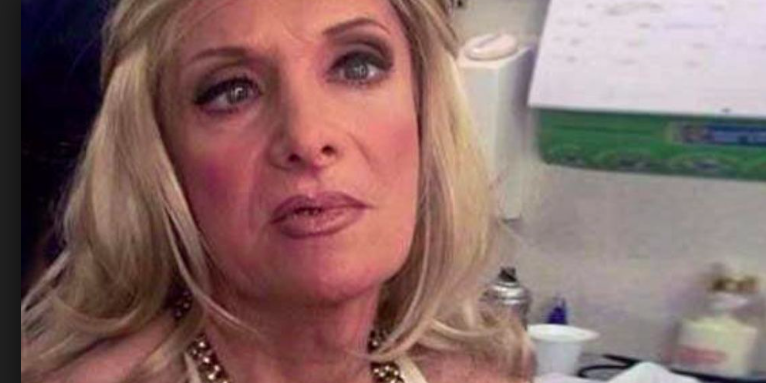
In 2014, trans activist Lohana Berkins was a guest on the television program Duro de Domar. There, she was asked her opinion about trans actress Florencia Trinidad (“Flor de la V”) and the fact that she spent a lot of money on a surrogate mother to become a mother. In her response, Berkins highlighted two media situations involving trans women: “You have to be either divine, immaculate, get married in white (referring to Florencia), or you become the court jester, where everyone laughs at you and ridicules you.” The latter example referred to the media-savvy trans woman Zulma Lobato, who had been heavily criticized.
Zulma's public exposure in recent years has been immense. On a program on Crónica TV, she suffered a heart attack live on air, and afterward, the host, Anabela Ascar, recounted the incident on camera, saying, "Luckily, it happened in our studios and not at her home." Ascar also stated that Zulma was invited to the show to help her because she had told her she "didn't have a job."
Zulma's on-air meltdown was followed by memes on social media, as is always the case when it makes the news. Even Aníbal Pachano, a media-savvy choreographer, imitated her attack, mocking her on a television program. In Argentina, someone without talent, connections, or a stereotypical appearance doesn't make it into the media because they aren't marketable. Zulma's case was clear: her degraded gender identity was used to expose and ridicule her across the country.
Media outlets expose Zulma Lobato, but do not report on transphobic murders
For most media outlets, our trans or travesti identity is disposable and ridiculable. They seem to be constantly saying, "This being has no value ." Therefore, anything that happens to us won't generate outrage. The violence we are exposed to, both from the State through its police forces or through lack of access to basic rights, and from society as a whole through its discriminatory practices, is ignored. Moreover, it is reinforced by media violence.
This also occurs within the LGBTQ+ community, where many gay men replicated—or even used as their profile picture—the photo of Zulma being attacked on camera. Just a couple of days ago, Zulma was once again the victim of this kind of exposure. This time, it was gossip show host Ángel de Brito who posted a video on his Twitter account showing her homeless in Mar del Plata. Zulma is seen with two suitcases and surrounded by police officers.
Right now, thanks to De Brito's cruel portrayal, more than twenty national media outlets have featured headlines on their websites such as "Zulma's dramatic situation," "Zulma Lobato found lying in the street," or "Zulma Lobato is going hungry." However, when a trans woman or transvestite is murdered, there is no media coverage or outrage over these transphobic murders or transfemicides.
Accumulation of violence
This news about Zulma allowed morbidly curious readers to read the news and comment, perpetuating violence against an entire community . The comments under the news about Zulma's situation are despotic. From "crazy old man"—disrespecting her gender identity and pathologizing it—to threats that seem to say "this is what happens to trans women," without taking even a second to analyze the situation or empathize—even minimally—with a community that suffers systematic rights violations, or with a person who is having a hard time while everyone watches.
Zulma Lobato is a trans woman, an elderly person experiencing homelessness, targeted by a hegemonic system. Her body and identity bear the marks of a series of acts of violence perpetrated by a patriarchal system. We can see that society as a whole is complicit in this; let us hope that, from a feminist perspective, we can respond to her life situation as we do to so many other forms of violence.
We are present
We are committed to journalism that delves into the territories and conducts thorough investigations, combined with new technologies and narrative formats. We want the protagonists, their stories, and their struggles to be present.
SUPPORT US

FOLLOW US
Related notes
We are present
This and other stories are not usually on the media agenda. Together we can bring them to light.