

The story of Katty Fontey, president of the first trans collective in Chile
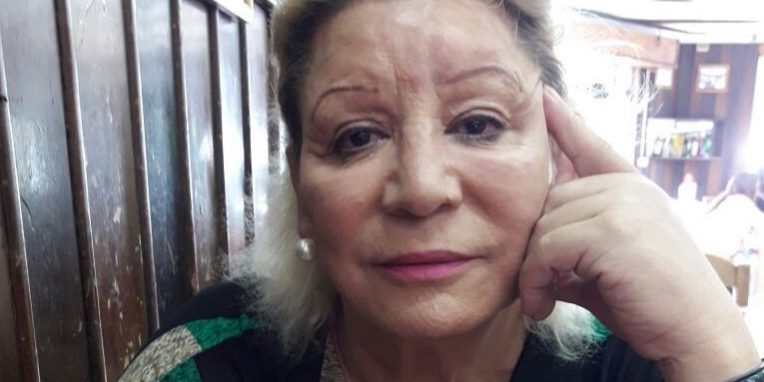
By Víctor Hugo Robles. Katty Fontey is the president of TravesChile, a senior trans woman actively involved in social and community life. She was born in a time when sexual difference was unthinkable in her town and social class, and so she decided to migrate to the big city, escaping her father's anger and…

Share

Katty Fontey is the president of TravesChile, a senior trans woman actively involved in social and community life. Born in a time when sexual difference was unthinkable in her town and social class, she decided to migrate to the big city, escaping her father's anger and discrimination. Neither school discipline nor boys' suits could imprison her free body, which longed to grow, dance, and fly. She was raised among her street friends, forging her own unique life story, working in the sex trade during difficult times, and leading the first LGBTQ+ protest in Chilean history —an epic and unforgettable event that took place on April 22, 1973.
In this dialogue with Presentes , Katty Fontey revisits her story, a cinematic biography that doesn't parade on red carpets but walks the streets of Chile, lovingly attending to her elderly trans friends forgotten by the clock of time.
– Katty, tell us about your origins.
My story is tragicomic. I was born on December 29, 1951, in the city of Curicó. My father was none other than the then-mayor of Curicó, Arnoldo Parra Donoso. My mother was a social worker, a cold woman who didn't have much of a relationship with me. I am an only child.
– And what was your life like in your childhood?
– Great, wonderful, everything was fine, I had a house and a comfortable life. Everything was good, thank God and the Blessed Virgin. I remember that as a girl I liked men and that's where I had problems, serious problems.
– Identity difficulties or other types of difficulties?
– Problems with acceptance and violence because I liked my dad's driver. I don't remember how I discovered my sexual difference; I only know that I looked at boys with great attraction, and I saw women as friends. I dressed in my mother's petticoats, wore towels as turbans on my head, and used nightgowns. I looked in the mirror and struck poses. At that time, Sophia Loren, Marilyn Monroe, and Brigitte Bardot were famous. I wanted to be like them.
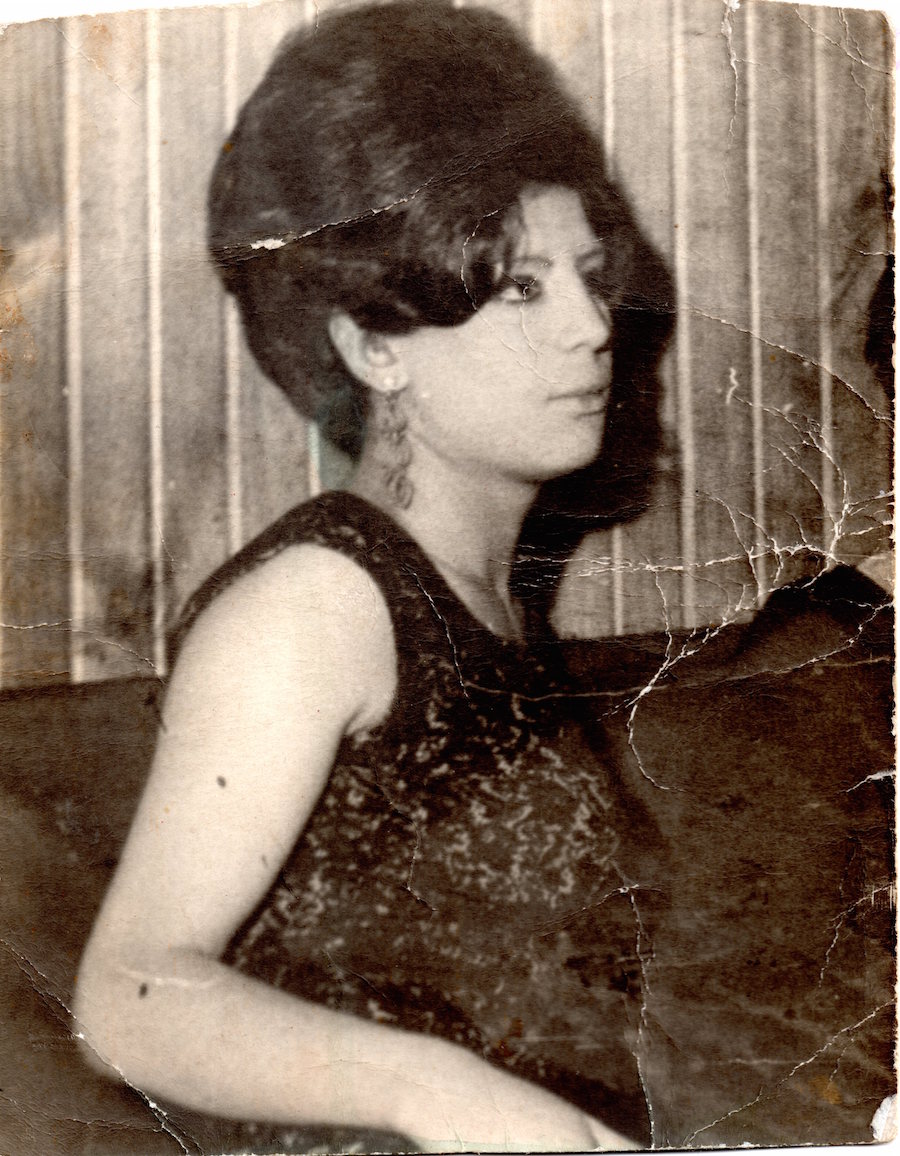
Katty in 1971
[READ ALSO: #Chile The first Trans Mausoleum in Latin America was inaugurated]
– You used to dress up as a woman, just like that, as a game…
– Yes, but secretly, and one day the nanny, Berta, caught me. She said to me, “What are you doing? You can’t do that.” She told me that my father would be very angry, that I shouldn’t do it anymore. She also told me that I should play ball or marbles instead. She told me to leave the room, not to be alone, to go out into the yard.
– And did you like the little balls?
I never played marbles, much less soccer. I liked soccer, but only to look at the players' legs. I didn't even do gymnastics in school; I was ashamed of my body. Everything was going relatively well until the scandal surrounding the 1962 World Cup.
- What happened?
I started hugging my dad's driver. He was a handsome man, I loved the hair on his body, and I kept trying to kiss him. He noticed, I imagine he knew what was happening to me: that's why we were intimate. After that, he got scared and dropped me off at my house. My nanny found out. Everyone knew about my relationship with the driver, everyone, even my father. He wanted to kill me. My nanny, Berta, told my family that I was "sick and degenerate." My father was furious because he thought it would cost him his job. He kicked me out of the house. He sent me to Santiago with Nanny Berta.
– What memories do you have of that exile?
-I remember living in a nice neighborhood with my nanny. She raised me and sent me to a school in Vitacura, School 44, a co-ed school. I completed all the elementary school grades, and when I moved on to the first year of humanities, they put me in an all-boys high school.
 “The rotten apple”
 “The rotten apple”
Katty recounts that she began having problems in school because her gender identity became evident. “I thought I was the only one; I was slowly discovering my sexuality,” she says, adding, “I remember when I arrived at high school, I met Erasmo and Cartagena. I was about 15 years old. Everything was going relatively smoothly until I was caught having sex in the gym with the principal’s son. I was expelled. The principal pulled me out of the line, and I remember him saying, ‘This apple has to be removed from the crate because this apple is the one that will spoil all the rest of the fruit.’”
– And what did you feel, what did you do?
"Just a minute," I told him. "Shut up," he said. "Don't make me shut up," I told him. "There are two more blocks in the school, Erasmo and Cartagena," I shouted loudly. Then they sent for my nanny, and before she arrived, I ran away from the school, and the principal's son ran away with me. The others were expelled too. Erasmo and Cartagena wanted to kill me. Later, we went to the Alameda to explore the city. I remember we went out partying with the kid, his name was Larry. Then Cartagena and Erasmo arrived, and the four of us were walking around the streets. We made up. Little by little, we met more people: Dania, Milenka, Cuca, Estrella, the Doctor, so many new people.
[READ ALSO: Being trans and living in Chile: 10 things you need to know]
– The Doctor? The famous transvestite from San Camilo Street?
– Yes. I knew La Doctora when she was young, when she didn't dress as a woman yet, she dressed as a man, in a ponytail, her name was Tomás Rivera González. Mario, La Estrella, was her partner, they were wonderful. They worked in the sex trade. In those years I had run away from home and had nowhere to sleep or anything or anyone to help me.
– Did you like the street?
Yes, I liked it a lot. I thought and felt there was more freedom. I never heard from my nanny or my parents again. I started living my own life; I was free.
– How did you begin your transformation into Katty Fontey?
"The Doctor helped me. She would collect money for me and they'd put me at Bosco, a famous soda fountain in Santiago. They'd buy me a coffee there so I'd wait for her because she saw I wasn't good at hooking up. She had her parties, her clients, all that stuff. One day, the Doctor took me to her house to help her out. She lent me clothes, but I had to return them. I left home with rings, a watch, and a necklace. I had no other choice but to start selling everything to survive. Mario, who was the Doctor's partner, they called her Estrella, took me to San Camilo. I remember I ended up living at Jorge's house, a bastard, who lived across the street from his brothel on San Camilo Street, so he made me a little bed in a room he had, and during the day I would clean the women's rooms, buy their things, sweep the living room. I couldn't dress as a woman because I was underage."
 The famous Doctor
– Did you like San Camilo?
– Yes. I arrived in San Camilo when there were queues like Chalba, Cecilia, the late Liliana, little Sandra who was very pretty, it was like seeing Liz Taylor but in miniature.
– What was your name back then?
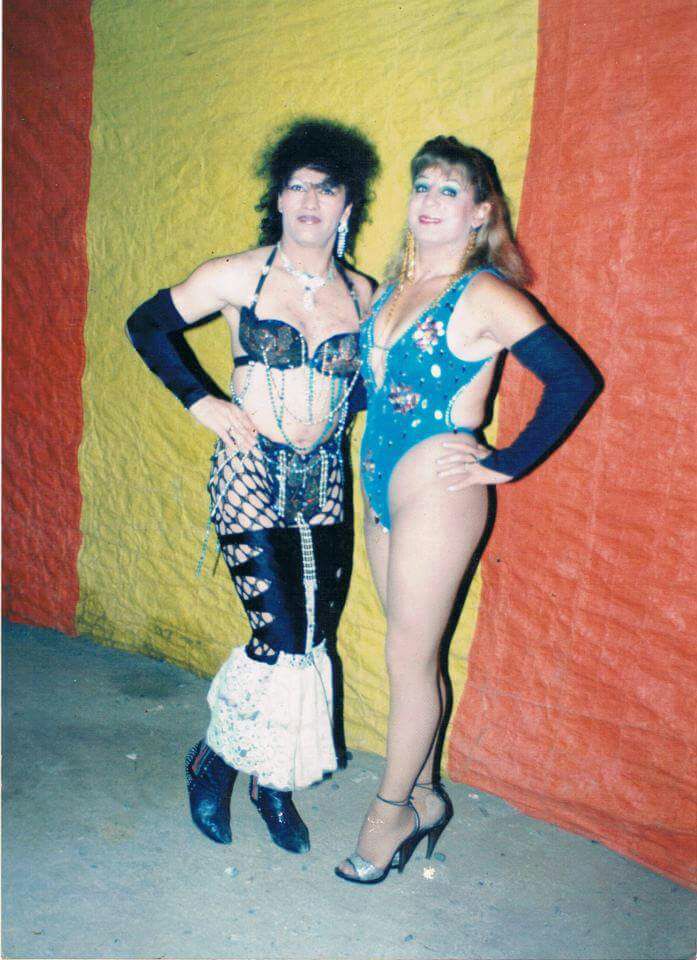
– Parra, or maybe Megatherium, because I was so skinny, and right around that time they found a skeleton—it was even on the news—it was a dinosaur, and they named it Megatherium. I looked like nothing but skinny goat bones, and that's why they called me Megatherium. Later, Chalva and the late Viviana sent me to buy clothes on 10 de Julio Street, and they took a liking to me. Well, there was a TV show called "Aunt Katty," a black and white program. I said, "What a pretty name, Katty." "Call yourself Katty, girl," my friends told me. "You're going to be Katty Fontey," that's what I called myself when I started doing shows and dancing in different places. My character toured many humorous, risqué theaters. For New Year's, they gave me clothes to dress as a woman. Chalva gave me a skirt, and the late Viviana gave me shoes. And so, dressed as a woman, they sent me to buy something on 10th Street ( July 10th) to see what would happen to me, to see if they would discover me or not.
– A kind of trans test?
– Yes, of course, I went to a pharmacy that didn't exist; it was a test. I remember I had short hair, a bit short in the back, like a schoolboy's, and long in the front, which I put up in a fan-like bun, and nothing happened to me. When they arrived, everyone hugged me. That's when I started dressing as a woman. During the day I went around in civilian clothes, and at night I was a woman.
Aunt Carlina
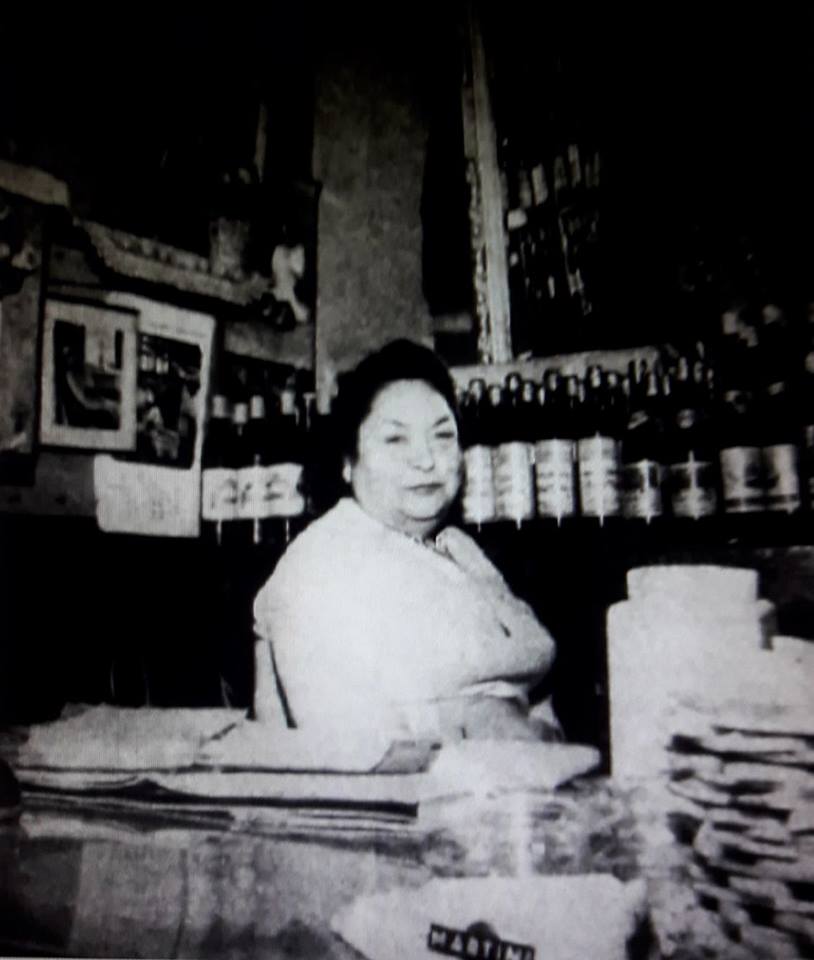 Aunt Carlina
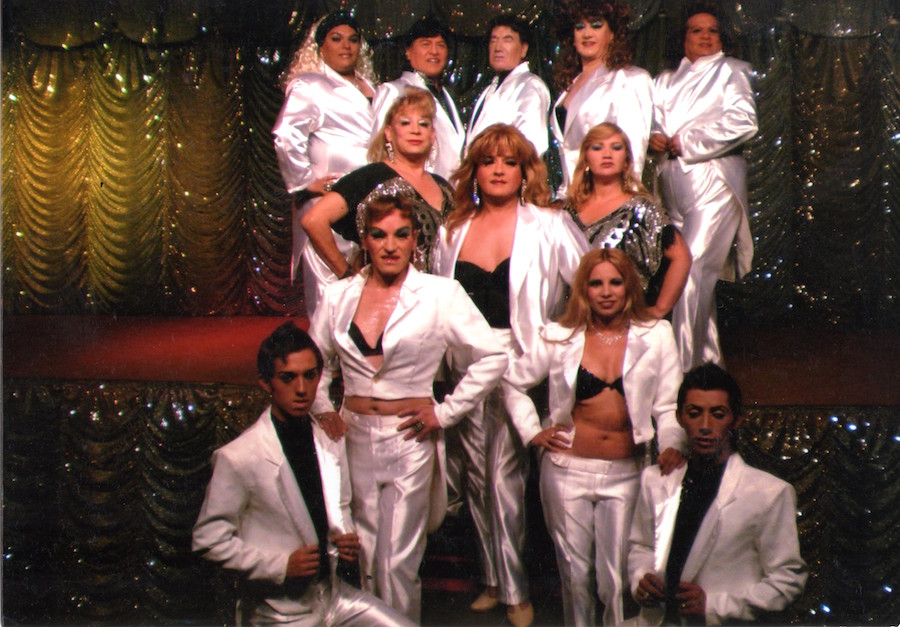
Walking the night on San Camilo street, Katty met other transvestites who worked with Doña Carlina Morales Padilla, the mythical "Aunt Carlina", a national emblem of the most renowned brothels in Santiago in the 70s.
– What was Aunt Carlina like?
The owner and mistress of everything, very proper. The Doctor took me to Aunt Carlina's at 1226 Vivaceta Street . The lady had heard about me, that I had a reputation as a "pickpocket" (one who picks customers' pockets). Then she looked at me and said: "You're the pickpocket of San Camilo, you're not going to ruin my work here, honey, not here because I'm going to turn on a white light here. If you want, come and see the show, but nothing more than that."
– And did you go?
Yes, I only went on Sundays; they wouldn't let me in the other days. One day I went with Chalva, Viviana, and the Doctor. "Oh, ma'am, don't be like that," I said to Mrs. Carlina. Andrea, or Patas Caldea, as they called her, said she would look after me, so they let me in, and she gave me a pink crocheted bikini. I took some classes with the choreographer Paco Mairena, and he taught me for about a month how to dance like a mambo dancer. They made me wear high heels to attract attention because mambo was danced barefoot. I stood out from the crowd that way; that was the idea. And that's how I stayed. I started dancing, and they liked me.
– Dancing began to become a profession…
– Yes, of course, then I became a professional and forgot about the brothels. I didn't really like prostitution. It was a tough but beautiful time. As the years went by, the brothels disappeared and drugs came in, and that's when things got bad.
– What kind of drug? Cocaine?
– No, there was some, but it was for people with money. When drugs came in, it was crack cocaine, the worst kind. I'm talking about the 80s with Pinochet's dictatorship; that's when everything went to hell, here in Santiago, in the north. Then, when the 1973 coup happened, the bohemian nightlife was ruined. If you look at the theaters, the revues, the comedy shows, the risqué ones, even the Bim Bam Bum, which was the best, the most fashionable place in Santiago, Chile, the same historic venue where the famous Cochinelli performed.
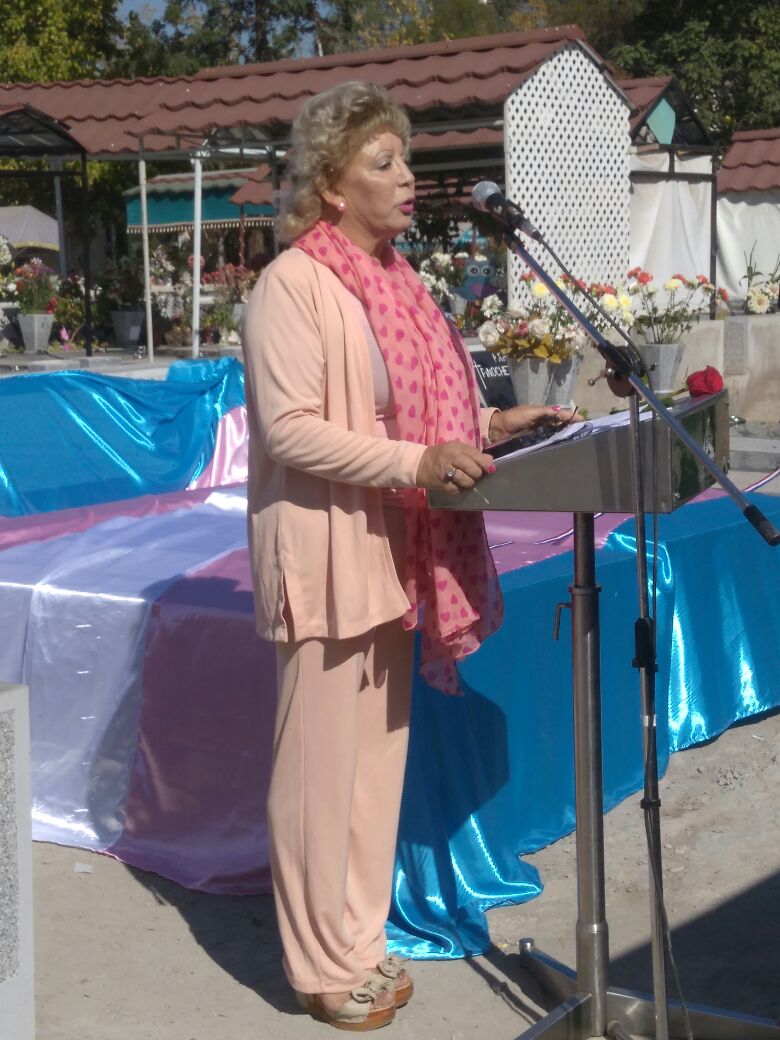
At the inauguration of the first trans mausoleum in Latin America, an achievement of TravesChile
The first protest for sexual diversity
On April 22, 1973, the first LGBTQ+ protest in Chile took place, during the presidency of Salvador Allende. Katty states that she witnessed that historic event.
– Tell me about this protest, this march on Sunday, April 22, 1973. Were you there?
– We were in the Alameda, at the El Bosque soda fountain. That's when they started arriving, and Mario had the idea. Estrella said, "I bet they can't get us all together and make us protest in the plaza." And another one said, "If they beat us up, they'll arrest us; we might be there for six months. Let's go." There were about 10 to 14 of us. It was more about making a scene. Instead of going to the plaza, we stood on the statue of Pedro de Valdivia's horse; that's what attracted the most attention.
– Do you remember those names? I have several in my memory. Mostly young homosexuals. According to my records, there were: Raquel, Eva, Larguero, Romane, José Caballo, Vanesa, one they called Fresia Soto, Confort, and Laucha.
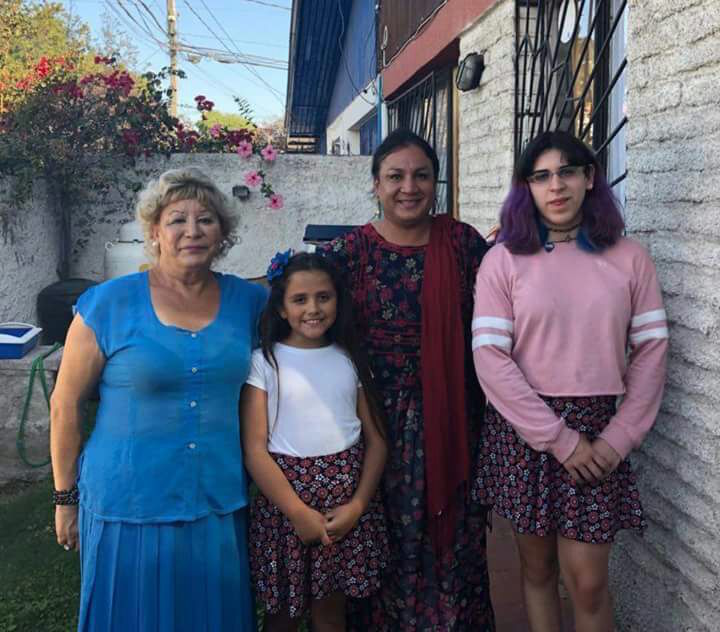 Katty alongside Mexican muxe activist Amaranta Gómez Regalado and Selenna, a trans girl who has a lot of visibility in Chile
[READ ALSO: When Chilean transvestites took to the streets for the first time]
– Was there immediate repression in that protest, or were they persecuted after the media coverage?
– There was no repression at the time, but later the reprisals came. Imagine, you were just walking around normally. Someone else would say, "That one's a faggot," they'd go and grab you, without knowing if you were gay or not. We were scared and regretful because we thought they were going to kill us.
– You participated in that first protest, how do you see the protests now?
– These are a piece of cake because, imagine, before they used to persecute us but now they protect them, they take care of them, there are police cordons.
– Do you feel that there is discrimination against the trans population in relation to the rights and visibility that gay men have?
– Yes, it exists, and a lot. Discrimination is everywhere. You see it at the doctor's office. They have my file and call me Harold Nelson, even though they know I've been there a million times.
– And now, Katty, what are you up to, what do you do for a living, what are you doing with your life?
– Now I live on Gran Avenida, and at home I make costumes and bikinis. I get calls for bachelor parties, or I go to Circo Timoteo, the first drag circus in Chile. Sometimes I do shows or sell popcorn at Timoteo. I live my life peacefully, I don't bother anyone, and I hope no one bothers me. I fight for the rights of my community, especially older trans women. I'm the president of the TravesChile group, and I hope our work helps improve the lives of our fellow trans women, as has been the case with the construction of the first trans mausoleum, the criminal complaint for Paloma's death , and many other political, social, and cultural actions we're planning for the present and the future.
We are present
We are committed to journalism that delves into the territories and conducts thorough investigations, combined with new technologies and narrative formats. We want the protagonists, their stories, and their struggles to be present.
SUPPORT US

FOLLOW US
Related notes
We are present
This and other stories are not usually on the media agenda. Together we can bring them to light.