

The letter B is not silent: bisexual people exist
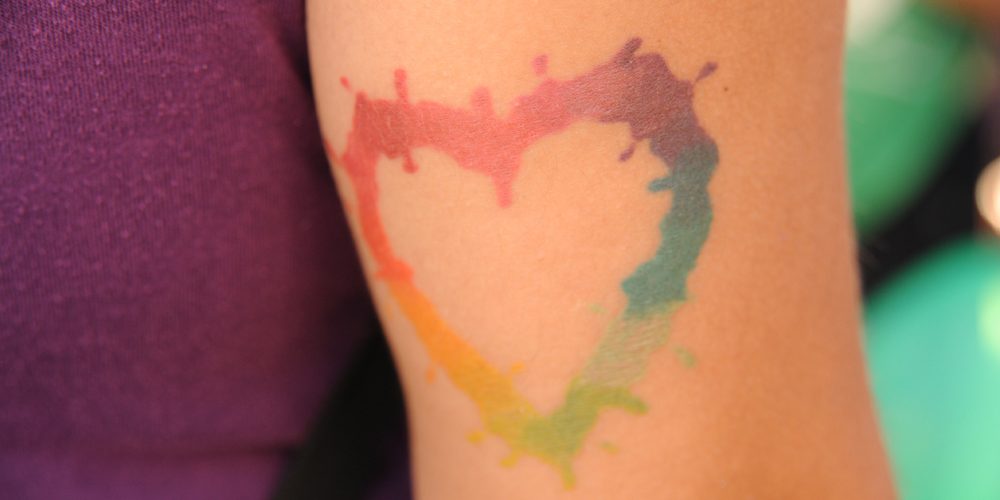
Bisexuality remains an invisible orientation in terms of representation, both in the media and in activism. On the International Day Against Homophobia, Transphobia, and Biphobia, it is important to acknowledge this form of discrimination.

Share

By Alexandra Hernández, from Lima. Photo: Ariel Gutraich. Almost no LGBTI activist would dare to say that bisexuality doesn't exist, that one ultimately "chooses" a gender, or that it's a stage of confusion. In the world of LGBTI activism, I generally feel comfortable and free to identify as bisexual without being looked at strangely or having the validity of my orientation questioned. Almost no activist would dare to say it, but many would prefer not to date bisexuals. They consider them promiscuous and are bothered by our increased visibility in LGBTI spaces. Some don't go that far, but they never remember to mention us and always assume a homosexual or heterosexual orientation in others, even though they are aware that sexuality is fluid and that the acronym LGBTI has a B in the middle. We activists fight for the recognition of our diverse identities, and as such, it would be inconsistent for activism for sexual diversity to deny the validity of or question any sexual orientation, however complex it may be. However, bisexuality remains an invisible orientation in terms of representation, both in the media and in activism. gay activism : biphobia (BiHate) .
"You're bisexual": how I came to terms with the label
Bisexuality is an orientation characterized by fluid attraction to more than one gender. Therefore, as a political struggle, it is not characterized by the assertion of an identity tied to a particular sexual practice, but rather by... Recognition of sexuality as a dynamic, fluid and non-static entity, with multiple identity discoursesA bisexual person might be aware of their attraction to multiple genders from early adolescence. Or they might recognize it later in life, basically because their sexual orientation allows them to express their attractions and affections in any context. However, The lack of bisexual representation in the media and the prejudices associated with that identity make it even more difficult for a person to identify as bisexualThis has widened the gap between identifying as heterosexual/homosexual and bisexual. If I had been asked how I identified at 18, I would have answered "heterosexual," because I didn't know I could be bisexual. When I was 20, a friend asked me about my attractions. I told her that I liked women too, even though I felt comfortable in my romantic relationships with men. “You’re bisexual,” she told me. From that moment on, I accepted the label… and all the prejudices that come with it.When I started in activism, I thought I would be free of prejudice, that I would find immediate acceptance. And I did. But discrimination isn't always obvious and direct. Bisexuality doesn't find much traction in activism because political stances are built on the assertion of a non-heterosexual identity, rejecting practices that perpetuate heteronormativity. Because they have the capacity to feel affective and sexual attraction to people of the opposite sex, bisexual people (and activists) are often seen as a Trojan horse of heterosexuality infiltrating activism. This reinforces the idea that heteronormativity is limited only to heterosexual practices, when in reality it can also be replicated in homosexual spaces and practices (role-playing, gender stereotypes, etc.). There are bisexual people who refuse to use the label "bisexual" once they are with someone (of the same or opposite sex) because they feel it's unnecessary, revealing internalized biphobia—that is, their own prejudice about being bisexual and the need to "choose a side." A person cannot be forced to assume an identity. And even less so if, in their own experience, they feel they behave as homosexual or heterosexual depending on the person they are with or most of the people they are attracted to. But it is important to recognize if this invisibility occurs in light of... prejudices associated with this identity.Bisexual privilege?
When a bisexual person has a visible relationship with someone of the opposite sex, they "gain privileges." They are not perceived as bisexual, but as heterosexual, and they don't experience social discrimination regarding their relationship. This approach denies the stability of bisexual attraction as the core of this identity: just as a lesbian doesn't stop feeling attraction to women despite being in a monogamous relationship with another woman, a bisexual person doesn't stop feeling sexual and romantic attraction to people regardless of their gender, even if they are in a monogamous relationship. Denying bisexual people space in activism or visibility simply because they currently (or always) have relationships, sexual activity, or a preference for only one gender denies the essence of their orientation. This pressure to choose a side is something bisexual people themselves internalize. And often, we choose to erase this important part of our identity instead of fostering discussion about the dynamic nature of sexuality. Political demands and bisexuality Activism proposes political positions based on sexual identity to confront hegemonic norms regarding gender and sexual orientation. Identifying as transgender or gay is a way of standing up against heteronormativity and, based on that experience, demanding public policies that allow us to live with dignity. The demands of bisexual activism would coincide with the demands of lesbian or gay activism. laws against discrimination Being with a person of the same sex or of a non-hegemonic gender allows us to access to legal protections for couples or families and have access to comprehensive sex education programs where we can recognize the existence of attractions to people of our same gender or sex. However, many of the demands of bisexual activism not only involve obtaining or regulating rights, but also have a broader educational and reformative intent that affects all sectors of society. Bisexuality is the sexual orientation that challenges the binary in sexual orientation. Because it proposes that attractions and affections are dynamic, and that they can change over time or remain consistently fluid. It's an orientation that challenges many assumptions about sexuality that have served both to reinforce the gender binary (only men and women exist and they are complementary) and to reinforce homosexuality as a fixed and stable characteristic over time. The idea that we exist on a spectrum proposes that heterosexuality and homosexuality are minority extremes. And that most of us have attractions located on a continuum of bisexuality, with tendencies, preferences, and adaptations to our environment. This aligns more closely with some current evidence and statistics on sexual orientation. For example, those that reveal that Almost 100% of young LGB people identify as bisexual (in the UK)gaining ground not only against homosexuality but also against heterosexuality, as bisexual visibility increases. However, in Latin American spaces, many LGBTI activists still prefer not to give platforms to bisexuality for fear that the visibility of their identities will dissipate and the progress they have made will be lost. Bisexual activists recognize the importance of reclaiming the labels “gay” and “lesbian.” But it is necessary to advocate for our sexual orientation because the experience is qualitatively different from that of other sexual identities. Even, Bisexuality and pansexuality are even more invisible among transgender people.In societies where heterosexuality is assumed to be the norm, and fluidity in sexual orientation is not understood, even in activist spaces, trans activism is often relegated to the realm of identity politics, rendering their sexuality, preferences, and sexual practices invisible. Many trans activists are also gay or bisexual, but they are excluded from LGB spaces because the discourse on sexuality is centered on cisgender LGB people. These situations make it imperative to debate and discuss which forms of activism employ discourses that render invisible the lived experiences of, perhaps, a large percentage of the LGBTI population. Acknowledging that, as a lesbian, one might feel attraction to a man or to masculinity does not erase lesbian identity, but it does foster a greater understanding of how sexuality works. The identity label we use is up to us and can have significant political motivations. But it is even more important to recognize that beyond political labels, we construct sexualities and express them in ways that are far more dynamic than we are led to believe. Imposing roles on us is also a way of establishing hegemony.We are present
We are committed to journalism that delves into the territories and conducts thorough investigations, combined with new technologies and narrative formats. We want the protagonists, their stories, and their struggles to be present.
SUPPORT US

FOLLOW US
Related notes
We are present
This and other stories are not usually on the media agenda. Together we can bring them to light.