

A driver refused to let a gay man ride: “I’d rather go to jail than give a ride to someone like that.”
Upon leaving Fiesta Plop, a well-known gay party in Buenos Aires, Emanuel Moyano was refused entry to the bus. “On top of being disabled, you’re a faggot,” the driver of bus number 3004 on line 168, operated by Expreso San Isidro, told him.

Share

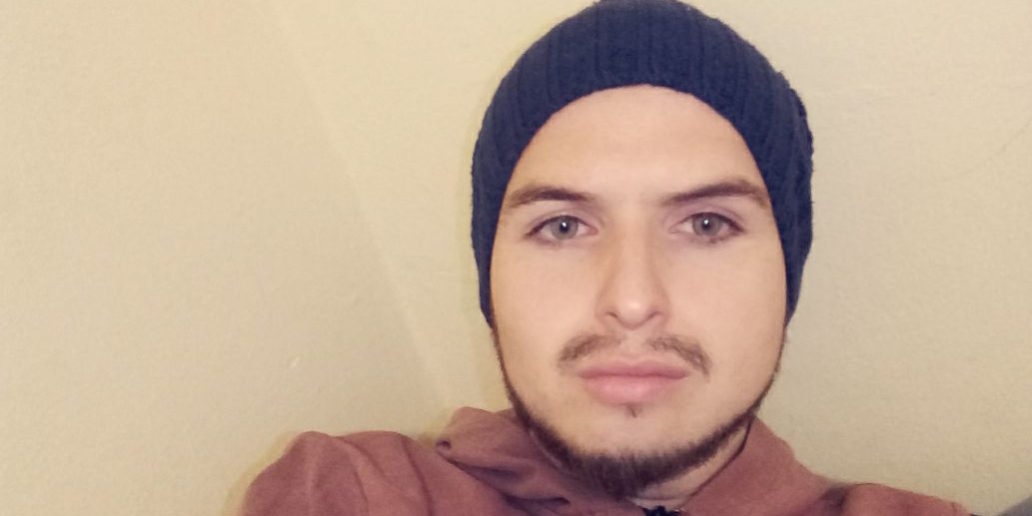
By Lucas Gutiérrez. Upon leaving Fiesta Plop, a well-known gay party in Buenos Aires, Emanuel Moyano was refused entry to a bus. “On top of being disabled, you’re a faggot,” the driver of bus number 3004 on line 168, operated by the Expreso San Isidro company, told him. As he was about to get off, the passengers supported him and confronted the driver. The driver then locked the bus doors, preventing its departure for more than 40 minutes until the police intervened: if Emanuel didn’t get off, the bus wouldn’t leave. According to what he told Presentes, he will file a complaint this afternoon with the City Ombudsman. The San Isidro company declined to comment to this publication.
[READ ALSO: #HateCrimes2017 Drastic increase in street attacks in Argentina]
Emanuel, 26, explained that it was after 3 a.m. when they boarded the bus at the Alvarez Thomas and Lacroze stop in the Colegiales neighborhood. Before them, a heterosexual couple boarded, asked for two tickets, and paid using the same SUBE card. When Emanuel asked for two tickets for himself and his friend using the same SUBE card, the driver refused. Why didn't he have his own? When asked, Emanuel said he had forgotten his disability certificate. (CUD) "So I can travel. – I'm not taking you anywhere, go find another SUBE card or a fake ID, you don't have and shouldn't have anything, you lying piece of shit," the driver continued at the bus stop in front of the well-known gay party 'Plop'. "Disabled and on top of that, a faggot. You don't have anything, otherwise you wouldn't be getting in here," he repeated. "What does one thing have to do with the other? That shows a lack of understanding. A disabled person isn't just bedridden. I have the right to go out! Otherwise, I'm going to die, not from the illness, but from depression," Emanuel told Presentes. The bus stop is located at the corner of Alvarez Thomas and Lacroze.
“I am more disabled by society than by the disease.”
“The disability law under which I received my disability card states that I don't have to tell them what illness I have,” Emanuel explains. He comments that while his illness, a mixed connective tissue disorder, is public knowledge because his case received media attention due to its rarity and complexity, he adds: “I'm more disabled not because of the illness itself, but because society is killing me. I'm not included in anything. I don't even have the possibility of having a good job.” When Emanuel refused to get off the bus, the driver of the 168 line decided to close the doors, preventing anyone from disembarking and remaining parked. In his social media post, he recounts that during those 40-plus minutes, the driver even kept a young woman with claustrophobia trapped inside. This is also narrated alongside the videos accompanying the post. text on Facebook.Solidarity
“Some of the passengers gave me seven SUBE cards. One girl even registered one in my name online.” But the driver wouldn't budge. “Because I'm gay, he wanted me to get off,” Emanuel explains. The bus didn't resume its regular route until several police officers intervened. Emanuel says that at first he was going to get off the bus: “I was telling my friend we should get off, that people have to go to work,” but the other passengers didn't want him to. “The day after this happened, I had epileptic seizures,” he recounts with an accent that reflects his Cordoban roots. “I know anything can affect me, and I don't want to be in intensive care again,” he explains. Agencia Presentes contacted Expreso San Isidro, the company that operates bus line 168. From the personnel office, an employee who refused to give his full name stated that they would not speak to this news outlet.
What is done in these cases?
María Rachid, head of the Institute Against Discrimination at the Ombudsman's Office of the City of Buenos Aires, explained to Presentes that they will advise and support Emanuel Moyano regarding the complaints he can file with the courts—both civil and criminal—and with organizations such as the National Institute Against Discrimination, Xenophobia, and Racism (INADI). “We are going to open a case file and summon the company and the driver. We will also request the intervention of the National Transportation Regulatory Commission (CNRT), to whom we will propose some lines of action to prevent these incidents from happening again, either on this or any other short- or long-distance bus line,” Rachid explained.Make it visible so it doesn't happen again
Emanuel says he hesitated before speaking out about the situation. “At first, I thought that if I did something, I could hurt a family, because he surely has one, but he repeated to me so many times, 'Just like I take down so many people here—in the Plop gay party area—do you think I won't take you down?' So if I don't do something, this situation will continue to happen,” Emanuel explained. Meanwhile, in Argentina, The figures are alarming. Regarding the increase in attacks against the LGBT+ community, Moyano has witnesses and is already preparing to file the appropriate complaints with the justice system. “I wouldn’t want this to happen to anyone else,” says Emanuel.We are present
We are committed to journalism that delves into the territories and conducts thorough investigations, combined with new technologies and narrative formats. We want the protagonists, their stories, and their struggles to be present.
SUPPORT US

FOLLOW US
Related notes

We are present
This and other stories are not usually on the media agenda. Together we can bring them to light.