

#Chile The first Trans Mausoleum in Latin America was inaugurated
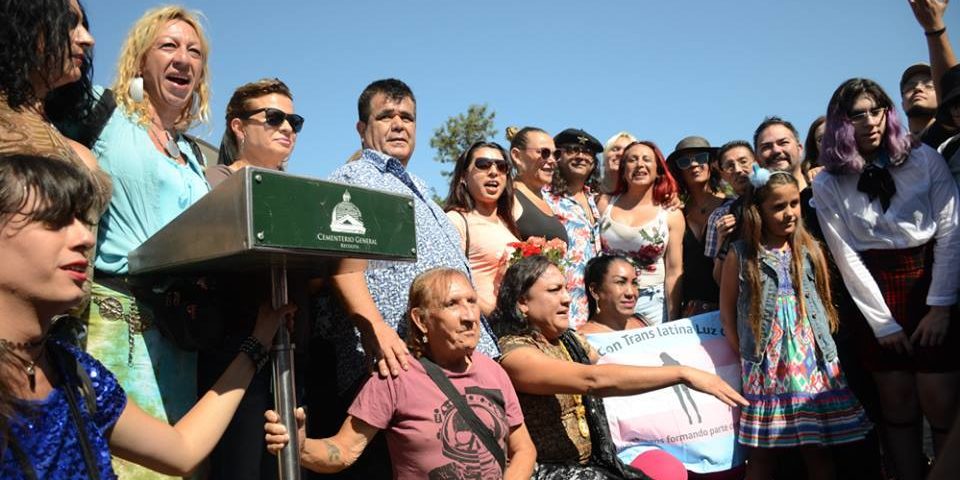
March 31, 2018, International Transgender Day of Visibility, will be remembered not only for the resilient struggle of a community discriminated against and plagued by violence, but also for the gestures of historical redress taking place in Latin America. The inauguration of the first transgender mausoleum in Santiago's General Cemetery, an initiative of the legendary organization TravesChile, funded by the International Trans Fund, is the most moving, clear, and eloquent example.

Share

By Víctor Hugo Robles from Santiago, Chile. Photos: Independent Photographers Association . March 31, 2018, International Transgender Day of Visibility, will be remembered not only for the resilient struggle of a community discriminated against and plagued by violence, but also for the gestures of historical redress taking place in Latin America. The inauguration of the first trans mausoleum in Santiago's General Cemetery, an initiative of the legendary organization TravesChile, funded by the International Trans Fund, is the most moving, clear, and eloquent image. In an event overflowing with emotion and a desire for unity, various Chilean LGBTQ+ organizations, particularly from the trans, transvestite, and transsexual community, inaugurated a work that is "unprecedented and historic in the world," according to renowned Mexican trans activist and anthropologist Amaranta Gómez Regalado, a member of the International Trans Fund, who was present at the event.
[READ ALSO: Chile will have the first trans mausoleum in Latin America]
Along with Amaranta Gómez, who traveled to Santiago de Chile from Buenos Aires after participating in the trial for the transvestism of Diana Sacayán, Representatives from multiple local LGBTI organizations such as OTD, Amanda Jofré, Fundación Selenna, Movimiento por la Diversidad Sexual MUMS, Corporación Chilena de Prevención del SIDA ACCIONGAY, Agrupación de Personas Viviendo con VIH/SIDA del Hospital San José Vida Óptima and Corporación SIDA Chile participated in the opening ceremony. Among the various representatives and guests, the presence of Joaquín Lavín Infante, mayor of the Las Condes district, stood out. He was one of the first political authorities to support the work of TravesChile when he was mayor of Santiago more than 17 years ago. During the ceremony, several activists spoke, highlighting the symbolic and material importance of a mausoleum for vulnerable trans people who are often buried in mass graves or temporary tombs without the dignity and respect they demand in life, as was the tragic case of Paloma, an elderly trans woman recently murdered in Chile.

“To die peacefully”
Katty Fontey, president of TravesChile, opened the ceremony, “moved and grateful for the unity expressed in this event,” acknowledging the contribution of the International Trans Fund. Sandy Iturra, spokesperson for TravesChile, fighting back tears, highlighted the “courageous and historic” work of her colleagues Katty Fontey and Silvia Parada because it “brings dignity to our community.” Sandy especially thanked Mayor Joaquín Lavín for his solidarity because “he was one of the first to support us with training,” while also rejecting the discrimination expressed by the political elite “who do not recognize our rights.”[READ ALSO: Being trans and living in Chile: 10 things you need to know]
“To die truly in peace, I would like my tombstone to say Sandy Patricia and not Mario Iturra,” the activist concluded amid applause, making direct reference to the urgent need to approve the Gender Identity Law, which is in its final, complex stage in the National Congress of Chile. Following the remarks of Joaquín Lavín, who said he felt "happy to have been part of the beginning of the organization" when he was mayor of Santiago and offered them training courses through a program of the Municipality of Santiago, the representative of the International Trans Fund, Amaranta Gómez Regalado, spoke. She reflected on dignified death and the value placed on the elderly in her Zapotec culture, and thanked TravesChile for its initiative, highlighting its humanity, originality, and sense of social justice. “I’m very happy to be back in Chile because it means seeing many friends I’ve made over the years,” said Amaranta Gómez Regalado, adding that she found it “paradoxical to come to a cemetery to inaugurate a mausoleum that will provide a dignified final resting place for trans people in this country. I say paradoxical because we should also be thinking about what to do with the lives of those of us who are still here, especially the younger generations, like the trans children I see at this inauguration. That’s why I’m hopeful that things will change in the next 50 years.”
 Where do our dead go?
Amaranta repeatedly asks aloud about the fate of our bodies, answering that “the dead go to our souls, our consciences, our memory, and our hearts.” “Dying in solitude, abandonment, and destitution causes great anguish for the trans community, and this trans mausoleum project in Chile marks a turning point in history,” Amaranta Gómez Regalado emphasized. Similarly, Broden Giambrone, a member of the International Trans Fund, wrote a moving letter that was read during the opening ceremony. The celebrated letter states: “The FIT is very proud to support TravesChile in this important and valuable project. We are very pleased that Amaranta Gómez Regalado, one of our esteemed members of the Steering Committee, can join you for the inauguration of the trans mausoleum. The transgender community faces great persecution and oppression worldwide. Our communities face high levels of violence, abuse, and harassment. We are targeted by the police and security forces. We often lose the support of our families and may be forced to leave our homes and communities. Even when we try to live a normal life, there are numerous challenges in obtaining employment, education, and housing. In many parts of the world, we cannot change our legal documents to reflect our identity. The impact of these forces is often marginalization and exclusion. For older trans people, this can be even worse, and support is rarely available. Many are left alone, living in the Poverty. As we strive to build a global trans movement, it is crucial that we care for one another. Our compassion and mutual support must be at the heart of our activism.
 Where do our dead go?
[READ ALSO: Chile: Paloma, a historic trans woman, has died: it is alleged that she was murdered]
The event culminated with the official ribbon-cutting of Chile's first Trans Mausoleum, accompanied by heartfelt applause and photos of the entire trans community present, including trans children, youth, and senior citizens. All united to dignify life as well as death. ]]>We are present
We are committed to journalism that delves into the territories and conducts thorough investigations, combined with new technologies and narrative formats. We want the protagonists, their stories, and their struggles to be present.
SUPPORT US

FOLLOW US
Related notes
We are present
This and other stories are not usually on the media agenda. Together we can bring them to light.